In 1904, a young Parisian aristocrat named Gabriel de La Rochefoucauld — a man so devoted to the glamorous nightlife of Paris that his contemporaries had taken to calling him le La Rochefoucauld de chez Maxim’s — decided to try his hand at literature. He wrote a novel called The Lover and the Doctor, and sent the manuscript to his friend Marcel Proust with a request for comments and advice.
Proust’s response is a small masterclass in how to tell someone, with great tenderness, that their work is not quite good enough.
He opened with praise — “Bear in mind that you have written a fine and powerful novel, a superb, tragic work of complex and consummate craftsmanship” — before proceeding, in the lengthy letter that preceded this eulogy, to identify what was actually wrong with it. The novel, it turned out, was full of clichés. And Proust, threading his way delicately through the problem, offered this specific observation: “There are some fine big landscapes in your novel, but at times one would like them to be painted with more originality. It’s quite true that the sky is on fire at sunset, but it’s been said too often, and the moon that shines discreetly is a trifle dull.”
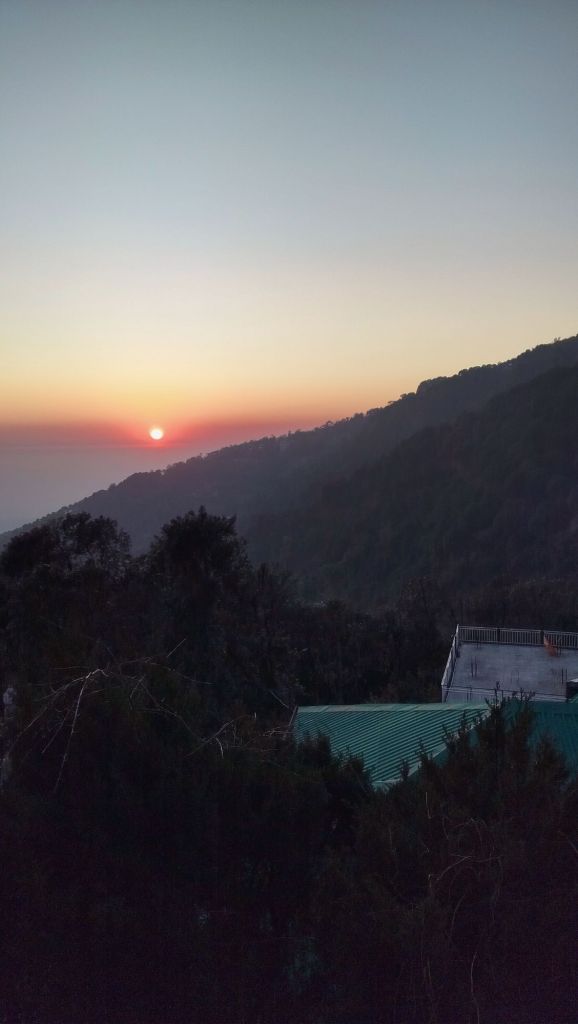
Here is the question Proust is implicitly asking Gabriel, and asking all of us who write: does the moon actually shine discreetly? Does the sky actually look like fire at sunset?
Well — yes, sometimes. That is precisely the problem. The cliché is not wrong. The moon can be discreet. The sunset can be blazing. Clichés survive as long as they do because they contain a genuine observation inside them, one that once, the first time it was made, must have felt like a small revelation.
But as Alain de Botton notes in How Proust Can Change Your Life, from which this story comes, “the problem with clichés is not that they contain false ideas, but rather that they are superficial articulations of very good ones.” The sun is often on fire at sunset, the moon often discreet — “but if we keep saying this every time we encounter a sun or a moon, we will end up believing that this is the last rather than the first word to be said on the subject.”
That is the real damage. Not inaccuracy, but premature closure. The cliché arrives so quickly, so automatically, that it prevents you from actually looking. You write the sky is on fire and move on, believing you have described a sunset, when in fact you have described your memory of a phrase about a sunset. The sky itself — that specific sky, on that specific evening, doing whatever strange and particular thing it was doing — has been replaced by a ready-made picture, a verbal convention that fits every sunset and therefore captures none of them.
Proust’s own moon is the rebuttal. In his novel, he skirted, as de Botton puts it, “two thousand years of ready-made moon talk” and arrived at this:
“Sometimes in the afternoon sky, a white moon would creep up like a little cloud, furtive, without display, suggesting an actress who does not have to ‘come on’ for a while, and so goes in front in her ordinary clothes to watch the rest of the company for a moment, but keeps in the background, not wishing to attract attention to herself.”
This moon is not discreet. It is an actress in ordinary clothes, watching from the wings. It is specific, odd, alive — a moon that could only have been written by someone who had actually looked at a moon and refused the comfort of the description already waiting for them.
The distance between the moon shines discreetly and Proust’s moon is not a distance of talent, exactly. It is a distance of patience. Of willingness to sit with the thing long enough to see it freshly, rather than reaching for the word that arrives first.
There is a further point here, one that de Botton draws out carefully. The way we describe the world is not merely a stylistic matter. It is linked, at some level, to the way we actually experience it. “Clichés are detrimental insofar as they inspire us to believe that they adequately describe a situation while merely grazing its surface. And if this matters, it is because the way we speak is ultimately linked to the way we feel, because how we describe the world must at some level reflect how we first experience it.”
Which means that writing in clichés is not only a failure of expression. It is a failure of attention. And the cure is not finding more unusual words — it is learning to look more carefully before reaching for any words at all. To stay with the moon until you have actually seen it. To trust that what you find there, however strange or inconvenient, is more worth saying than what has already been said a thousand times.
The sky is on fire at sunset. Perhaps. But what else is it doing — what specifically, stubbornly, unrepeatable thing is it doing right now, in the particular evening you are actually standing inside?
Start there. Proust would.

