1.
We have somehow made rest into a problem to be solved.
No, not sleep — we still allow ourselves that, though even sleep has been colonised by trackers and scores and eight-step routines for optimising it. But the other kind of rest. The sitting without purpose. The afternoon with no plan. The walk that isn’t exercise. The hour that produces nothing and goes nowhere and is, by every modern measure, wasted.
If you have tried to do nothing recently, you will know how quickly the discomfort arrives. Three minutes into stillness and the hand reaches for the phone. Not because there is anything particular to look at. Just because the emptiness felt like something needed filling.
2.
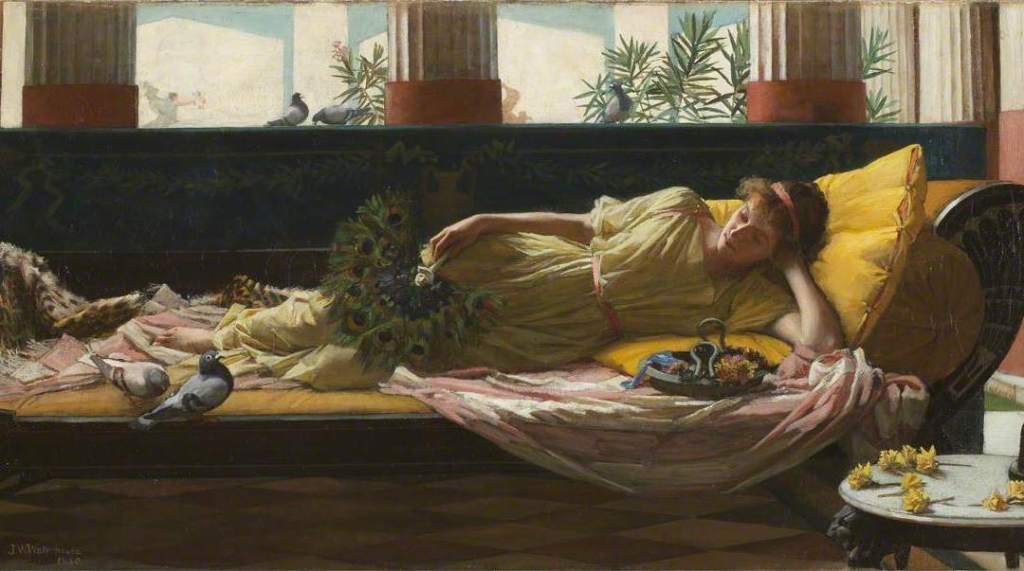
The Roman philosopher Seneca watched this happening around him nearly two thousand years ago, and he was baffled by it. In his essay On the Shortness of Life — which is short enough to read in a single sitting and devastating enough to stay with you for weeks — he describes the men of his time as perpetually busy, perpetually rushed, always on the way to something, always just about to begin living properly once this next thing was done. He found it a kind of madness. It is not that we have a short time to live, he wrote, but that we waste much of it. The people around him weren’t running out of time. They were spending it on everything except the things that actually mattered to them, and calling the busyness a life.
What Seneca was defending was not laziness. He was one of the most productive writers of his age. What he was defending was something more precise: the examined hour. Time that you have chosen, consciously, to spend in a way that feeds something real in you. He called it otium — a Latin word that translates roughly as leisure, but carries none of the guilty connotations that word has today. For Seneca, otium was not the opposite of work. It was the condition that made genuine work possible. Without it, you were just a man running.
If you want to understand what he meant, read On the Shortness of Life first. Then sit with the question it leaves you: how much of what fills your days did you actually choose?
3.
The Japanese have a concept that approaches this from a different angle: ma. It is usually translated as negative space, or pause, or interval — the silence between musical notes, the empty room in a house, the gap in a conversation that hasn’t yet been filled. In Japanese aesthetics, ma is not absence. It is presence of a different kind. The space that gives everything around it meaning.
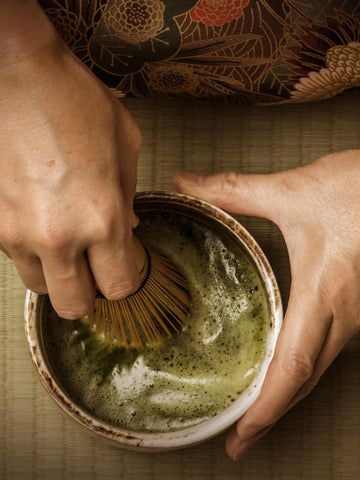
A conversation without ma is just noise. A piece of music without silence is just sound. And a life without stillness — without genuine, unproductive, unoptimised rest — starts to lose its own shape. You stop knowing what you think, because you are never quiet long enough to find out.
4.
Then there is the writer Jenny Odell, whose book How to Do Nothing is one of the more radical things published in recent years. The author, once again, is not recommending idleness. She is recommending resistance — resistance to the idea that every moment of your attention must be productive, monetisable, pointed toward some outcome. She spent time simply watching birds in a rose garden in Oakland, not to relax or recharge or come back sharper, but just to be fully present in a single place, attending to something that had no use for her at all.
What she found was a kind of re-entry into her own life — a sense of herself as a person who existed in a place, in a body, in the present moment, rather than a consciousness perpetually shuttling between tasks. The garden didn’t give her anything. But it returned her to herself.
Her book is worth reading slowly, which is itself a form of practising what she preaches. Don’t skim it. Let it take longer than it needs to.
5.
Doing nothing, it turns out, is not the absence of doing. It is a different kind of doing — one that our age has forgotten how to value and our nervous systems have forgotten how to tolerate.
But the capacity is still there. It surfaces sometimes on a slow Sunday morning before the phone is checked, or in the ten minutes after a long walk when you sit on a bench and simply look at the street. That feeling — of being briefly, simply, here — is not nothing.
It might, in fact, be the whole point.

