1.
Nobody warns you about this part.
They warn you about the climb — how hard it will be, how much you will have to give up, how many people will doubt you. There is an entire industry built around helping you reach the top. Podcasts, coaches, vision boards, five a.m. alarms. But the morning after you arrive? You are on your own.
Think of the following scenario.
Your promotion comes through on a Thursday. You tell a few people. Someone brings cake. By Saturday you are sitting in the same flat, looking at the same ceiling, feeling — nothing, really. A faint deflation, like a balloon the day after a party. You tell yourself you are tired. You tell yourself it will sink in. It doesn’t, quite. And beneath the tiredness is a question you dare not say out loud, because you know how it will sound: is this it?
2.
Tolstoy asked the same question. He was fifty, which is worth noting — not young and restless, but settled, accomplished, at the height of everything. The most celebrated writer in Russia, possibly in the world. A wife, children, an estate, a body of work that the world already considered immortal. And yet in A Confession — a short book he wrote not for publication but out of sheer necessity — he describes finding himself unable to walk past a rope without pausing. Not because he had decided anything. But because he could find no answer, when he examined it honestly, to a single question: what is it all for?
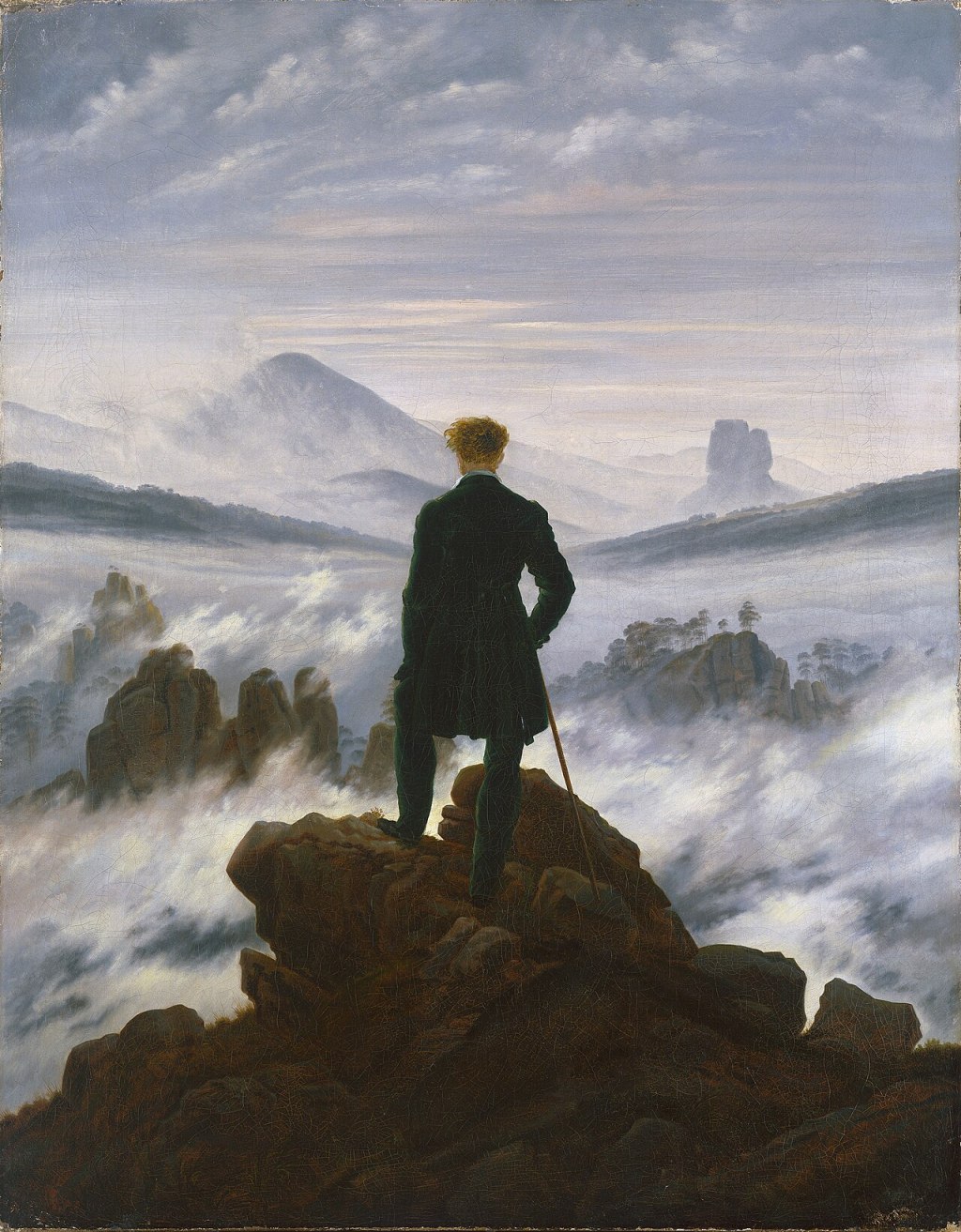
He had spent thirty years climbing. And then he got there, and the mountain had nothing to say to him.
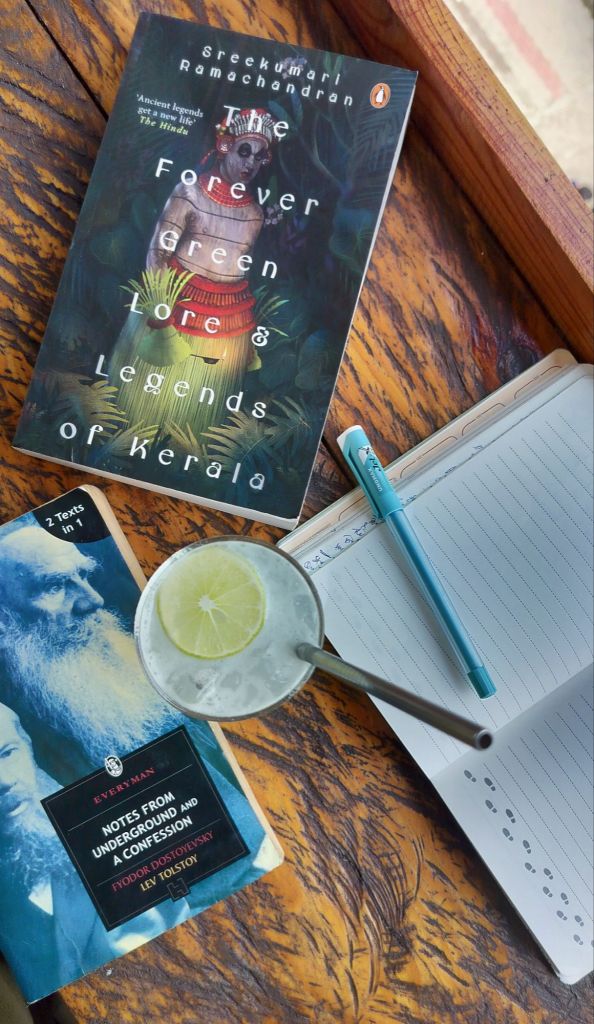
A Confession is not a long book, and it is not a comfortable one. Tolstoy does not resolve neatly. He moves through reason, through philosophy, through the lives of people around him, trying to find something to hold onto. What makes it worth reading — especially if you are sitting with your own version of this emptiness — is that he does not dress the feeling up. He simply describes it, with the same unflinching precision he brought to his fiction. Reading it, you feel less alone in the question. And sometimes that is enough to keep you looking for an answer rather than turning away from the question altogether.
3.
The psychologist Mihaly Csikszentmihalyi spent decades studying something more specific: the moments when people feel most alive. Not happiest in the conventional sense — not relaxed, not triumphant — but most fully themselves. What he found, documented in Flow, surprised him. It was never the arriving. It was always the being in the middle of something hard.
A surgeon three hours into a complex operation. A climber halfway up a rock face. A woman weaving a pattern that demands everything her hands know. In these moments, people reported, time disappeared. Self-consciousness disappeared. There was just the work and them, and a feeling that this — whatever this was — was what living was supposed to feel like.
He called it flow: the state where the difficulty of what you are doing sits at just the edge of your ability, pulling you forward. Not so easy that you drift, not so hard that you freeze. Just that narrow corridor of genuine effort where the self stops chattering and simply does.
Achievement, by its nature, closes that corridor. You solve the problem. You reach the top. The gap between you and the goal collapses — and with it, the very tension that was making you feel alive. What remains is the summit. Which turns out to be, as Tolstoy discovered, a surprisingly ordinary place.
Flow is worth reading slowly, and it is worth reading with a notebook nearby. Csikszentmihalyi is a scientist, not a poet, but the questions he prompts are intimate ones: when in your life have you lost track of time completely? What were you doing? Those answers, taken seriously, point toward something more reliable than any summit — a way of arranging your days around the kind of work that doesn’t leave you empty when it’s done.
The emptiness at the top is not ingratitude. It is not weakness. It is information — the self, finally quiet enough to ask a question it couldn’t ask while it was busy climbing: did I actually want this, or was I simply very committed to wanting it?
4.
Most of the time, by the time you arrive, you are a different person than the one who decided to climb. The wanting was real. But it belonged to someone slightly younger, slightly more anxious, who needed to prove something that, as it turns out, didn’t need proving.
The mountain was always just the excuse. What sustained you — what actually made you feel like yourself — was the quality of your attention on the way up. The difficult days navigated with some grace. The people beside you. The work that asked everything of you and got it.
That doesn’t disappear when the climb is over. But you do have to choose it again, deliberately, on the other side. The question the emptiness is really asking is not what do I do now? It is: what, stripped of all the proving, do I actually love doing?
Start there. The next climb will feel different.

