
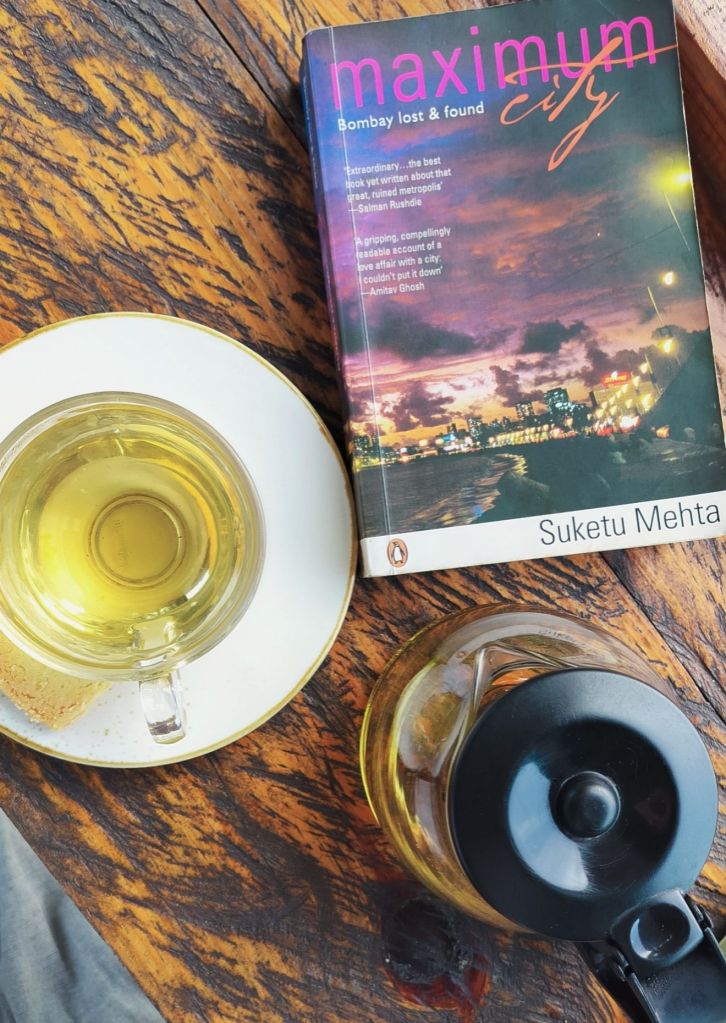
Interestingly, I was reading Suketu Mehta’s Maximum City right before I picked up The Only City, a newly released anthology of short stories set in Bombay, or Mumbai, the (slightly) less poetic name we have for it nowadays. Mehta’s book is a fascinating portrait of a metropolis that consumes and creates in equal measure. Picking up The Only City after that felt almost like turning the page from non-fiction to fiction, from Mehta’s journalistic gaze to the literary imagination of multiple writers trying to capture the same enigma: Bombay, that eternal muse.
It’s interesting how often Bombay has served as a backdrop to great works of fiction: Gregory David Roberts’s Shantaram, Salman Rushdie’s Midnight’s Children, Rohinton Mistry’s A Fine Balance, to name a few. There is something about this city that refuses to be ordinary. Its chaos, its contrasts, its relentless energy. Give it the overused title ‘the spirit of the city,’ or maybe ‘eternal will to reinvent itself,’ either way you’d end up finding one of the world’s great literary settings.
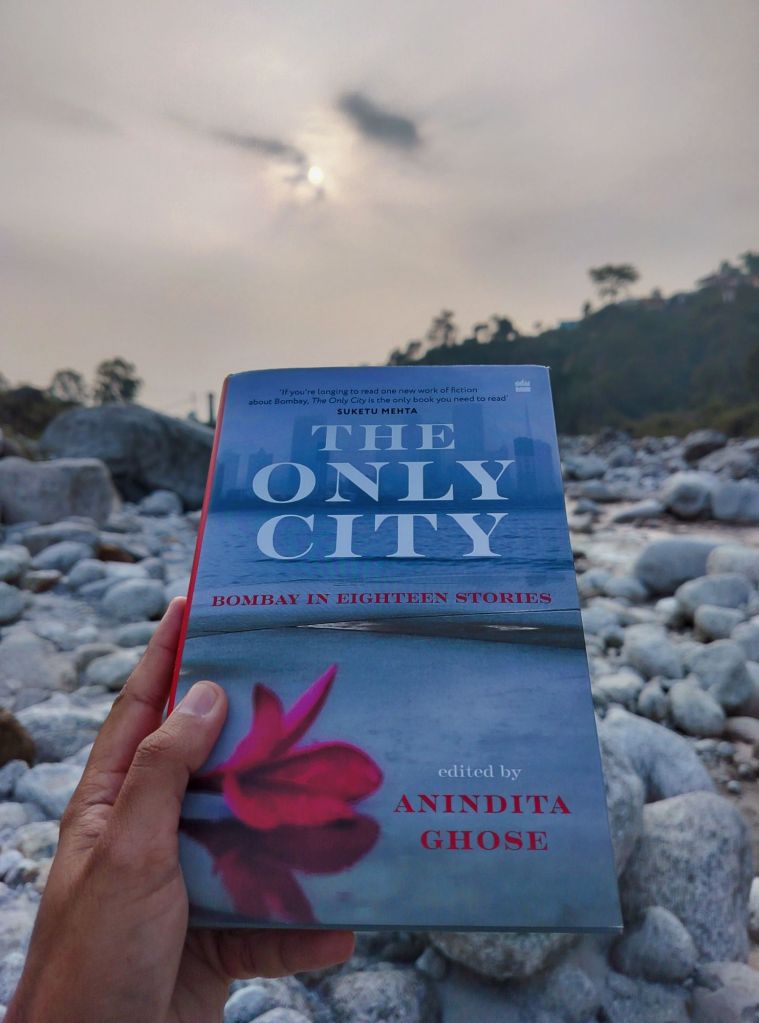
Khushwant Singh once famously said, “Bombay, you will be told, is the only city India has, in the sense that the word city is understood in the West. Other Indian metropolises like Calcutta, Madras and Delhi are like oversized villages.” It’s from this sentiment that the anthology takes its title, The Only City. Singh, who was not known for mincing words, had captured something fundamental about Bombay’s identity. I don’t see it (like many do) as an insult to other Indian cities, but as a reflection of Bombay’s unique cosmopolitan character. This is the city that absorbs everyone, gives everyone a story, and turns everyone into a witness to something larger than themselves.
And that’s exactly what this book does. It doesn’t treat Bombay as the protagonist, nor does it drown too much in nostalgia. Instead, the city serves as a subtle, living background — always present, always shaping the characters, even when it doesn’t demand attention. As the editor Anindita Ghose notes in her introduction, these are stories of Bombay’s people, not necessarily about Bombay itself. That point is crucial.
Take Sneha, for instance, from the short story “Bollywood, Baby.” She is one of those countless dreamers live with stardust in their eyes, hoping to become the next big name on the silver screen. Her story is not about the glamour of Bollywood, but about what that dream costs. Then there’s “Where the Lights Never Go Out,” about screenwriters who chase fame down dark paths, literally and metaphorically. Their hunger for success, their willingness to barter truth for opportunity, feels familiar not only to Bombay but to every creative hub where ambition flirts with despair.
What makes The Only City striking is how these stories are unmistakably urban and contemporary. You can read them sitting in Delhi, Bangalore, or London, and still relate to their emotional undercurrents. In “Normal Neighbours,” for example, a couple moves into a new high-rise apartment complex and is slowly absorbed into the strange social (with that comes the moral) fabric of elite society. The story feels like a satire on gated urban life, where privacy and pretense coexist in uncomfortable harmony. Similarly, in “Two Bi Two,” two men meet in the crowded chaos of a Mumbai train and share an unexpected, fleeting moment of sexual intimacy. It’s a bold story (tender and raw), and it captures intimacy in the midst of urban loneliness in a way that’s universal.
Then there are stories like “Strays,” which tear through the glitter to show the underbelly. A young boy, separated from his family, survives like a stray animal amid the city’s indifference. His story is painful, but it is also oddly fitting in a collection about Bombay, a city that nurtures and neglects, both at once. To millions, it remains a city of dreams; to others, it is a daily struggle against invisibility. That duality is what gives this anthology its emotional weight.
Of course, not every story hits the same note. Writers like Manu Joseph and Jeet Thayil deliver as expected — sharp, layered, and deeply aware of the psychological tensions of city life. But some of the other contributions feel uneven, their narratives fading quickly after the last page. The idea to open the collection with Raghu Karnad’s “Speedboat” may not have been the best one. Karnad, a superb nonfiction writer, doesn’t seem quite at home in this short story. The story feels more like a warm-up act than a curtain-raiser. In a book like this, where the reader expects to be immediately drawn into Bombay’s pulse, a more powerful opening might have set a better tone.
Still, these are minor quibbles in what is otherwise a finely textured anthology. What The Only City does beautifully is evoke the mood of Bombay, the unique flavour that seeps into your consciousness like the smell of rain on Marine Drive or the chatter in a local train.
If you’ve ever lived in Bombay, the book will bring back flashes of recognition — a particular street corner, a monsoon evening, a conversation overheard in a taxi. And if you’ve never been there, it will still speak to you as someone who has loved, lost, dreamed, and endured in any big city. Because what this book captures most poignantly is the human experience of modern urban life: its desires, its disillusionments, its fleeting connections.
In the end, The Only City feels like an elegy and a love letter rolled into one. It reminds you why Bombay continues to haunt the imagination of writers and readers alike. And perhaps, as Khushwant Singh suggested, it truly is “the only city,” not because of its skyline or size, but because it mirrors the contradictions of human existence itself: beauty and brutality, hope and heartbreak, all coexisting in a single breath.
So if you’re feeling nostalgic about Bombay, or simply want to pause and look at the city with fresh eyes (which is a rare occurrence in a city like Bombay), this collection is worth your time. Reading it is like sitting by the window of a slow local train, watching (and literally feeling with your body) the city rush past, and realising that every face you see, every building you pass, is a window to a story of its own.

