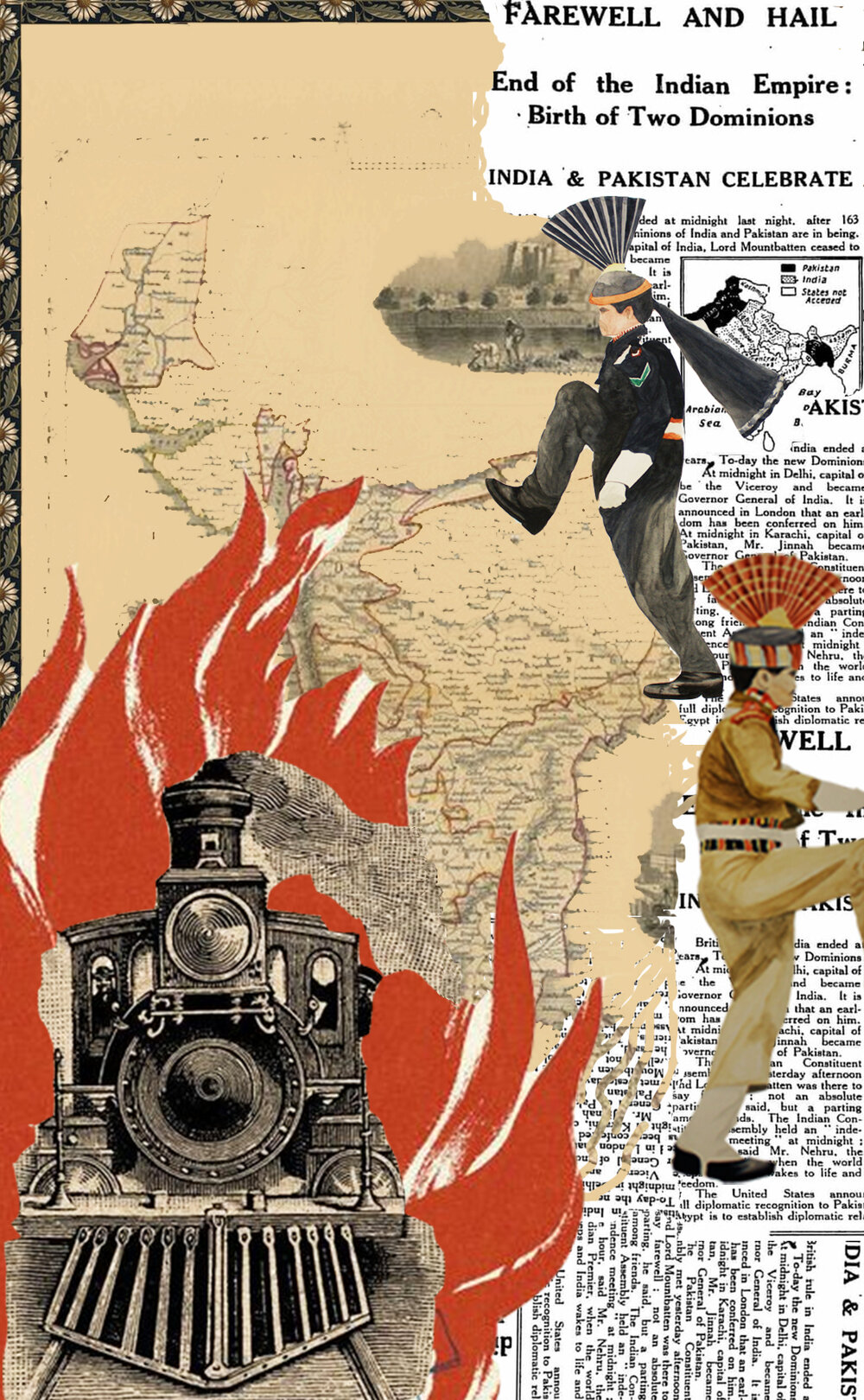
In the first part of our India-Pakistan partition series, we observed the events leading up to the independence day in 1947. Now let’s take a step further.
The day of independence arrived and the Union Jack over the old Lucknow residency, which had never been lowered by day or night, was hauled down at sunset on August 14, 1947 and sent home to Britain.
In his address to the Pakistan Assembly, Mountbatten paid, “tribute to the great men, your leaders, who helped to arrive at a peaceful solution for the transfer of power!” Equally shocking was his reference to the situation in Lahore: “Some days ago I went to Lahore. From the reports I had received I expected to witness a scene of unparalleled devastation. Those of you who have not visited Lahore will be relieved to hear that the destruction is far less than I expected.”
In his address to the Constituent Assembly of India the next day, there was no reference to large scale massacres, migration of people, atrocities against women and children, and the resultant misery and destitution which was evident all around. Nehru’s famous “A Tryst With Destiny” speech in the Comstituent Assembly contained only an oblique reference to the turmoil and holocaust in the country. He said, “This is no time for petty and destructive criticisms, no time for ill-will or blaming others.”
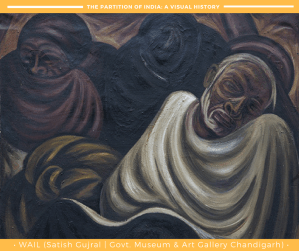
The independence day celebrations were going on in Delhi and elsewhere, unmindful of the conditions in the two provinces — Punjab and Bengal — where people were experiencing hell on earth. On the Pakistan independence day, on August 14, fires were raging all over Lahore with twenty shops gutted in Anarkali bazar, killing sixty persons and injuring many more. Troops shot down sixty-one marauders in Amritsar on the same day. Armed gangs were active in the Punjab districts and several villages had been completely destroyed. Sindh Muslim League leaders were saying that there was no more room for the refugees. Gandhi was touring the riot-affected areas in Calcutta and had decided to take up residence in the city, where he went on an indefinite fast.
There was the usual attempt at passing the buck. Liaquat Ali Khan said that the Sikhs were responsible for the present situation — not the Congress or the Muslim League. Baldev Singh countered that the trouble had started in Rawalpindi in early March, and it had been started by the Muslims. Sardar Patel said that there was no doubt that if the origin of the troubles was traced, it would be found that they started at Rawalpindi, but it was equally definite that Master Tara Singh had recently made some highly indiscreet speeches.
On August 17, the prime ministers of India and Pakistan met at Ambala to bring peace, order and security to Punjab and made a joint appeal for peace. But the events of the period assumed different realities depending on whether the observer was a Pakistani or an Indian. One view was that atrocities against Muslims in East Punjab were the provocation for the carnage against the Sikhs and Hindus in West Pakistan. The other was quite the opposite — that the massacres of non-Muslims in West Pakistan were responsible for the large-scale reprisals and revenge killings of Muslims in East Punjab. The truth may never really be known and may lie somewhere in between. In his letter dated August 25 to Gandhi, Nehru wrote, “It is said and rightly that Lahore and Amritsar are quiet. The fact is that there are not many people left there to be killed. That is to say that Lahore has become almost entirely a Muslim city and Amritsar a Hindu-Sikh city.”
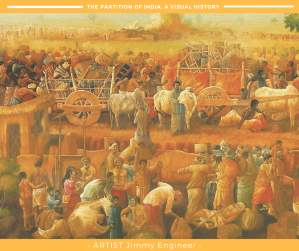
If any proof of unimaginativeness and wooden-headedness of the government bureaucracy, even those turbulent times, was required at all, the Delhi newspapers had begun to publish government advertisements saying, “Are you leaving for Pakistan? If so, do not forget to surrender your ration card to the Rationing Officer at Delhi station.” This, at a time, when Delhi was witnessing the horrors of violence. V. Shankar, who was then political secretary to Patel, vividly described the scenes there: “I was a mournful witness of ghastly scenes, laying bare before me the bestiality and brutality of man. Men of all ages, their throats slashed, backs stabbed, and necks severed; women with vermillion marks lying exposed to wind and weather, their bodies decomposing, their mouths twisted in horror, but still showing some signs of freshness; babies in arms, probably just taken out of their cradles.”
There was often outrage in India — as there is now — at the coloured reporting by foreign press correspondents and their blaming India than Pakistan for the communal holocaust. Patel once stated, in reply to a question, “Government is aware that several foreign correspondents have sent unfortunately tendentious, exaggerated and one-sided reports….There is complete freedom in external publicity. We cannot prevent it.” The presentation of Punjab riots in the United States press was such that it harped on India’s incapacity to govern, not mentioning that it was a problem created by the British and inherited by both India and Pakistan.
Whichever version one goes by, it is safe to conclude by quoting what Nehru said in a broadcast on the All India Radio, “During the last three weeks, I have wondered about the Punjab — West and East Punjab — and my mind has been filled with the horrors of the things which I saw and heard. During the last few days in Punjab and Delhi I have supped my fill of horror. That indeed is the only feast that we can now have.”
Click here to read the next part…
***
The above excerpts are taken from Madhav Godbole’s book The Holocaust of Indian Partition.

