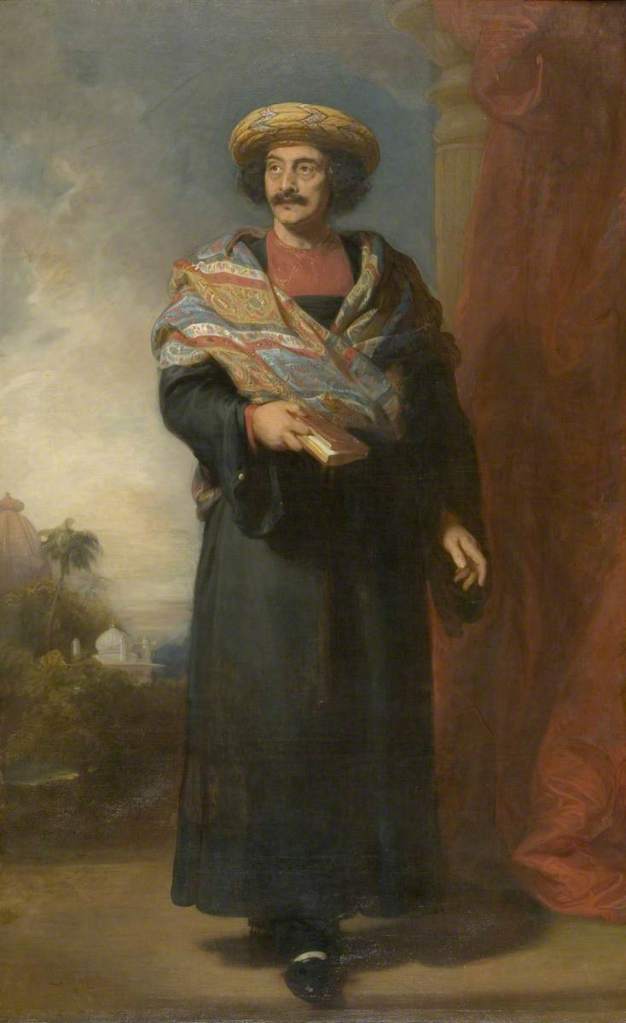
“I regret to say,” wrote Raja Ram Mohan Roy in 1828, “that the present system of religion adhered to by the Hindus is not well calculated to promote their political interest. The distinctions of castes introducing innumerable divisions and sub-divisions among them has entirely deprived them of patriotic feeling, and the multitude of religious rites and ceremonies and the laws of purification have totally disqualified them from undertaking any difficult enterprise. It is, I think, necessary that some change should take place in their religion at least for the sake of their political advantage and social comfort.”
Written at a time when Indians had just begun to experience the intellectual and cultural turmoil that characterised social life in 19th-century India, this represented the immediate Indian response. The British conquest and the consequent dissemination of colonial culture and ideology had led to an inevitable introspection about the strengths and weaknesses of indigenous culture and institutions. The response, indeed, was varied but the need to reform social and religious life was a commonly shared conviction. The social base of this quest which was generally, but not altogether appropriately been called the renaissance, was the newly emerging middle class and the traditional as well as western educated intellectuals. The socio-cultural regeneration in 19th-century India was occasioned by the colonial presence, but not created by it.
The spirit of reform embraced almost the whole of India beginning with the efforts of Raja Ram Mohan Roy in Bengal leading to the formation of the Brahmo Samaj in 1828. Apart from the Brahmo Samaj, which has branches in several parts of the country, the Paramahansa Mandali and the Prarthana Samaj in Maharashtra and the Arya Samaj in Punjab and North India were some of the prominent movements among the Hindus. There were several other regional and caste movements like the Kayasth Sabha in Uttar Pradesh and the Sarin Sabha in Punjab. The backward castes also started the work of reformation with the Satya Sodhak Samaj in Maharashtra and the Sri Narayana Dharma Paripalana Sabha in Kerala. The Ahmadiya and Aligarh movements, the Singh Sabha and the Rehnumai Mazdeyasan Sabha represented the spirit of reform among the Muskims, the Sikhs and the Parsis respectively. Despite being regional in scope and content and confined to a particular religion, their general perspectives were remarkably similar; they were regional and religious manifestations of a common consciousness.
Although religious reformation was a major concern of these movements, none of them were exclusively religious in nature. Strongly humanist in inspiration, the idea of otherworldliness and salvation were not a part of their agenda; instead their attention was focused on worldly existence. Raja Ram Mohan Roy was prepared to concede the possible existence of the otherworld mainly due to its utilitarian value. Akshay Kumar Dutt and Ishwarchandra Vidyasagar were agnostics who refused to be drawn into any discussion on supernatural questions. Asked about the existence of God, Vidyasagar quipped that he had no time to think about God, since there was so much to be done on earth. Bankimchandra Chatterjee and Vivekananda emphasised the secular use of religion and used spirituality to take cognisance of the material conditions of human existence.
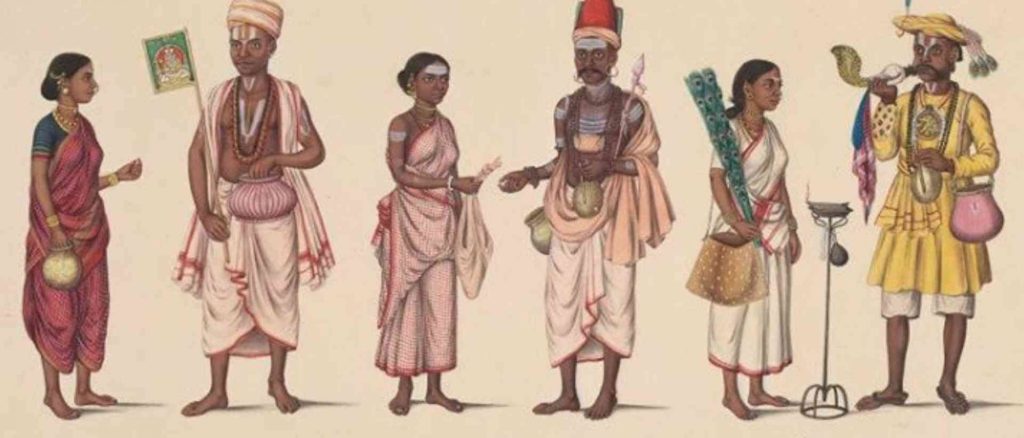
Given the inter-connection between religious beliefs and social practices, religious reformation was a necessary pre-requisite for social reform. “The Hindu meets his religion at every turn. In eating, in drinking, moving, sitting, standing, he is to adhere to sacred rules, to depart from which is sin and impiety.” Similarly, the social life of the Muslims was strongly influenced by religious tenets. Religion was the dominant ideology of the times and it was not possible to undertake any social action without coming to grips with it.
Indian society in the 19th century was caught in a vicious web created by religious superstitions and social obscurantism. Hinduism, as Max Weber observed, had “become a compound of magic, animism and superstition” and abominable rites like animal sacrifice and physical torture had replaced the worship of God. The priests exercised an overwhelming and, indeed, unhealthy influence on the minds of the people. Idolatry and polytheism helped to reinforce their position. As suggested by Raja Ram Mohan Roy, their monopoly of scriptural knowledge and of ritual interpretation imparted a deceptive character to all religious systems. The faithful lived in submissions, not only to God, the powerful and unseen, but even to the whims, fancies and wishes of the priests. There was nothing that religious ideology could not persuade people to do – women even went to the extent of offering themselves to priests to satisfy their carnal pleasures.
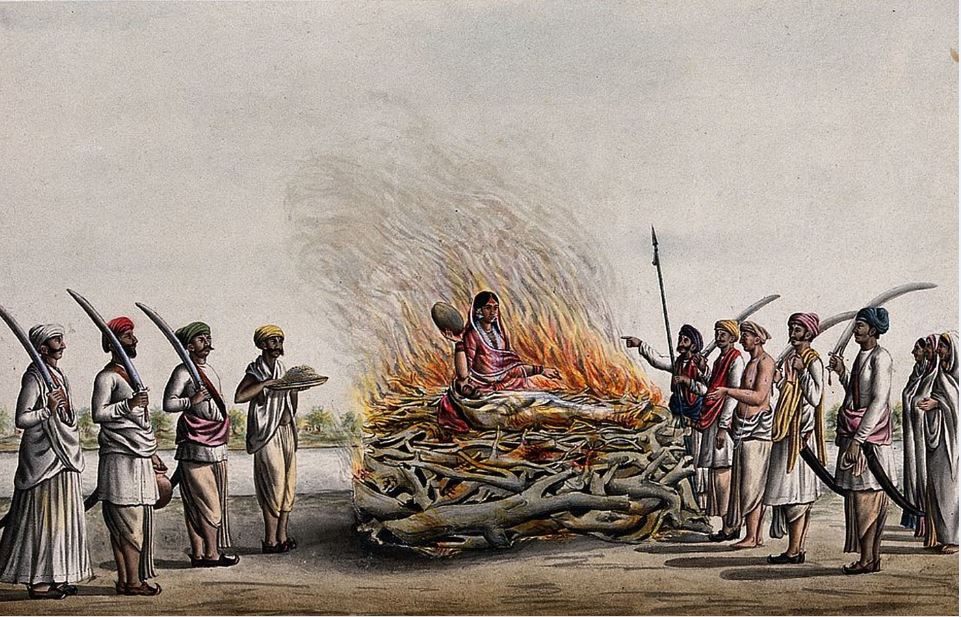
Social conditions were equally depressing. The most distressing was the position of women. The birth of a girl was unwelcome, her marriage a burden and her widowhood inauspicious. Attempts to kill girl infants at birth were not unusual. Those who escaped this initial brutality were subjected to the violence of marriage at a tender age. Often the marriage was a device to escape social ignominy and, hence, marital life did not turn out to be a pleasant experience. An 80-year-old Brahmin in Bengal had as many as two hundred wives, the youngest being just eight years old. Several women hardly had a married life worth the name, since their husbands participated in nuptial ceremonies for a consideration and rarely set eyes on their wives after that. Yet when their husbands died, women were expected to commit Sati which Ram Mohan described as “murder according to every shastra.” If they succeeded in overcoming this social coercion, they were condemned, as widows, to life-long misery, neglect and humiliation.
Another debilitating factor was caste. It sought to maintain a system of segregation, hierarchically ordained on the basis of ritual status. The rules and regulations of caste hampered social mobility, fostered social divisions and sapped individual initiative. Above all was the humiliation of untouchability which militated against human dignity.
There were innumerable other practices marked by constraint, credulity, status, authority, bigotry and blind fatalism. Rejecting them as features of a decadent society, the reform movements sought to create a social climate for modernisation. In doing so, they referred to a golden past when no such malaise existed. The 19th-century situation was the result of an accretionary process; a distortion of a once ideal past. The reformers’ vision of the future, however, was not based on this idealisation. It was only an aid and an instrument – since practices based on faith cannot be challenged without bringing faith itself into question. Hence, Raja Ram Mohan Roy, demonstrated that Sati had no religious sanction, Vidyasagar did not “take up his pen in defence of widow marriage” without being convinced about scriptural support and Dayanand based his anti-casteism on Vedic authority.
This, however, did not mean a subjection of the present to the past nor a blind resurrection of tradition. “The dead and the buried,” maintained Mahadev Govind Ranade, the doyen of reformers in Maharashtra, “are dead, buried, and burnt once for all and the dead past cannot, therefore, be revived except by a reformation of the old materials into new organised forms.” Neither a revival of the past nor a total break with tradition was contemplated.
***
The above excerpts were taken from Bipan Chandra’s book India’s Struggle for Independence.

