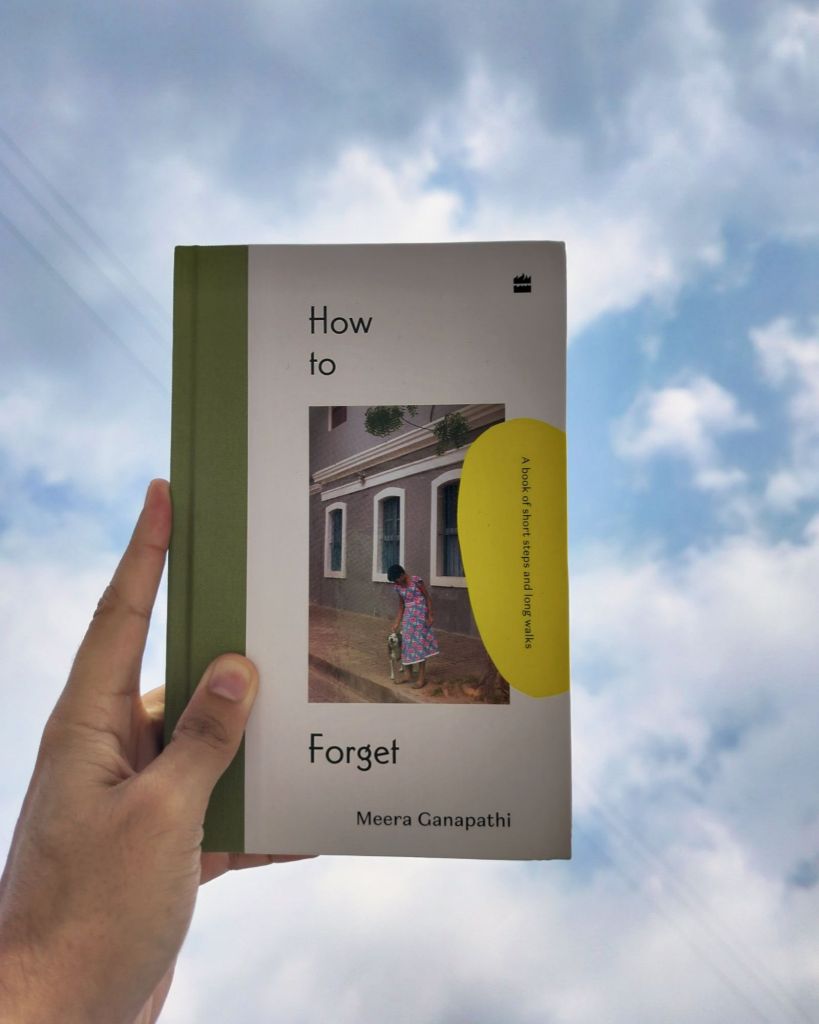
I love it when books leave an aftertaste. By that, I mean when the writer’s perspective has found a home in my mind and makes me see the world with fresh eyes. How to Forget is one such book. Though its title promises forgetfulness, ironically, what it gives you is a quiet remembering—of overlooked sensations, of passing faces, of forgotten longings, and sometimes even of forgotten selves.
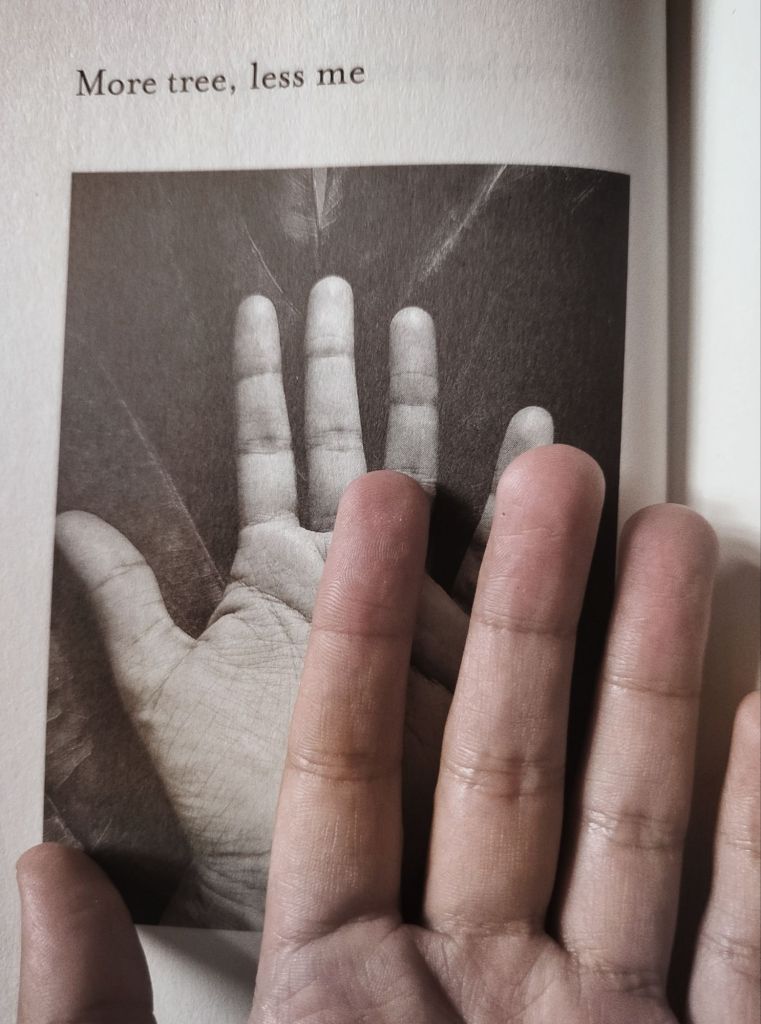
The book is a collection of over fifty short pieces, most of them oscillating somewhere between poetry and prose. It’s a unique experience, I must say, where the writer, while not being too fussy about the existing forms, has created one for herself. Some pages contain a few verses, then there are some with just a sentence winding across space like a glimmering asteroid. There are black and white photographs placed carefully, which allow your gaze to linger, and then to reflect and meditate.
Meera Ganapathi’s Writing
It was something that I could not ignore. Meera Ganapathi’s writing flows and flows, to the point where it leaves you overwhelmed. It was rather strange (it would be a sheer genius if it’s deliberate) that, to me, her writing felt like walking. There is rhythm in the way one sentence ends sharply, and the next flows on, gentle and meditative. The experience is like taking a walk with no clear destination, where you forget why you began, but begin to notice the shape of shadows, the sound of people chattering far away, the fragrances coming out of someone’s kitchen. It is a kind of writing that does not lead but accompanies. It is also the kind of writing that reminds you: slowing down is not losing time, it is reclaiming it.
The idea is to remain in a state of constant departure while always arriving.
Waking Life (2001)
The act of walking (it’s simple and ancient!) is the underlying theme of the book. But it is not about walking for health or productivity. These are not fitness walks. These are soul walks, wandering walks, memory walks. Often, the writer seems to be walking and remembering, walking and forgetting, walking and simply noticing. As Nietzsche once said, “Only ideas won by walking have any value”—a sentiment I kept feeling throughout this book. More than anything, the book inspires a new gaze: a way of noticing the world with each new step.
Reading How to Forget
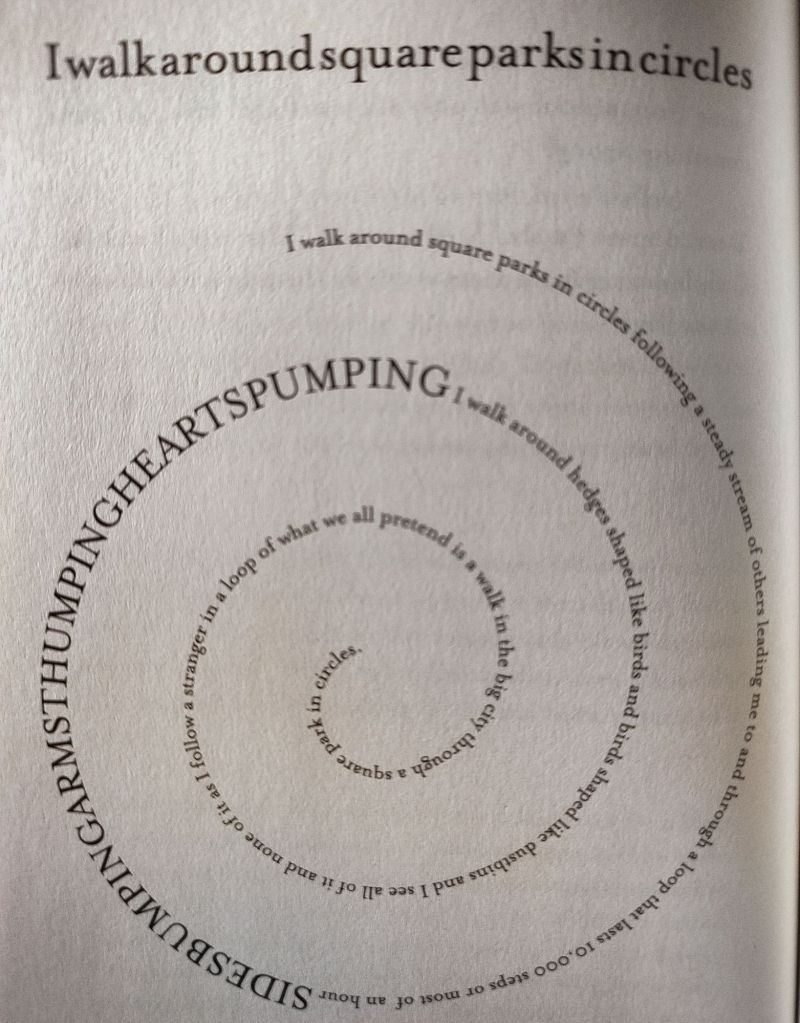
I read and reread several chapters in this book. One such chapter is called I walk around square parks in circles. It’s just one long sentence, looping like the motion it describes. The sentence itself becomes a kind of park, the reading a form of circling. It’s one of those moments where language and experience blur, and you are no longer sure whether you are reading or walking yourself. In such moments, my focus immediately shifts from the contents of the book to the labour of the writer.
There is another piece titled What I want my child to know and have as a child—again, a single, long sentence. How long? Well, it runs for a few hundred words. What pours out of it feels like an intimate alliance of desire and nostalgia. Finding rupees in washed shorts-pockets, one bee sting for education, finding horses in waves, uncontrollable laughter, and dozens more.
I was particularly moved by the feminine gaze that pervades throughout this collection. There’s a chapter where Meera wonders why women often get left behind when they go walking with their male partners, the things they tell themselves and the excuses men make. It’s such a small detail, and yet it opens so many questions. These quiet moments of gendered walking (who leads, who lags, who watches, who is watched) are metaphors for much deeper truths.
Another such poem that made me think was titled Moisturize the Night. Let’s read it and reflect on the last couple of lines.
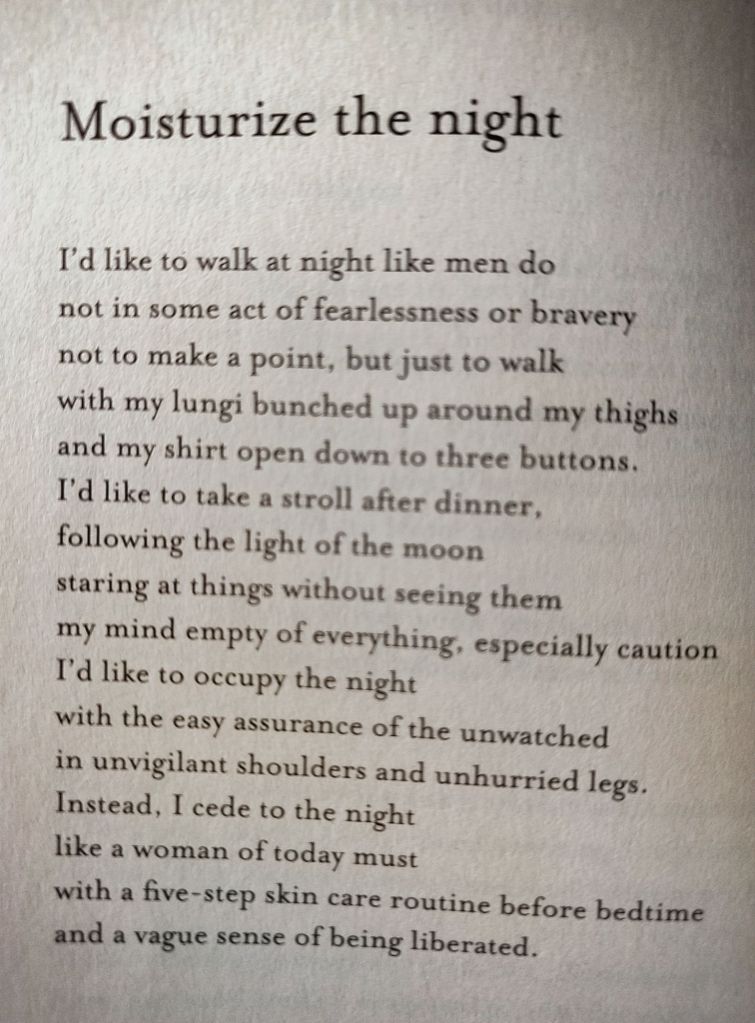
Such is the power of Meera’s perspective in the book. Not because it’s about women per se, but because it looks at the world with an attentiveness that is so often gendered female: the sensitivity to subtlety, the noticing of moods, the invisible emotional labor of remembering and forgetting, again and again. There is no loud feminism in the book, but a soft, stubborn one—the kind that asks us to simply observe what is already there. It’s an exercise in mindfulness.
At times, while reading, I found myself suddenly still. No analysis, no interpretation, just a kind of being. For instance, the idea that walking helps you forget, and in the very act of forgetting, you end up remembering what you didn’t know you were aware of. This paradox kept returning. Isn’t that how most of our emotions work? Certainly grief, I would think. You try to move past it, and in the motion, it finds you again. Even memory, how we misplace it only for it to bloom again unexpectedly, like a smell from childhood.

When I finished reading it, I didn’t write about it straightaway. I wanted to go for a walk. A real one, maybe a slow drift down the lanes of my own neighbourhood. And I did exactly that. I realised that’s what good writing can do. It not just informs you, or entertains you, but repatterns you.
Meera Ganapathi’s writing inspired me in its own charming way. And perhaps that is the book’s final offering: a return to writing as art, not as argument. Not even as literature, in the way we now speak of literature. But as something older. As something like walking itself: human, patient, quiet, enduring.
Some books take you somewhere. How to Forget teaches you to stay.
Note: Click here to listen to our short podcast on this book.
 Kalampedia