
Previously, we meditated on summers as well rains with the help of Kalidasa’s masterpiece Ritusamhara. Now, let’s move ahead and read what the great poet from ancient India had to say on autumn.
How nature responds in autumn
Kalidasa, in his usual style, begins with the descriptions of landscapes, flora and fauna, how the nature responds to the change in seasons. He does so by making comparisons with the feminine ideal of beauty.
The clear streams move gently like proud women,
becoming calm with their soft and unhurried steps,
leaping, glittering fish—girdles around their waists,
white swans—pearl necklaces around their bosoms,
and the broad sandy banks—their curved hips.
Isn’t it fascinating? How Kalidasa always finds a way to describe feminine beauty through different elements in nature! That’s what makes it so romantic.
Moving further, Kalidasa further paints the picture of the sky after the monsoon season.
Having shed the rain, swayed by the wind
clouds are splintered into hundreds of cloudlets
and shine like silver conch shells at places,
at others, they are pale like lotus stalks.
The sky appears stately like a king
fanned gently by the royal chowries.
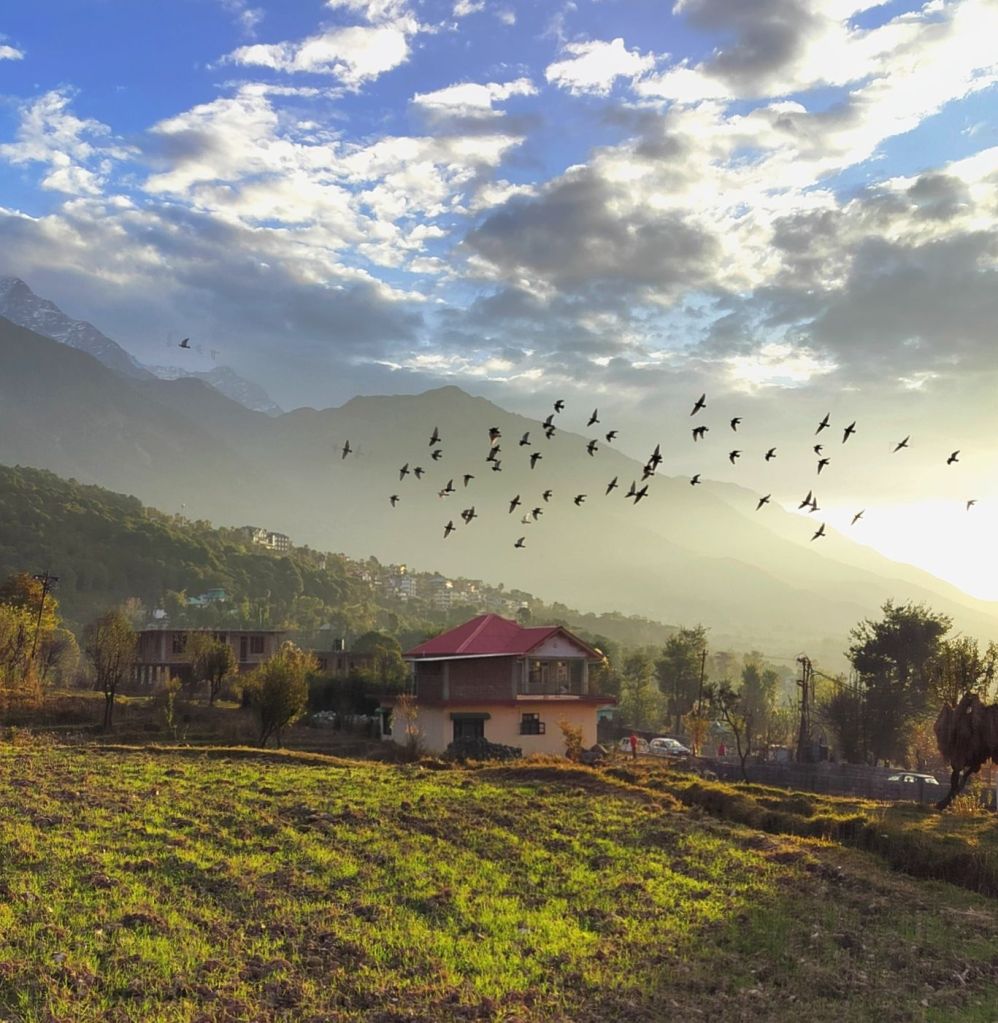
At this point, one can only appreciate the kind of creativity Kalidasa exhibits through his metaphors. And not only does he describe the autumn sky in one stanza, but he keeps coming back to it, describing how the sky appears during different times of the day, and night.
Autumn’s influences on people
So, what effect does it have on the people? How do men respond? More importantly, how do women respond? Kalidasa tells about that too.
The fields full of ripened paddy, adorned
with herds of healthy cattle—flourishing,
the horizon reverberating with pleasant cries
of Saras and Hamsa, fill people’s heart with joy.
What about women? Here is what he says:
The radiance of the moon is now found in the faces
of charming women, the sonorous cries of Hamsas
in the tinkling of their gem-studded anklets,
and the deep-red glow of Bandhuka blossoms
in their luscious lips. Who knows where
the glorious autumn is departing?
How does that sound to you? Let me know your thoughts on this.
If you’re interested in listening to the entire chapter on Autumn, click here.
Reference books:
The Six Seasons—Ritusamhara: Kalidasa by Abhay K.
 Kalampedia