
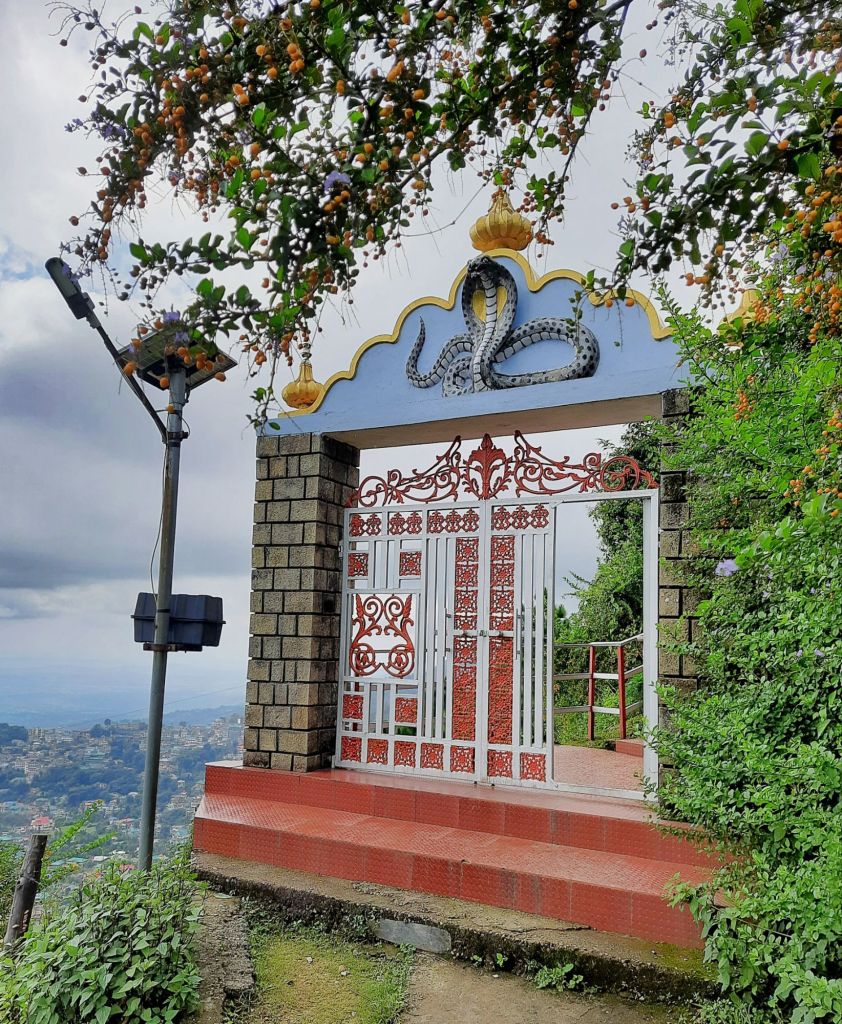
I grew up in the Himalayas, something that I have mentioned at least a billion times before. What I may not have told you is the fact that serpent worship was a part of everyday life there. In fact one of the most visited temples in my neighbourhood was dedicated to a local serpent deity.
There was one particular yearly ceremony in the temple that always fascinated me. After the supposed battle of gods and demons, a snake would appear in the temple the very next day. People saw it not as coincidence but as confirmation that the gods had won. And whenever they lost, the snake wouldn’t show up. Fascinating, right?
It was with these memories that I picked up K Hari Kumar’s Naaga, a book devoted to serpent worship (ophiolatry, as it is called), particularly in the Indian context. It takes you into the fascinating, layered world of serpents (author prefers the word serpent, as opposed to snake) and their stories.
The book is divided into four parts. The first part lays the foundations, introducing serpent worship in India along with various naaga deities. It also takes you to the subterranean realm of Naagaloka. The second part examines how serpent worship manifests across India, from Alexander’s encounter with serpent-worshipping cults in Punjab to the awe-inspiring ritual of Dakkebali in Karnataka. The final two sections are devoted to mythologies and folktales (about the serpents of course) — and there are so many of them that you will lose count.
The book begins with serpents in world mythology. We briefly meet Jörmungandr, the world-serpent of Norse lore, the cosmic egg of ancient Egypt, and many more. Then, it piles up story after story, pausing to ask questions along the way: Why are serpents so often cast in a negative light? Was it the biblical account of Adam and Eve that fixed this narrative in the collective mind? Or the way snakes are framed in art and popular culture today? From there, the text leads us back to India and into Naagaloka, the world that continues to shape rituals, festivals, and everyday beliefs in the subcontinent.
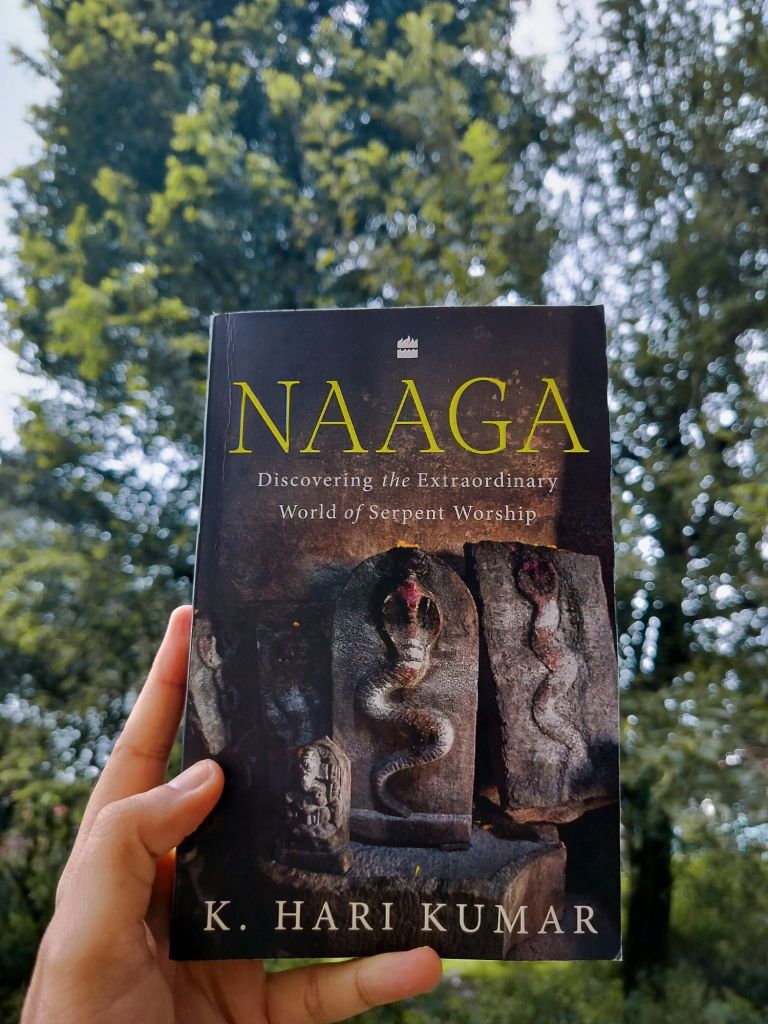
Yet, despite the amount of its stories and the research that must have gone behind it, I found myself struggling with Naaga at times. There is this sheer overload of information. Without a narrative thread binding the stories together, it feels like reading a manual which is reference-heavy and bland in taste. I wish the author had included his personal journey, if there was no other larger narrative to carry the reader along.
Another issue I had was about the style of writing. The prose often feels dry, lacking emotions or a personal voice. Let me illustrate this point with the help of the below paragraph taken from the book:
My earliest memories of snakes are threaded with fear. At six years old, in the quiet village of Kanjikode, Kerala, I stumbled upon a cobra coiled near an old well. Its presence was terrifying, igniting a primal terror in my young heart. My instinct was to run, but my mother’s calm voice cut through my trembling, ‘Don’t run. It will anger them. There are gods, the Naagadevatas. Do not disturb them, do not fear them. When you see one, do not retaliate. Instead stand back and let them pass. They won’t harm you. Pray.’
Just read it carefully and you will notice the issue here.
Stumbled upon a cobra? Igniting a primal terror in my young heart?
Is that how you would describe a child’s encounter with a snake?
Then mother saying: Don’t run. It will anger them. There are gods, the Naagadevatas. Do not disturb them, do not fear them. When you see one, do not retaliate. Instead stand back and let them pass. They won’t harm you. Pray.
Is that how a mother warns a child? Would she ever say, Gods, the Naagadevatas?
The phrasing is somewhat mechanical and oddly polished. It feels like something crafted for effect rather than coming from a raw memory. And you find the same pattern page after page, paragraph after paragraph. I cannot make a claim that AI was used in polishing the text (obviously, the writer would deny that), but my point is, the effect is just the same. The memory reads like a staged recollection. It fails to connect emotionally, because the voice has lost the awkwardness, the style that would make it authentic.
And that is, in a way, my overall feeling towards the book. Naaga is a vast, well-researched catalogue of myths, stories, and practices about serpents. One cannot deny the effort that has gone into it. It succeeds as a reference when one wants a particular story or ritual. But it does not fully succeed as a narrative that draws the reader in. Instead of slithering freely like a serpent through forest, it often feels pinned down, static. So, if you come to it seeking the kind of storytelling that makes you fall in love with reading, you may leave feeling unsatisfied.
Note: You can listen to some of these serpent stories in our podcast here: Part 1, Part 2.

