
The immigration debate is no longer confined to policy rooms or political speeches. Across much of the Western world, it has seeped into everyday life — into conversations, resentments, and anxieties. There is a growing pushback from native populations, a sense of unease about changing demographics, and a hardening of borders not just in law, but in sentiment.
It is within this charged atmosphere that Super by Lindsay Pereira situates its story.
At the heart of the novel are two characters who exist on opposite ends of this global movement. Sukhpreet, a college student from Jalandhar, embodies a familiar aspiration. He dreams of Canada with a kind of romantic innocence, seeing it as a land where life will finally begin in earnest. His longing is not unusual, it echoes the dreams of countless young men and women who look westward for opportunity and dignity.
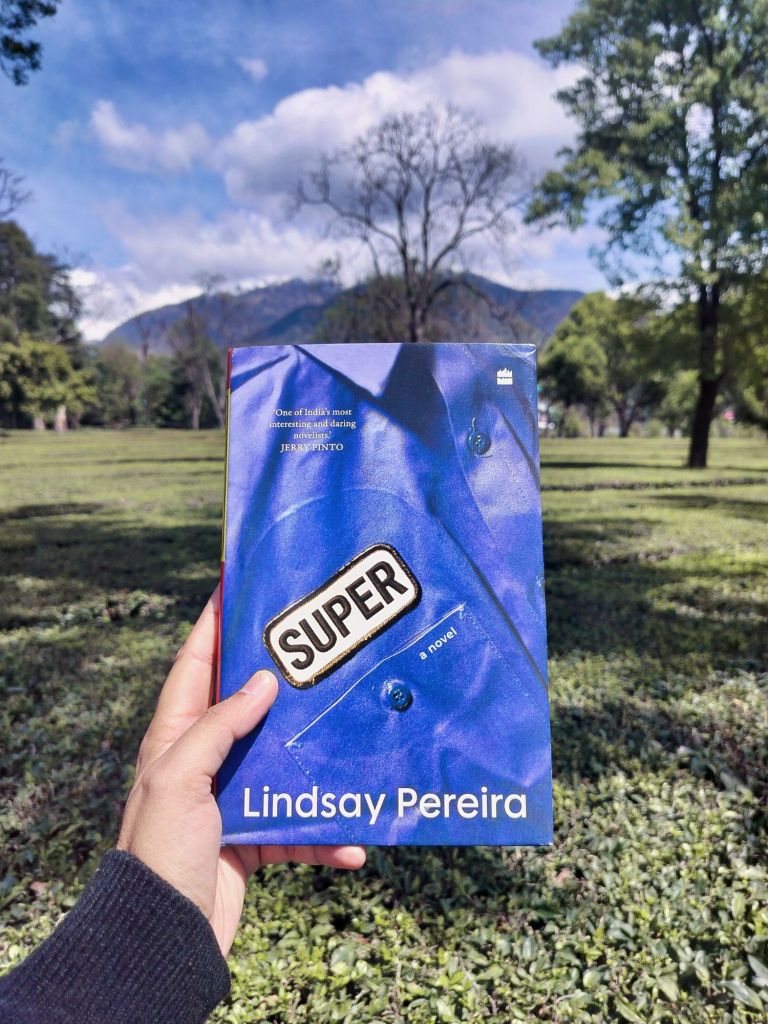
On the other side is Maynard, a Canadian who lives a quiet, almost withdrawn life with his dog, Woody. Beneath that quiet, however, is a simmering anger. He watches as more immigrants arrive, and what for some is hope becomes, for him, a source of resentment and alienation.
The novel unfolds over four years, gradually drawing these two distant worlds closer. There is no dramatic suspense in the conventional sense. Instead, Pereira lets the inevitability of their collision hang in the air. When it does happen, the narrative does not move ahead in any direction, it settles. The encounter is followed by a flashback, by a movement into the past, as if to suggest that such moments are not sudden accidents but the result of long, invisible trajectories.
What stands out most is Pereira’s writing style. It is simple, unadorned, almost conversational. There is no attempt to impress with linguistic complexity, yet the emotional weight of the story remains intact. He sketches both worlds with clarity: the hopeful, restless energy of Sukhpreet’s life in India and the strange, brittle solitude of Maynard’s existence in Canada.
But the real strength of Super lies in what it reveals. We are often told a particular version of the immigration story — the one where someone from a “third world” country struggles, perseveres, and eventually succeeds in the “first world.” It is a narrative of upward movement, of grit rewarded.
Pereira turns that narrative inside out.
He shows us the cost of that dream. The compromises, the loneliness, the cultural dislocation. And perhaps most unsettlingly, he shows that arrival is not resolution. That even after reaching the promised land, life can remain fractured, uncertain, and at times, deeply tragic.
This is not a book that comforts. It unsettles. It forces you to look again at a dream that many of us take for granted. In a country like ours, where the idea of going abroad still carries immense prestige, Super asks for a pause. It asks us to reconsider, not the possibility of migration, but the mythology around it.
Perhaps that is why this book feels necessary.
Because sometimes, before chasing a dream, it is worth understanding its shadow.
 Kalampedia