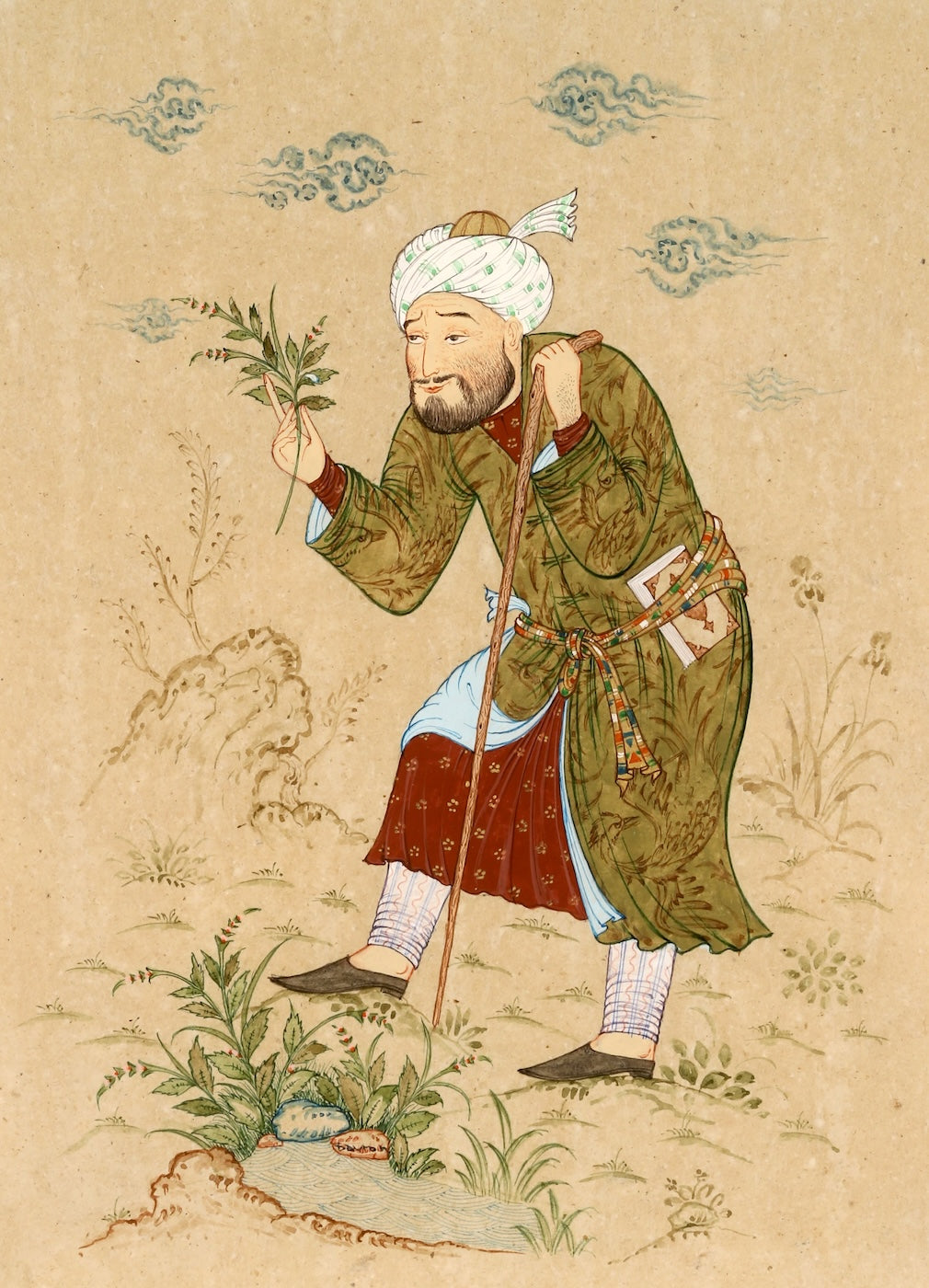
When we speak of health in the modern world, we usually mean treatment. Diagnosis followed by intervention. A problem isolated, named, and acted upon. Ibn Sina, known in the West as Avicenna, worked from a very different starting point. For him, health was not something restored after breakdown. It was something cultivated daily, through attention to the body, the mind, the environment, and the rhythms that bind them together.
His most influential medical work, The Canon of Medicine, written in the early eleventh century, is not merely a catalogue of diseases and remedies. It is a systematic account of how human life sustains itself, and how it quietly drifts toward illness when balance is lost. For centuries, this text shaped medical education across the Islamic world and Europe, not because it offered miraculous cures, but because it offered coherence.
At the heart of Ibn Sina’s approach lies the idea of mizaj, or temperament. Every individual, he argues, is composed of a unique balance of qualities: hot and cold, moist and dry. Health is the state in which these qualities remain proportionate. Illness arises when they fall out of harmony. This is not metaphorical language. Ibn Sina uses it to explain digestion, sleep, emotional states, and susceptibility to disease. A person prone to anxiety, for example, is not simply psychologically troubled. Their temperament may be excessively dry or warm, affecting both mind and body.

What is striking is how preventive his medicine is. In the Canon, Ibn Sina devotes long sections to what he calls the “six essential causes” of health: air, food and drink, physical movement and rest, sleep and wakefulness, evacuation and retention, and emotional states. These are not minor lifestyle notes placed at the margins of treatment. They are foundational. Before prescribing drugs, he asks whether the air is clean, whether meals are appropriate to the person’s constitution, whether grief or fear has unsettled the inner balance.
Food, in Ibn Sina’s system, is medicine long before medicine is required. He classifies foods according to their qualities and effects on the body. Some strengthen, some cool, some dry, some generate excess heat. Eating becomes an act of self-knowledge. What nourishes one person may harm another. This insistence on individual difference resists standardisation. Health, here, cannot be reduced to universal rules.
Equally important is Ibn Sina’s understanding of emotional life. He does not treat emotions as secondary or abstract. Joy, anger, sorrow, and fear alter the body’s internal climate. Prolonged grief, he notes, weakens the vital spirit and makes the body vulnerable to illness. Sudden fright can disrupt the heart’s rhythm. Healing, therefore, cannot ignore the inner world. The physician must attend to the patient’s circumstances, losses, habits, and relationships.
In his clinical observations, Ibn Sina often describes cases where treatment succeeds only after emotional causes are addressed. A famous example involves a young man who appears physically ill but recovers once his concealed love is acknowledged. This is not sentimentality. It is diagnostic attentiveness. Ibn Sina is showing that the body speaks when the mind is constrained.
Even when he turns to pharmacology, the tone remains careful rather than aggressive. Drugs are graded by strength, and the mildest effective remedy is preferred. Overmedication, he warns, can disturb the body’s natural intelligence. Healing is not an act of domination but of cooperation. The physician assists the body in returning to its own equilibrium.
Underlying all of this is a philosophical conviction. Human beings are not machines assembled from parts, nor are they souls temporarily trapped in flesh. They are integrated wholes, shaped by habits, climate, food, emotions, and thought. Health is not perfection. It is adaptability. The capacity to respond without breaking.
Reading Ibn Sina today, one is struck by how modern his concerns feel, despite the language of humours and temperaments. Burnout, anxiety, digestive disorders, sleep disruption, chronic inflammation. These are often treated as isolated problems now. Ibn Sina would see them as signals. Signs that life has slipped out of proportion.
His work does not offer quick fixes. It offers a discipline of attention. To notice what enters the body. To respect the pace of recovery. To understand that healing is not always about adding something new, but about removing excess and restoring rhythm.
In this sense, Ibn Sina’s medicine is not only historical. It is quietly corrective. It reminds us that health is not a battle to be won, but a relationship to be tended. And that the most enduring forms of healing begin long before illness forces us to listen.
 Kalampedia