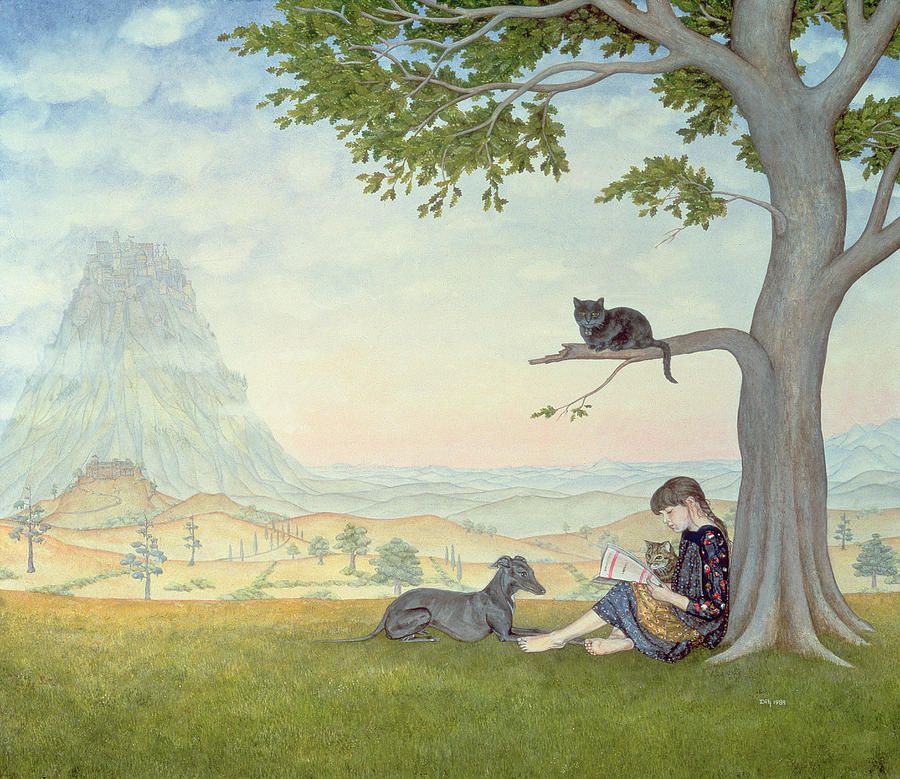
What is bibliotherapy? It’s a question many of you have been asking me, of late. Let me explain.
At its heart, bibliotherapy is the belief that stories can heal. It is the art of using literature — novels, poems, essays, myths, folktales, even philosophical texts — to help a person understand themselves and their emotions more clearly. The word itself is simple: biblio (book) + therapy (healing). But beneath this simplicity lies a vast and nuanced world, because we humans ourselves are vast and nuanced. What literature does is give us a language for the things we feel but cannot name.
The simplest way to define bibliotherapy is this:
It is the practice of reading the right book at the right moment to help a person feel seen, soothed, understood, and eventually transformed.
But bibliotherapy is not just “reading to feel better.” It is reading with intention, reading with awareness, and often, reading with guidance. It is not a quick fix or a set of instructions. Rather, it is the experience of encountering yourself in the pages of another’s truth. It is a medicine that works through words and metaphors instead of pills, through characters instead of clinical categories, through the patient unfolding of a story instead of a diagnosis.
How does bibliotherapy work?
Most of us recognise the feeling: you read a sentence and suddenly something in your chest loosens. Or you meet a character and think, This is me, only written down. Or a poem makes you stop because the poet has spoken a truth you have always lived but never expressed.
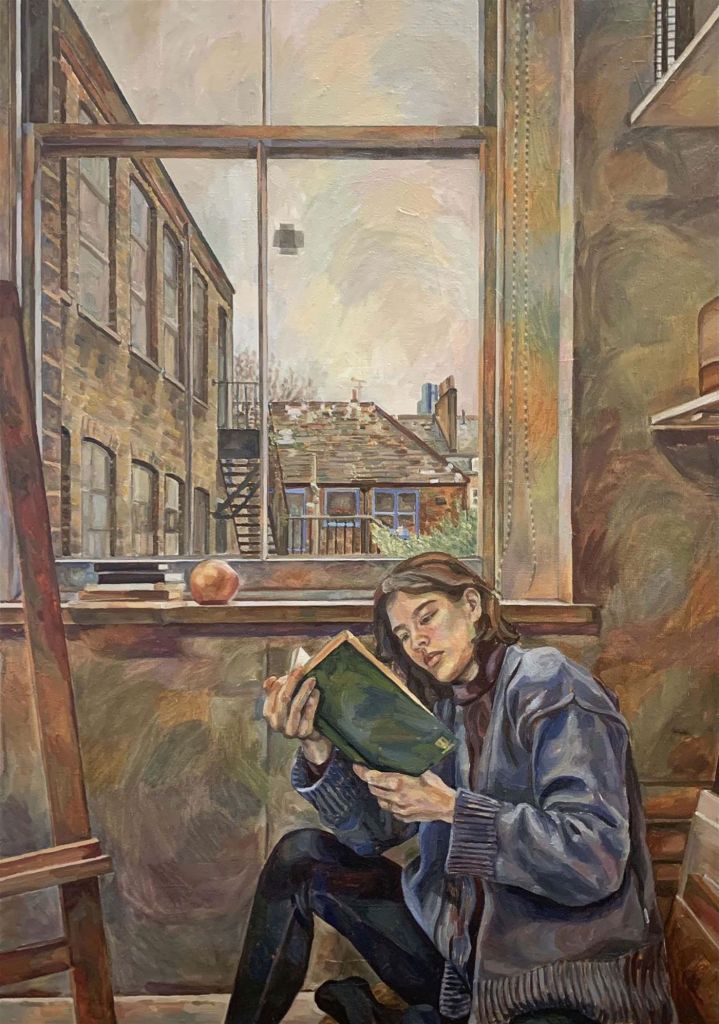
This is the central mechanism of bibliotherapy:
identification → reflection → insight → emotional release → change.
- You identify with a character or situation.
- That identification allows you to reflect safely on your own emotions.
- Through reflection, you gain insight — about yourself, about others, about the world.
- The insight leads to relief, clarity, emotional grounding.
- And slowly, quietly, something begins to shift inside you.
Stories are old, perhaps older than the humans themselves. Stories help us understand what logic cannot. They venture into the subconscious and being out the emotions that are hidden to the conscious.
Different Paths Within Bibliotherapy
Although bibliotherapy looks like a single practice, it actually has many subtle layers:
Emotional Bibliotherapy
Reading to understand and process personal feelings: grief, anxiety, heartbreak, loneliness, anger, identity, change. When Joan Didion writes in The Year of Magical Thinking, “Grief turns out to be a place none of us know until we reach it,” she becomes a companion for anyone navigating loss.
Cognitive bibliotherapy
Reading that helps reframe unhelpful thoughts or patterns.
Classic cognitive-behavioural bibliotherapy often involves structured workbooks or exercises. But literary bibliotherapy achieves it through narrative: a character’s internal evolution becomes a gateway for our own.
Developmental bibliotherapy
Books that guide a person through life transitions: adolescence, marriage, parenthood, career, ageing.
Rilke’s Letters to a Young Poet remains a timeless example, offering counsel without prescribing answers.
Spiritual and philosophical bibliotherapy
Reading that offers meaning, clarity, or direction.
Texts like the Bhagavad Gita, Meditations by Marcus Aurelius, or the Tao Te Ching become companions in existential seasons.
Creative/expressive bibliotherapy
Reading and writing used together as healing practices.
A person may read Woolf, Kincaid, or Neruda, and then write their own paragraph, poem, or memory in response. Expression turns the borrowed voice into one’s own.
What makes bibliotherapy so powerful?
1. It is non-invasive.
Nothing is forced. A story waits patiently until you’re ready for it.
2. It offers indirect emotional distance.
You can explore grief, anger, jealousy, desire, fear (often through fictional characters) without confronting yourself too abruptly.
3. It builds inner language.
Many emotional problems come from not being able to articulate one’s inner world. Books give us vocabulary for our pain and our healing.
4. It reconnects us to humanity.
When you read Dostoevsky’s trembling inner monologues or Toni Morrison’s thunderous grief, you realise you are not alone, not abnormal, not broken. You belong to a long lineage of human experience.
5. It creates slow, sustainable change.
Unlike motivational slogans or fleeting advice, a book stays with you. A single line can accompany you for years.
What Bibliotherapy Is Not
- It is not a replacement for psychotherapy when someone needs clinical care.
- It is not reading as escapism (though comfort-reading can be part of it).
- It is not about reading more, but reading with depth.
- It is not prescriptive in a harsh way. Every recommendation is more like an offering: “Perhaps this story may walk with you for a while.”
An example of bibliotherapy
Imagine a person grieving the loss of a loved one picks up A Grief Observed by CS Lewis. Lewis writes: “No one ever told me that grief felt so like fear.” The reader, who has been experiencing a strange tightness in the chest and a numb dread, suddenly understands their own body better. The sentence gives permission to feel. And from there, healing begins.
This is bibliotherapy. A single sentence can become a mirror. A book can become a companion. A story can become a gentle intervention.
Why it works across civilisations?
Throughout history — whether in India, Greece, Persia, China, Japan, Africa, or the Middle East — stories, epics, and poems have been forms of moral, psychological, and spiritual guidance.
In ancient Egypt, the “House of Healing” was filled with papyrus scrolls, because reading was considered a medical act.
In ancient India, the Mahabharata and Ramayana were recited not only for entertainment but to teach emotional intelligence, duty, sorrow, forgiveness, and the complexity of human motivation.
The modern term “bibliotherapy” was coined in 1916 by Samuel McChord Crothers in The Atlantic, but the practice is far older than the word.
In the end, bibliotherapy works because books are mirrors, windows, and doorways. They mirror our inner lives. They offer windows into the lives of others. And they open doorways into new ways of seeing, thinking, and being.
It is one of the gentlest forms of healing available to us, requiring no equipment, no setting, no expertise beyond curiosity, compassion, and a willingness to listen to the wisdom stitched between the lines.
To read with awareness is to heal slowly, tenderly, beautifully.
That is bibliotherapy.
 Kalampedia