
She wasn’t doing a thing that I could see, except standing there, leaning on the balcony railing, holding the universe together.
JD Salinger (A Girl I Knew)
It’s an idea, isn’t it? Love, as we are told repeatedly by romance writers, is the pinnacle of ecstasy. It is nothing short of a miracle when it happens. Imagine you are going about your life; nothing special is happening. Then comes the moment when the word “fall” is described as a happy feeling. You fall in love, and that’s it. Boom! That’s when the magic happens.
This is the idealised form of love that we have learned. Many of us have experienced that magical moment. I am sure you have felt it too. Maybe more than once? However, due to our idealised expectations, everything from that moment onwards often goes downhill. It’s understandable when you think about it. But that’s the thing: we don’t think when we fall in love.
So, what do we do then? Thankfully, we have books to help us navigate such difficult questions. In this case, Natasha Lunn’s book Conversations on Love comes to our aid. In her book, Natasha converses with a number of experts and explores various aspects of love—not just romantic love but love in its entirety.
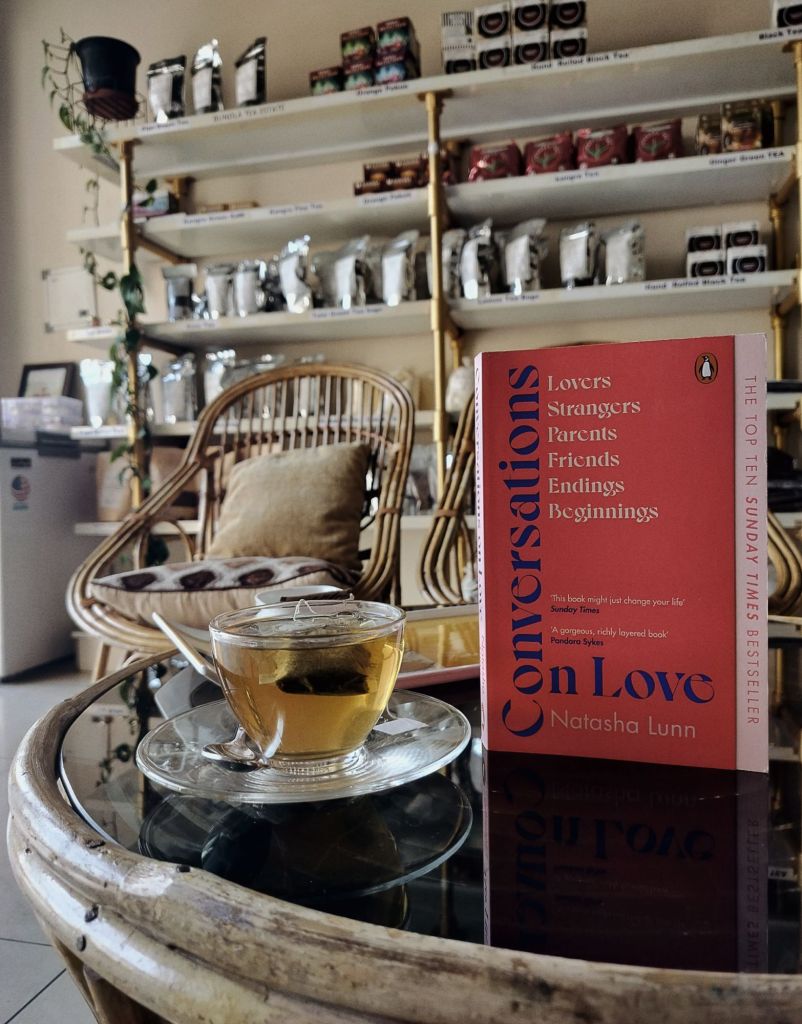
The first conversation we encounter is with Alain de Botton, an author and founder of The School of Life, which focuses on emotional health. The conversation begins with the question of loneliness—an important topic for someone who is single. Quite often, people enter relationships because they believe it will solve all their life’s problems, which may not be a good idea.
As Alain de Botton explains, such heightened expectations give rise to tremendous fear—the fear that if things don’t work out with a partner, it would be a horrible tragedy and that your life would essentially feel wasted.
So, what is the alternative?
The answer is quite paradoxical. De Botton suggests that the ability to say “I could be alone” is one of the most important guarantees of one day being with someone else in a happy way. The psychology of being alone is fascinating; it’s not always the act of being lonely that fuels this feeling but rather the narrative that plays out in our heads. For instance, while sitting alone at home on a Monday night, we might not feel as lonely as we do on a Saturday night because we assume everyone else is having fun while we are left out.
In contrast to the romantic view of love—where feelings are prioritised over thinking—De Botton advocates for the opposite approach. He argues that understanding is key to forming lasting relationships and, consequently, lasting happiness.
Our emotions are not entirely reliable. When a rather charming candidate comes into view, we can easily lose our faculties. We imagine who they are and how our lives will be together forever, believing they are the source of total happiness. At times like these, it’s useful to recognise that we’re experiencing a crush. There should be another part of our mind that acknowledges this reality—one that sympathises with our enthusiasm but still maintains a grip on reality, reminding us that the other person is a stranger with their own flaws and baggage who will add troubles to our lives just as we would to theirs. It will never be perfect; such understanding goes a long way.
This is what Alain de Botton helps us understand. But what about others and what they have to say? What about other aspects of love? We will discuss that in subsequent posts.
Note: You can listen to the entire exchange between Alain de Botton and Natasha Lunn here.
 Kalampedia