
Ramana Maharshi, born Venkataraman Iyer, was an Indian sage. He is renowned for his profound teachings on self-enquiry, a path of spiritual liberation that involves turning the mind’s attention inward to its source.
Ramana Maharshi’s clear insights and simple yet powerful approach have inspired countless seekers worldwide. His teachings, often delivered through brief and direct responses to questions, encourage individuals to investigate the nature of their own consciousness and transcend the limitations of the ego. This approach has been central in many of the Indian philosophical schools, including Buddhism.
In most of his works, Ramana Maharishi used this method of self-enquiry to understand the mind. Below are the excerpts where he discusses this concept in detail.
What is the nature of the mind?
What is called “mind” is a wondrous power residing in the Self. It causes all thought to arise. Apart from thoughts, there is no such thing as mind. Therefore, thought is the nature of mind.
Apart from thoughts, there is no independent entity called the world. In deep sleep there are no thoughts, and there is no world. In the states of waking and dream, there are thoughts, and there is a world also. Just as the spider emits the thread (of the web) out of itself and again withdraws it into itself, likewise the mind projects the world out of itself and again resolves it into itself.
When the mind comes out of the Self, the world appears. Therefore, when the world appears (to be real), the Self does not appear; and when the Self appears (shines), the world does not appear. When one persistently enquires into the nature of the mind, the mind will end leaving the Self (as the residue). What is referred to as the Self is the Atman. The mind always exists only in dependence on something gross; it cannot stay alone. It is the mind that is called the subtle body or the soul (jiva).
What is the path of enquiry for understanding the nature of the mind?
That which rises as “I” in this body is the mind. If one enquires as to where in the body the thought “I” rises first, one would discover that it rises in the heart. That is the place of the mind’s origin. Even if one thinks constantly “I,” “I,”one will be led to that place. Of all the thoughts that arise in the mind, the “I” thought is the first. It is only after the rise of this that the other thoughts arise. It is after the appearance of the first personal pronoun that the second and third personal pronouns appear; without the first personal pronoun there will not be the second and third.
How will the mind become quiescent?
By the enquiry “Who am I?” The thought “Who am I” will destroy all other thoughts, and like the stick used for stirring the burning pyre, it will itself in the end get destroyed. Then, there will arise Self-realisation.
What is the means for constantly holding on to the thought “Who am I?”
When other thoughts arise, one should not pursue them, but should enquire: To whom did they arise? It does not matter how many thoughts arise. As each thought arises, one should enquire with diligence. To whom has the thought arisen. The answer that would emerge would be “To me.”
Thereupon if one enquires “Who am I?,” the mind will go back to its source; and the thought that arose will become quiescent. With repeated practice in this manner, the mind will develop the skill to stay in its source. When the mind that is subtle goes out through the brain and the sense organs, the gross names and forms appear; when it stays in the heart, the names and forms disappear. Not letting the mind go out but retaining it in the heart is what is called “inwardness” (antarmukha). Letting the mind to go out of the heart is known as “externalisation” (bahirmukha).
Thus, when the mind stays in the heart, the “I” which is the source of all thoughts will go, and the Self which ever exists will shine. Whatever one does, one should do without the egoity “I.” If one acts in that way, all will appear as of the nature of Shiva (God).
Reference books:
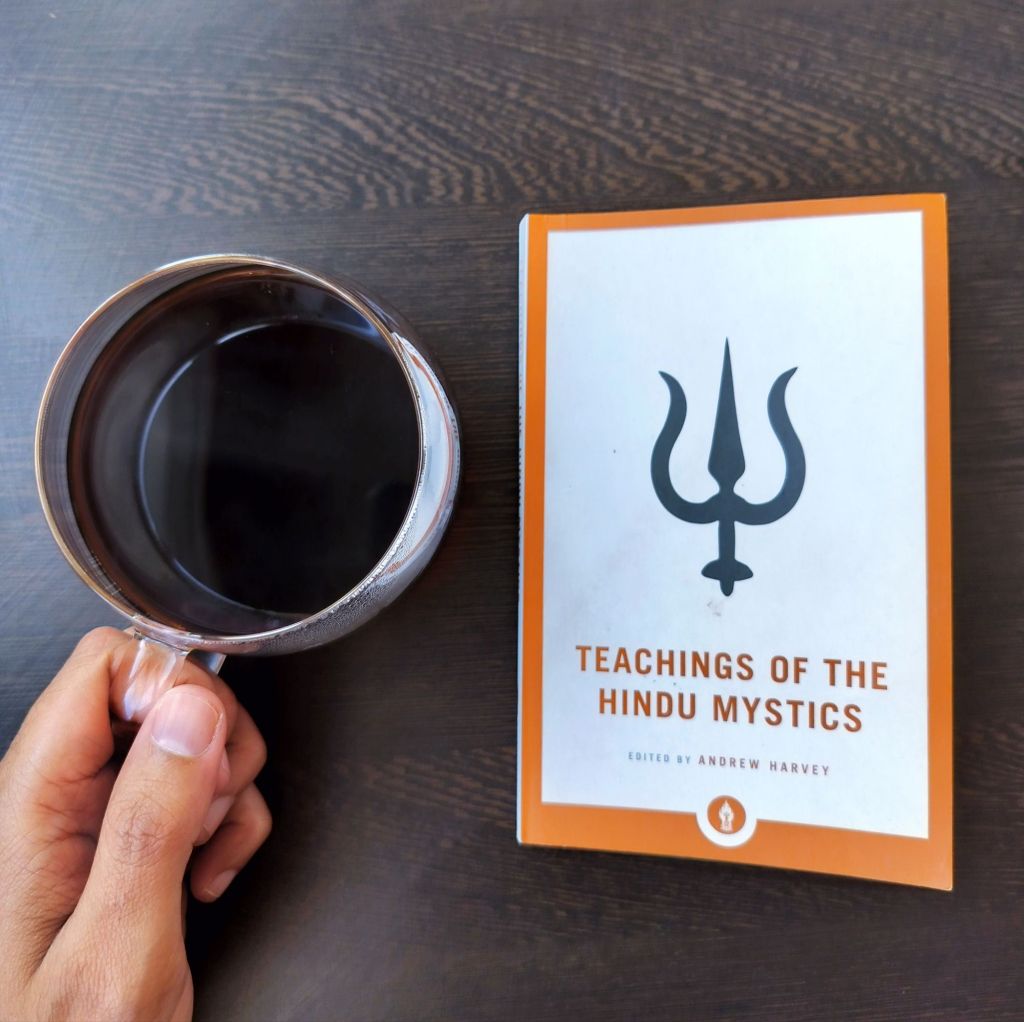
Teachings of the Hindu Mystics by Andrew Harvey
 Kalampedia