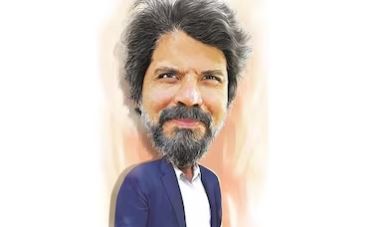
Pankaj Mishra is a renowned Indian writer and intellectual who has gained international acclaim for his insightful and thought-provoking essays and books.
His most celebrated books include From the Ruins of Empire: The Intellectuals Who Remade Asia, Temptations of the West: How to Be Modern in India, Pakistan, Tibet, and Beyond, and Age of Anger: A History of the Present. If I were to describe Mishra’s writing in a sentence, I would say it is characterised by his erudite analysis, elegant prose, and sharp wit.
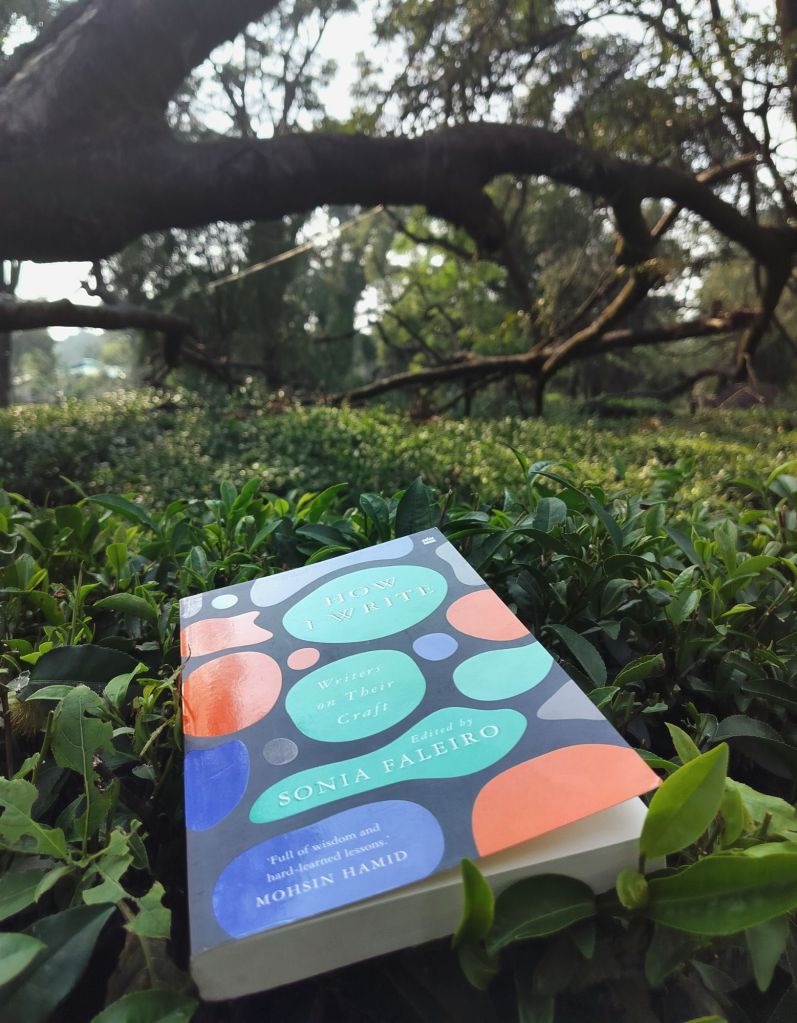
So I was particularly curious to know how he developed his craft. What was the process like? And I found the answer in a recently published book titled How I Write. It’s a collection featuring interviews with writers from the South Asian background. In the first chapter itself we find the conversation between Pankaj Mishra and Sonia Faleiro (who also happens to be the editor of this book).
Early days
Let’s start from the origins. Mishra admits that the first twenty years of his life remain the valuable source of his writings. Especially in terms of the societal exposure he got in those years. Here’s what he says:
My father worked for the railways, so we moved around quite a lot. I was exposed to the cruelties that people of a higher caste inflict on people from a lower caste; I was exposed to the communal poison of Hindu supremacists expressing nasty views about Muslims, Sikhs and Christians. … Those experiences made me, and forged my material, something that I’m still working with thirty years later, and will probably continue to work with.
It’s natural that the early exposure to the world shapes a writer’s worldview. At the same time, it provides them the raw material that can be used for a long time. Mishra knows that with the current privileges, he may not be exposed to the deeper realities of today’s Indian society. Which really made me wonder: should one always rely on one’s own impressions that were made in early years? Well, it can be debated. I would love to know your thoughts, dear reader.
Novelist writing on social issues
It’s something that you also find in Arundhati Roy’s writings. When a novelist writes about the real world problems, they do so in a manner which highlights individual’s plight. They don’t follow the traditional journalistic method where a collective identity is ascribed to a group of people and generalisations are made. No, they are very careful about getting to the depths of an issue. And this is something that you would notice in Pankaj Mishra’s books and essays.
Mishra says:
My instincts were that of the novelist inside me, because a novelist is always interested in the fate of an individual. And when that individual is suffering, that is what you respond to. I was approaching my subjects with the kind of empathetic intelligence that a novelist brings, feeling a high degree of sympathy with the people who were being victimised. I’ve never really departed from that fundamental way of looking at journalism; in the end, who are you really responsible for? What is your analytical framework? What should shape your narrative, if not sympathy with the underdog?
Putting things in context
At one point in the conversation, Mishra talks critically about VS Naipaul who had been a huge influence on him. Mishra remarks that Naipaul lacked a serious knowledge of history and so he put things in his own narrative, without actually giving a proper context. For instance, when Naipaul went to Iran, the year after the Shah was deposed, he only focused on how people turned into Islamic revolutionaries. What made them into Islamic revolutionaries wasn’t covered at all.
You have to agree with that analysis. Without putting things in context, we all can become a victim of lazy analysis. Interestingly, some people in India accuse Mishra of making the same mistake, that is putting things out of context while describing Indian society. What do you think about that? Let me know.
Note: I did a three-episode podcast series on Pankaj Mishra’s travels in India, Pakistan and Afghanistan based on his book Temptations of the West. You can check it out here.
 Kalampedia