
There’s an old debate about whether to call Kalidasa the “Shakespeare of the East” or call Shakespeare the “Kalidasa” of the West.” Irrespective of our opinions on this debate, what it does tell us is that both these poets enjoy a great stature even today. Still, it’s entirely possible that you wouldn’t have heard about the eastern counterpart of Shakespeare. That’s all right. I am here to help.
Kalidasa lived in the fifth century and wrote a number of works (in Sanskrit) spanning poetry, drama, and prose. These works have captivated readers for centuries with their lyrical beauty, profound insights, and timeless themes.
While Kalidasa is most famous for his works Abhijnana Shakuntalam and Meghaduta, another masterpiece that deserves some attention is Ritusamhara, translated as The Garland of Seasons. Ritusamhara is a perfect example of Kalidasa’s poetic genius that celebrates the six seasons of the Indian year. This lyrical work offers a vivid and evocative portrayal of nature’s beauty and the impact of the seasons on human life.
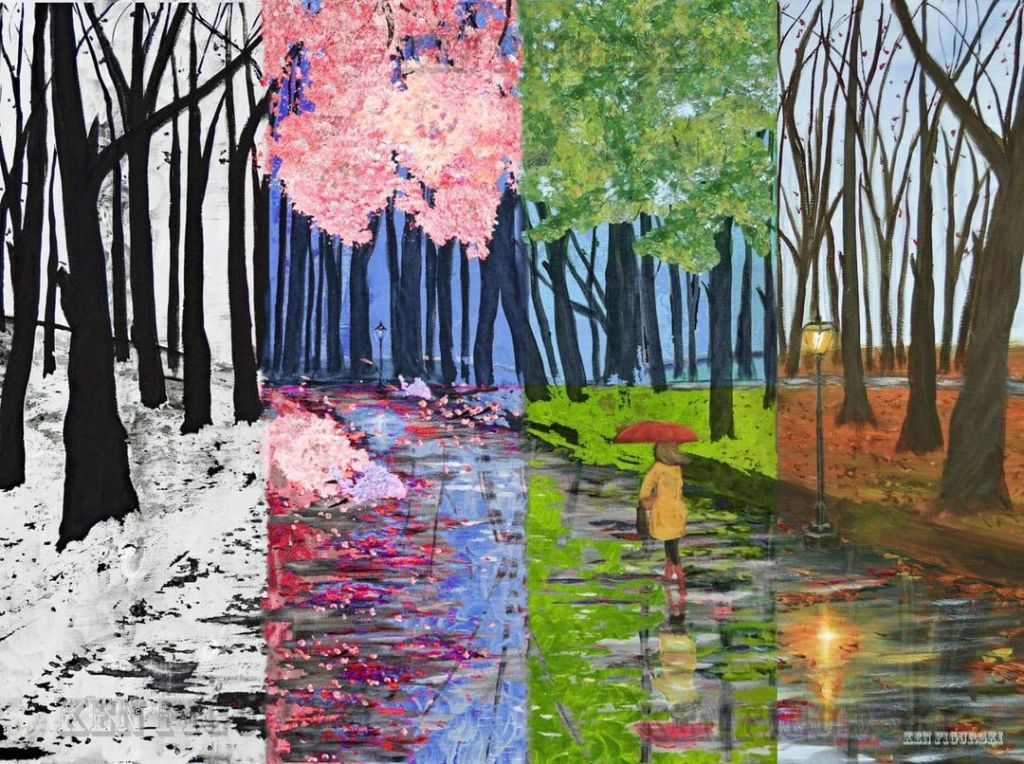
In the next few posts, I will discuss each one of these seasons, starting with the summer.
Kalidasa on Summer
The summer chapter of Ritusamhara is a deep exploration of the hottest season in India. Kalidasa paints a vivid picture of the scorching heat, the parched landscape, and the challenges faced by people and animals during this time. This is how he introduces the season to his reader.
The furious sun is ablaze,
One longs for the moon,
The pools of limpid waters
Invite a dip evermore.
Kalidasa, then, delves into the romantic and sensual aspects of the season. He paints some sensuous images of women adorned in light, flowing garments, their beauty accentuated by the summer heat.
Proud young women in beauty’s bloom,
Overcome by sweat and effusive moisture
Under arm and on perfect limbs,
Discard their cumbersome garments
And cover their high and pointed breasts
With fine linen and thin raiment.
As you can see, Kalidasa’s language is evocative, capturing the beauty of a woman. He explores the forbidden allure of clandestine meetings and the passionate embrace of lovers under the summer moon.
Slowly, Kalidasa moves on from lovers to the wild animals in the forest. His portrayal of nature in summer is equally detailed and captivating. He describes the parched landscape, the wilting vegetation, and the struggling wildlife with precision.
In the forest the might conflagaration
Has consumed the sharp dry strings of the grass blades,
And the seared leaves are blown on high
By violent gusts of wind;
The water in the pools evaporates
With the burning breath of the midsummer sun,
And the scourged precincts of the woodland
Present a fearful scene.
Kalidasa’s attention to detail is evident as he captures the subtle nuances of the natural world. He even mentions the threat of wildfires, a common occurrence during the dry summer months.
The flames grow manifold in power
In the groves of the salmali trees,
Whose hollow trunks afire
Are glowing like burnished gold;
Leaping to the boughs of neighbouring trees,
Reft of ripe and fallen leaves,
The flames invade the heart of the forest
Urged by the miscreant wind.
Kalidasa’s beautiful descriptions bring the summer season to life, allowing the reader to feel the heat, smell the smoke, and witness the struggles of nature and humanity.
How does he describe the rains? Let’s find out in the next chapter of this series.
Reference books:
 Kalampedia