Our lives are often a whirlwind of activity, a ceaseless rushing from one moment to the next. In this constant motion, we can lose touch with the simple beauty and wonder of being alive. One book that I particularly find helpful in this regard is The Miracle of Mindfulness by Thich Nhat Hanh.
The book is a gentle invitation to pause, to breathe, and to return to the present moment. It is a guidepost on a journey inward, where we discover that true peace and happiness reside not in distant achievements, but in the richness of each passing moment.
Want to know more about it?

Well, in that case, let us read together some of the excerpts from the book. It will help us learn the art of mindful living, and together, perhaps, we can learn to transform our lives into a living meditation.
Washing the dishes to wash the dishes
Thirty years ago, when I was still a novice at Tu Hieu Pagoda, washing the dishes was hardly a pleasant task. During the Season of Retreat when all the monks returned to the monastery, two novices had to do all the cooking and wash the dishes for sometimes well over one hundred monks. There was no soap. We had only ashes, rice husks, and coconut husks, and that was all. Cleaning such a high stack of bowls was a chore, especially during the winter when the water was freezing cold. Then you had to heat up a big pot of water before you could do any scrubbing. Nowadays one stands in a kitchen equipped with liquid soap, special scrubpads, and even running hot water which makes it all the more agreeable. It is easier to enjoy washing the dishes now. Anyone can wash them in a hurry, then sit down and enjoy a cup of tea afterwards. I can see a machine for washing clothes, although I wash my own things out by hand, but a dishwashing machine is going just a little too far!
While washing the dishes one should only be washing the dishes, which means that while washing the dishes one should be completely aware of the fact that one is washing the dishes. At first glance, that might seem a little silly: why put so much stress on a simple thing? But that’s precisely the point. The fact that I am standing there and washing these bowls is a wondrous reality. I’m being completely myself, following my breath, conscious of my presence and conscious of my thoughts and actions. There’s no way I can be tossed around mindlessly like a bottle slapped here and there on the waves.
The cup in your hands
In the United States, I have a close friend named Jim Forest. When I first met him eight years ago, he was working with the Catholic Peace Fellowship. Last winter, Jim came to visit. I usually wash the dishes after we’ve finished the evening meal, before sitting down and drinking tea with everyone also. One night, Jim asked if he might do the dishes. I said, “Go ahead, but if you wash the dishes you must know the way to wash them.” Jim replied, “Come on, you think I don’t know how to wash the dishes?” I answered, “There are two ways to wash the dishes. The first is to wash the dishes in order to have clean dishes and the second is to wash the dishes in order to wash the dishes.” Jim was delighted and said, “I choose the second way – to wash the dishes to wash the dishes. From then on, Jim knew how to wash the dishes. I transferred the “responsibility” to him for an entire week.
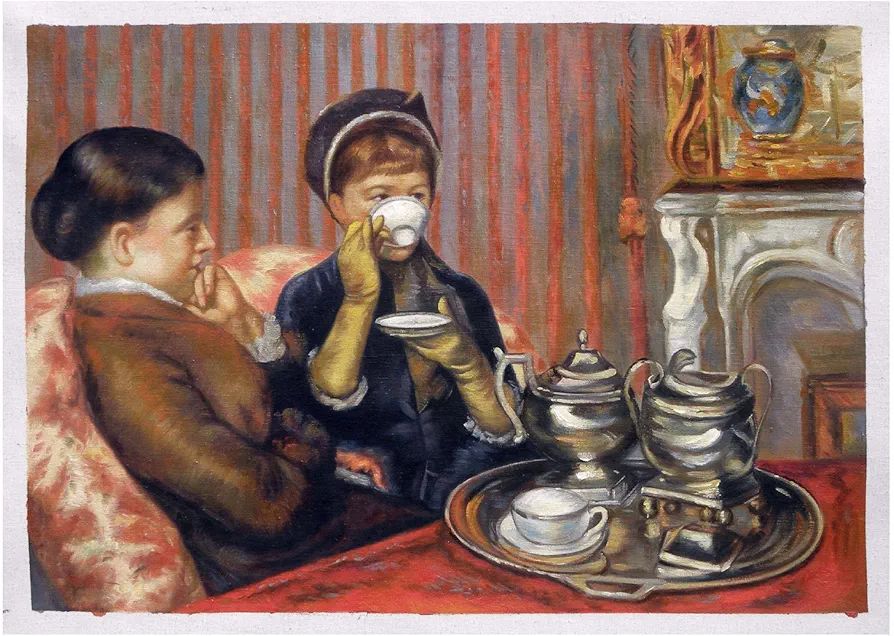
If while washing dishes, we think only of the cup of tea that awaits us, thus hurrying to get the dishes out of the way as if they were a nuisance, then we are not “washing the dishes to wash the dishes.” What’s more, we are not alive during the time we are washing the dishes. In fact we are completely incapable of realising the miracle of life while standing at the sink. If we can’t wash the dishes, the chances are we won’t be able to drink our tea either. While drinking the cup of tea, we will only be thinking of other things, barely aware of the cup in our hands. Thus we are sucked away into the future — and we are incapable of actually living one minute of life.
Eating a tangerine
I remember a number of years ago, when Jim and I were first traveling together in the United States, we sat under a tree and shared a tangerine. He began to talk about what we would be doing in the future. Whenever we thought about a project that seemed attractive or inspiring, Jim became so immersed in it that he literally forgot about what he was doing in the present. He popped a section of tangerine in his mouth and, before he had begun chewing again, had another slice ready to pop into his mouth again. He was hardly aware he was eating a tangerine. All I had to say was, “You ought to eat the tangerine section you’ve already taken.” Jim was startled into realizing what he was doing.
It was as if he hadn’t been eating the tangerine at all. If he had been eating anything, he was “eating” his future plans.
If you can eat just one section, you can probably eat the entire tangerine. But if you can’t eat a single section, you cannot eat the tangerine. Jim understood. He slowly put his hand down and focused on the presence of the slice already in his mouth. He chewed it thoughtfully before reaching down and taking another section.
Later, when Jim went to prison for a activities against the war, I was worried about whether he could endure the four walls of prison and sent him a very short letter: “Do you remember the tangerine we shared when we were together? Your being there is like the tangerine. Eat it and be one with it. Tomorrow it will be no more?”
 Kalampedia