Do you remember being curled up under a blanket, listening to your grandmother recount fantastical tales passed down through generations? That’s the happy memory of childhood for so many of us in India.
You might even remember the stories. These stories, often filled with mythical creatures, fired up our imagination and transported us to another world. At the same time, they kept us rooted in our ancient culture. It’s one of the greatest privileges in life, though often overlooked, to belong to an ancient culture and savour its fruits.
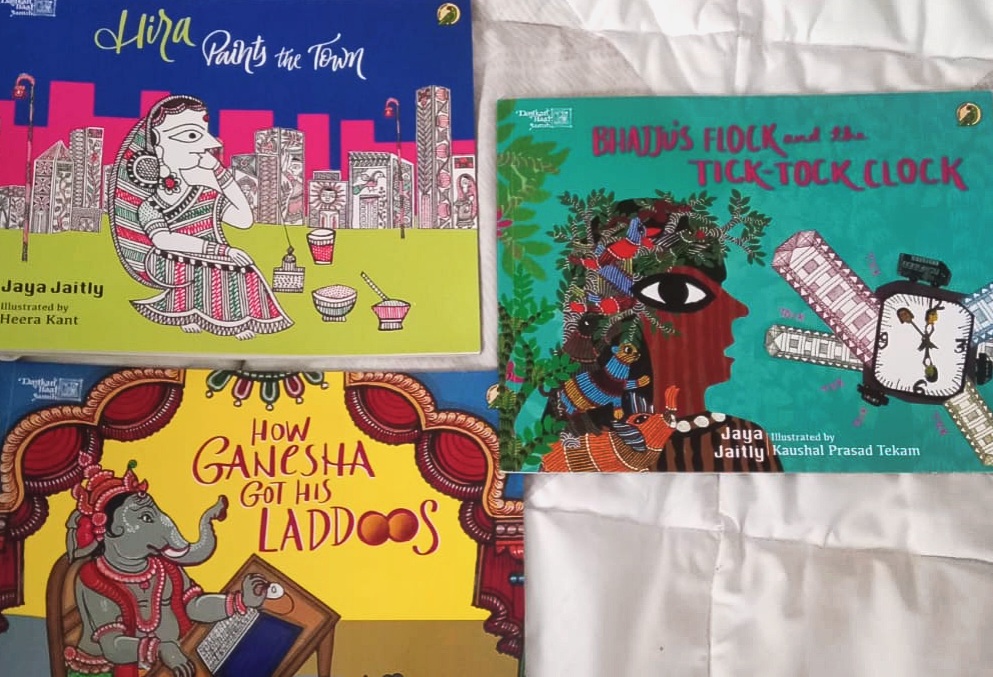
It’s understandable that since our lives have got busy these days, keeping traditions alive can be tough. But that’s where we can all step in and make a difference. Jaya Jaitly’s new children’s book trilogy is a great example–it shows how important traditions are and it does so in a fun and interesting way.
Jaitly bridges the gap between generations by bringing age-old characters to life in a way that resonates with kids today. The characters are old but settings are new. The stories highlight this underlying theme of contradictions: how the old ways are struggling to survive in the new world. It’s definitely a food for thought!
The trilogy is further enriched by stunning illustrations that incorporate Gond, Madhubani, and Odisha’s Patachitra art styles. These vibrant art forms add a whole new layer of storytelling, making the books a visual and literary treat for young ones.
Now, let me tell you briefly about each one of these stories.
How Ganesha Got His Laddoos
In the old days, there was a sweet tradition. Before big celebrations, like wedding parties, people would offer delicious food to the gods, especially Ganesha, the remover of obstacles. It was a way of saying thanks for all the good things in life. Back then, these offerings were simple and eco-friendly. People used banana leaves, and Ganesha, with his love for sweets, always enjoyed a plate of delicious laddus.
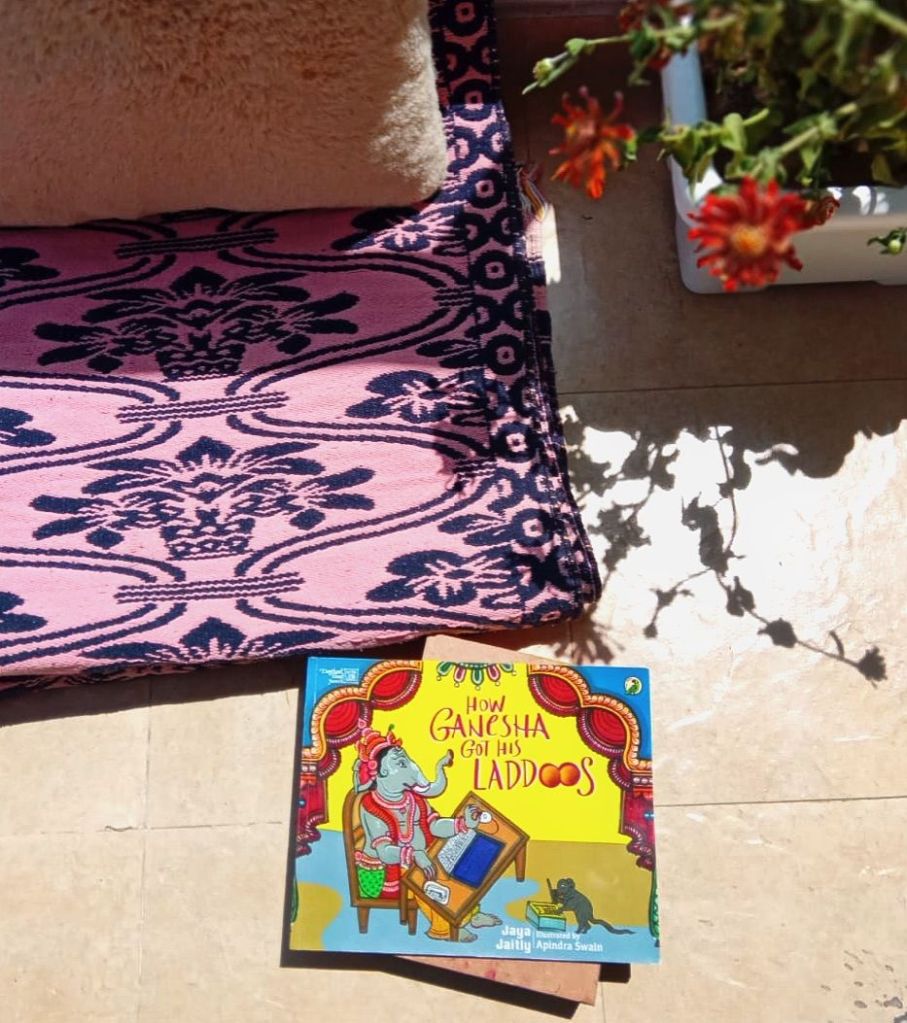
Then, the modern world came bustling in. Life got faster, and people forgot about the good old ways. Ganesha started missing his favorite laddus! So, he decided on a daring adventure–a trip to the big city! However, city life was a whole new world. He had to learn about computers, smartphones, and all sorts of new things. But Ganesha, being the clever god he is, picked it all up quickly. Finally, with a triumphant click, he ordered a huge plate of laddus, all for himself! This story reminds us that even though times change, some things, like the joy of a delicious treat, always stay sweet. All we need to do is adapt to that change.
Buy How Ganesha Got His Laddoos on Amazon
Hira Paints the Town
In the heart of Mithila lived Hira, a young woman raised in the tradition of Madhubani art. There, women learned to paint with brushes made of soft grass and colours mixed from natural wonders like rice powder. When Hira got married, her life changed. Her husband, a school teacher, worked in the city, and so Hira moved with him.
One day, visiting the school, Hira felt a pang of disappointment. The place seemed dull, devoid of colour. The children, unlike those back in Mithila, never painted. Inspired by a circular platform under a tree, Hira created a beautiful Madhubani painting. But her joy was short-lived. When she returned the next day, the painting was gone, erased by someone.
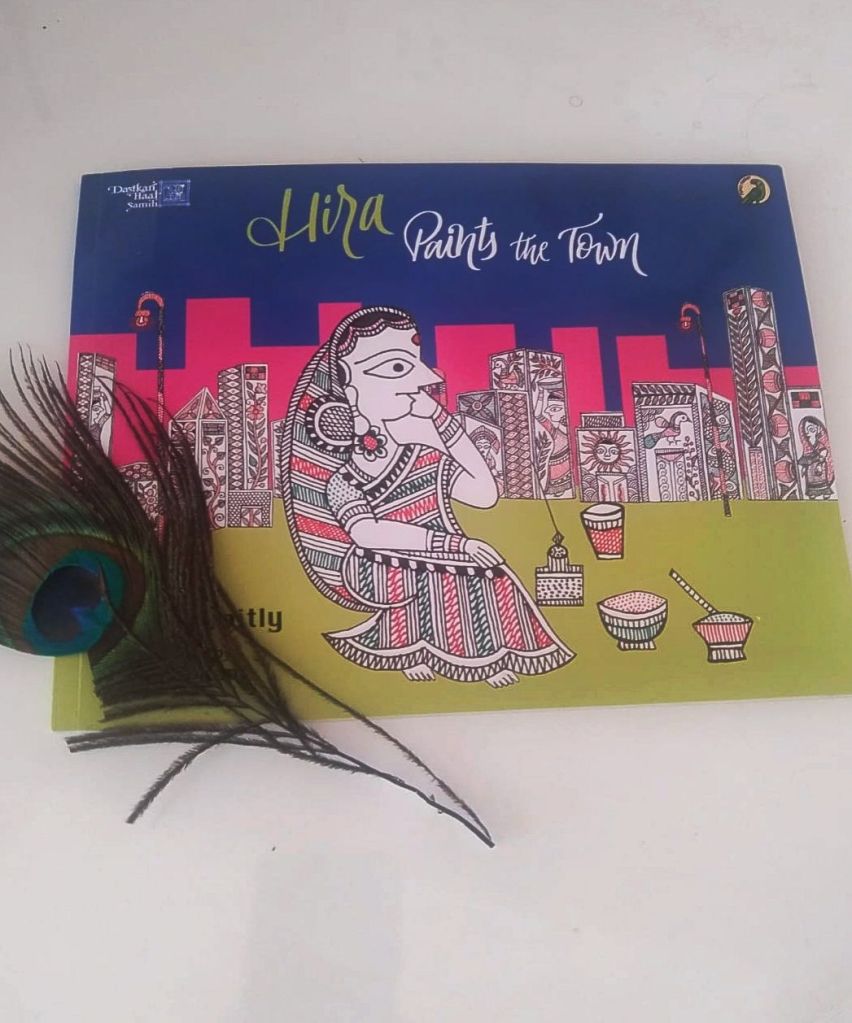
Hira, determined to share her art, tried again on a different wall. This time, her creation was met with disrespect–a man spat on it. Disheartened, she searched for another suitable surface, only to find it got covered with posters. Just as she felt defeated, a young student named Aman saw her. He recognised the beauty of her art and understood her dreams.
Aman offered a solution–paint on paper! He then scanned her artwork and used a projector to display it on every building in the city. Hira’s vibrant paintings, once vulnerable, now adorned the entire cityscape, a testament to her talent and Aman’s cleverness.
Buy Hira Paints the Town on Amazon
Bhajju’s Flock and the Tick-Tock Clock
Bhajju, a young boy, belonged to the Gond tribe. However, the world around him was changing. He had to travel by bus to work in a city factory, leaving behind his beloved forest. Bhajju loved spending time with the trees and animals, his imagination conjuring up fantastical stories.
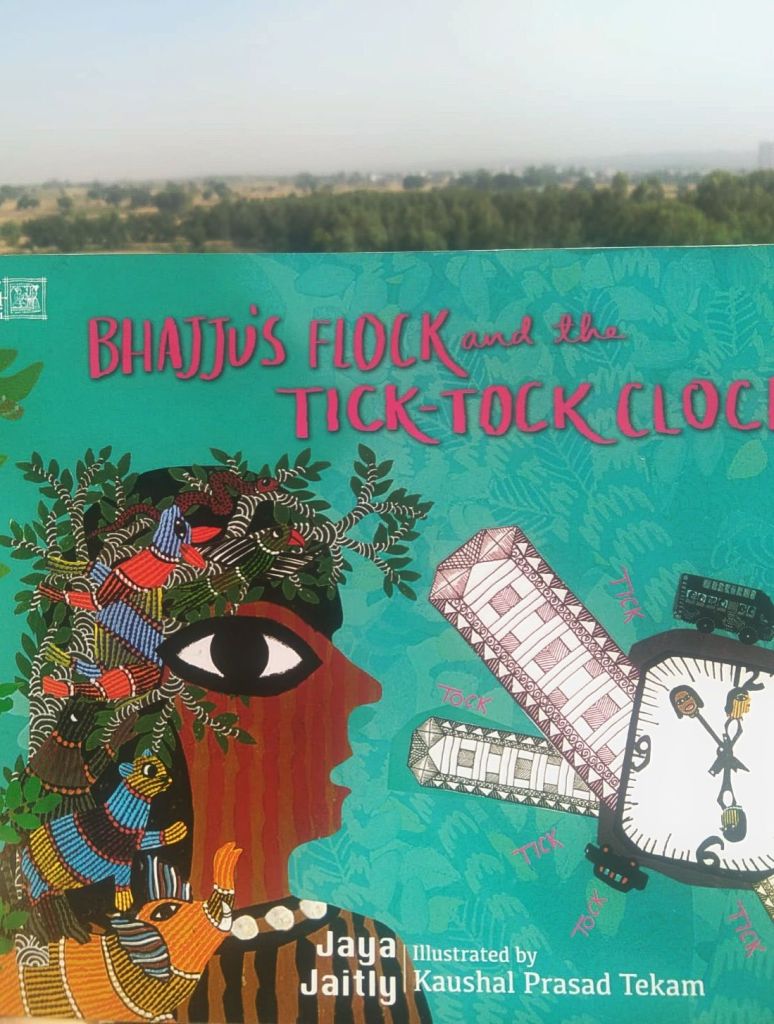
One day, lost in his thoughts about tigers, elephants, deer, monkeys, parrots and even a snake, he missed the bus to work. The animals in his story–his caravan–didn’t mind, but Bhajju did. At the bus stop, a tea stall owner reminded him he was late. Yet, Bhajju wasn’t worried. He simply climbed onto his imaginary elephant and rode to the factory.
The factory was a world away from the forest. Here, the noise of machines replaced the sounds of animals. There were clocks everywhere, dictating everyone’s movements with their constant tick-tock. Bhajju found it strange. Why did everyone follow this clock? When his manager questioned his lateness, Bhajju honestly replied that he came riding an elephant. The manager would not believe him. No one would.
But Bhajju’s question remained–what was time? Was it just a clock or something more? Did it fly by during vacations and crawl during exams? Bhajju couldn’t quite understand.
 Kalampedia