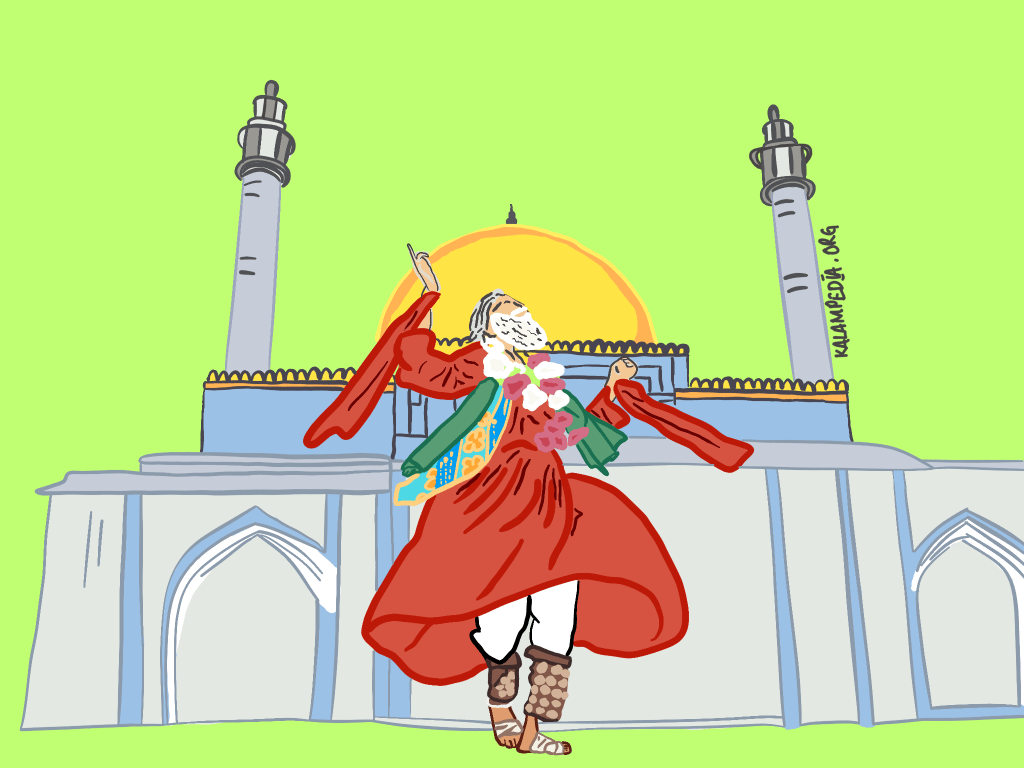
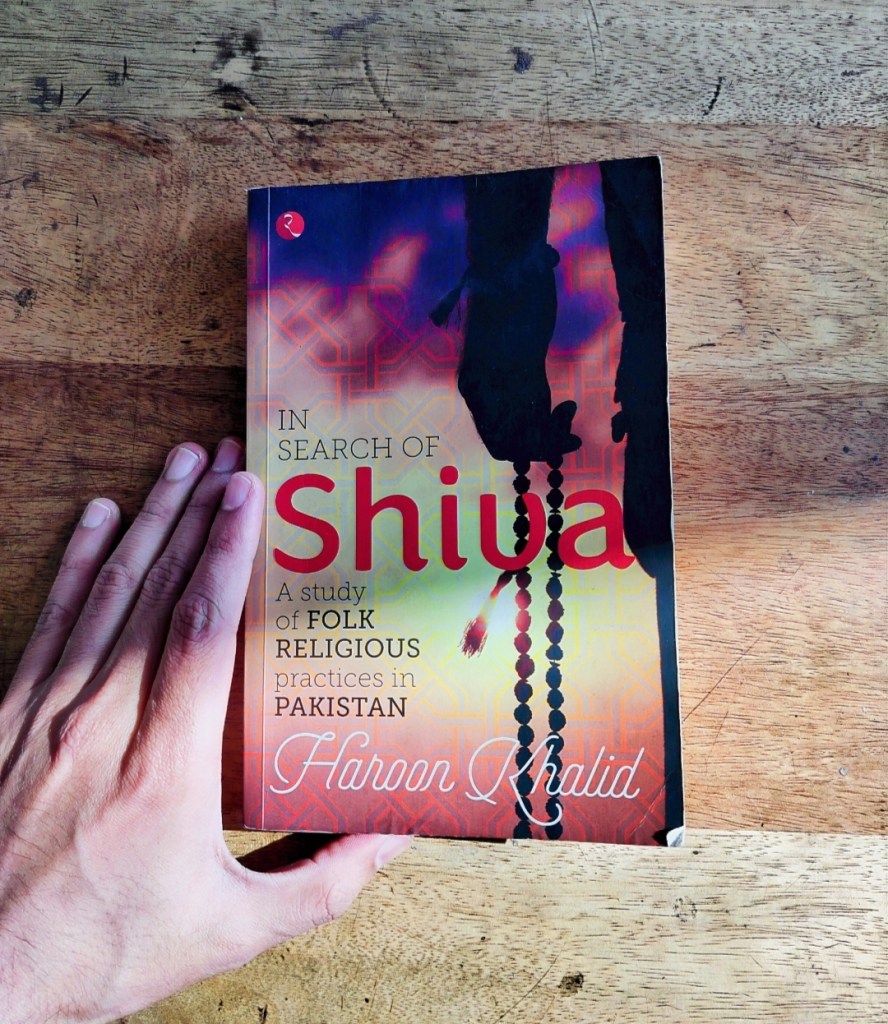
I picked Haroon Khalid’s book Shiva: A Study of Folk Religious Practices in Pakistan assuming that it’s going to be a serious study in the folk religious practices in Pakistan. However, it took a surprising turn, consistently invoking dark humour and adding an unexpected layer of delight. I can say that because I am sitting in India (the farthest possible distance from Pakistan), and therefore, even the darkest aspects of it can only amuse me and not frighten.
For some reason the book reminded me of Eric Weiner’s The Geography of Bliss. The book doesn’t just inform, it takes you on an exciting journey, where laughter becomes a companion in exploring cultural intricacies. Let me explain with the help of a few examples.
In the first chapter itself, we start noticing some of the disturbing aspects. Khalid writes:
I remember having a discussion with a friend of mine a few years ago, who after completing his MBA joined one of the largest business organisations in the country. After cracking a series of sleazy jokes, my friend decided to shift the topic of discussion to matters political.
‘You know they killed a terrorist in Kurram Agency recently and discovered that he wasn’t circumcised. You know what that means? It means that he was a Hindu, an Indian. The Taliban would never kill other Muslims. These are all Indian and Israeli agents pretending to be Taliban, trying to discredit them.’
As I rolled my eyes in disgust, having learned by bitter experience that it would not be worth the effort to challenge his contention, my other friends nodded in agreement. I wondered to myself what the authorities were doing inspecting the bomber’s penis anyway. My friend took a gulp of beer followed by a drag of charas, and then told us another joke about a Sikh, a Pathan and a Punjabi, and how the Sikh acted goofily and the Punjabi wisely, ignoring the fact that Sikhs and Punjabis can be mutually inclusive.
In the same chapter, Khalid discusses the ongoing boycotts at that time. Even today, the practice persists in Pakistan, with passionate folks boycotting Israeli and American brands. Currently, the focus is on the Israel-Palestine conflict, whereas in the book, it revolved around a movie called “Innocence of Muslims” for its blasphemous nature. Interestingly, the violent protests proved counterproductive as they inadvertently made it more popular. Khalid recounts a conversation with one of his students who had chosen to boycott Facebook.
‘But why would you boycott Facebook?’ I asked.
‘Because that will hurt their business,’ he replied.
‘Why do you want to hurt Facebook’s business? You do realise it is a separate entity.’
‘I want to protest somehow.’
‘Who do you want to protest against?’
‘The Americans.’
‘Why the Americans?’ I asked.
‘Because they ridiculed our Holy Prophet [Peace Be Upon Him].’
‘Are all Americans responsible for that? What about the millions of Muslims living in America?’
‘I would only protest against non-Muslims,’ Salman said.
‘What do Hindus, Sikhs and Buddhists have to do with the movie?’ I asked.
‘I will only protest against the Christians then.’
‘How are all the Christians responsible for what one of them has done? Are we all responsible for what Osama bin Laden has done?’
‘No. Then what should I do?’ Salman asked.
Don’t get me wrong; the book isn’t just about such facepalm moments. There are, of course, penis-shaped offerings at a shrine, sacred trees that predate nations and religions, malangs (dervish) with their long matted locks smoking cannabis, sacred cats, dogs, and crows, and much more (you’ll discover that), but I feel it would be a crime not to mention Khalid’s social commentary.
To give you another example, in one of his conversations with a student, Khalid talks about Pakistan’s identity and how it’s been defined as an opposition to India or Hinduism.
‘What is the opposite of Islam?’ I asked my fourteen-year-old students during a world history class. The discussion had somehow diverted to the topic of Islam. Eager hands rose into the air calling for my attention.
‘It’s Hinduism,’ one student said. All the students agreed.
‘Would that also be true for Muslims in, let’s say, Egypt?’ I followed up with another question, enjoying the process.
‘There it would be Christianity.’
‘No. Judaism,’ said another boy.
Carved out of India in 1947 on the basis of two-nation theory, the raison d’être for Pakistan is its opposition to India, a Hindu majority nation. That Hindus and Muslims are separate entities based on their different and opposing religions, cultures, history and language, is the lifeline of the theory.
School textbooks on Pakistan Studies highlight that India was a land lost in the darkness of ignorance, where a beacon of light arrived with the Muslims. Students grow up believing that Hindus are evil because they worship several deities with several hands. They are evil because they burn their widows and practise caste system. It is taught that during the Partition, Hindus killed Muslims because the Muslims wanted to live peacefully in their new homeland and the Muslims only killed Hindus and Sikhs in retaliation.
Another intriguing section in the book is regarding the Islamic revivalism in Pakistan. The idea is to go back to the religious roots of Islam, cutting ties with cultural affiliations in the region. Khalid meets Dr Sadaf Ahmad, a professor of Anthropology in Lahore.
‘I sometimes receive emails from students saying that they cannot study Anthropology of Religion. Our faith is not strong enough at this stage, is what they say,’ Sadaf told me. ‘Study of Anthropology allows one to understand concepts from different perspectives. It means recognising that different people have different truths. This, some students feel, will undermine their faith.’
Khalid also talks about a revivalist organisation called Al-Huda which aims to educate women about Islam.
‘At the classes the women are instructed about Islamic culture and ethos that is not indigenous but Arabic in essence. Local cultural practices like Basant or Mehndi are looked down upon and discouraged. Particularly, attention is given to da’wa [preaching of Islam] and dars. Women who are trained at this institution take up an active role in spreading their messages within their communities and societies through dars.’
There is so much more that I can write about this book, particularly its central theme— the exploration of folk religious practices in Pakistan. However, I’ll leave that discovery to you, dear reader. Personally, I’m more inclined to dive into another one of Haroon Khalid’s works, perhaps Imagining Lahore this time. I am sure there’s another fun adventure just around the corner for me.
 Kalampedia