Note: In the concluding part of our Padmavat series, we’ll find out what happens in the end. More importantly, we’ll find out about Jauhar, a tragic practice from the medieval times. If you haven’t read the previous parts, you can start here.
Now, let’s come back to our story.
No respectable person, let alone a king, would willingly offer his queen to a foe, and so it was for Ratan Sena. Resolute in his decision, he braced for battle as the imposing Sultan, Alauddin Khilji, marched relentlessly towards the bastion of Chittaur.
The battle was unparalleled in the history of Chittaur. Both armies, fortified with determination, clashed with violence that painted the land red. As heads rolled and blood stained the earth, scavengers circled overhead, drawn by the relentless dance of death below. The siege stretched on, turning the city into an inferno.
In the midst of this chaos, Alauddin’s eyes met the radiant beauty of Padmavati, leaving him utterly transfixed. His already fierce ambition to conquer was further fuelled. Triumph came at a heavy price as he captured the resolute King, Ratan Sena, chaining him like a prized possession.

The kingdom reeled from these developments, its heartbeat echoing the anguish of both Padmavati and Nagmati. Their shared pain was punctuated by dread for their uncertain fates.
Then entered Devapal, the prince of Kumbhalner and a known adversary of Ratan Sena. His ears, too, had been filled with tales of Padmavati’s allure. Trying to get hold of the queen, he sent a priestess to deliver a deceptive message to the queen. But Padmavati, astute as ever, saw through the trap. Rallying her spirit, she sought the aid of Gora and Badal, the legendary Rajput warriors. Their valour shone as they fought the enemy and liberated Ratan Sena from his chains.
Yet, peace remained elusive. Devapal, seeing an opportunity, engaged Ratan Sena in a fierce duel. Their blades danced, and in the end, both warriors fell, leaving behind tales of unmatched valour.
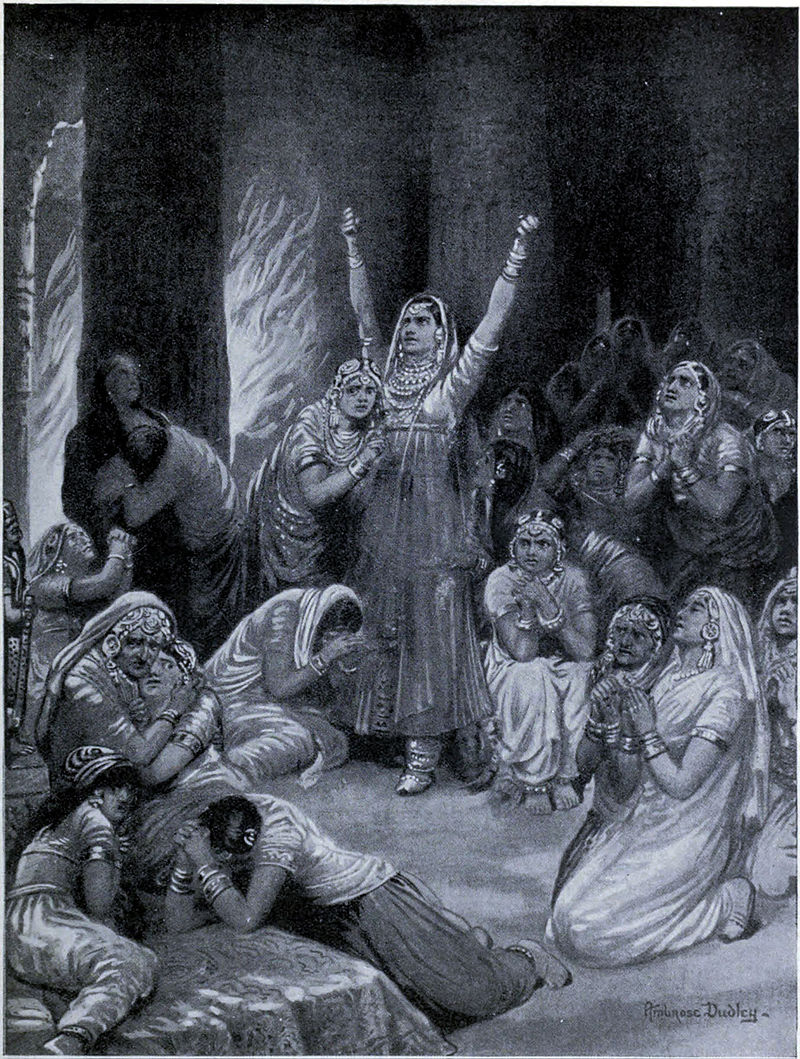
“Like a moth drawn to the flame of love, I shall embrace the end,” proclaimed a heartbroken Padmavati, with Nagmati echoing her tragic resolve. In other words, ‘it was time for jauhar.’
Jauhar refers to a historical practice among certain Hindu communities in India, particularly during the medieval period, wherein royal women, to avoid capture, enslavement, or dishonor at the hands of invading armies, would self-immolate in mass ceremonies. And that’s what Padmavati did. The tumultuous battle raged on. With every fallen hero, a trail of sorrowful women chose the fire, committing the fateful act of jauhar.
The aftermath was haunting. While Alauddin Khilji stood victorious over the ruins of Chittaur, the ethereal Padmavati remained forever beyond his grasp. Thus ends the epic tale of Padmavat.
Reference books:
 Kalampedia