If you’re into the practice of yoga, you might have come across the term chakra. And you might have found yourself asking this question: what are chakras? Let me take this opportunity to explain this idea.
In the spiritual fabric of ancient Indian wisdom, the concept of chakras stands out vividly. Rooted in Kundalini Yoga, chakras provide an insightful map to understand our inner world and its connection to the universe.
Understanding kundalini and chakras
Imagine a dormant energy, much like a sleeping serpent, coiled at the base of your spine. This is the Kundalini. In the practice of Kundalini Yoga, the objective is to awaken and guide this energy upwards through the spine. As it ascends, it passes through energy centres called chakras.
Classical Indian literature, particularly texts like the Hatha Yoga Pradipika and Yoga Upanishads, delve deep into the intricate journey of Kundalini energy, comparing it to a river’s voyage, meeting different landscapes (chakras) until it reaches the vast ocean, symbolising a state of complete enlightenment.
The essence and relevance of the Seven Chakras
1. Muladhara (Root Chakra)
Found at the base of the spine, this chakra grounds us. It symbolises stability and our connection to the Earth, reminding us of our foundational ties to the world we inhabit.
2. Svadhisthana (Sacral Chakra)
Positioned just below the navel, this chakra stirs our creativity. It is the wellspring of emotions, desires, and the seat of our creative impulses.
3. Manipura (Solar Plexus Chakra)
Located above the navel, it represents our inner fire, our ambition, and our willpower. This is where our sense of self and empowerment emanates.
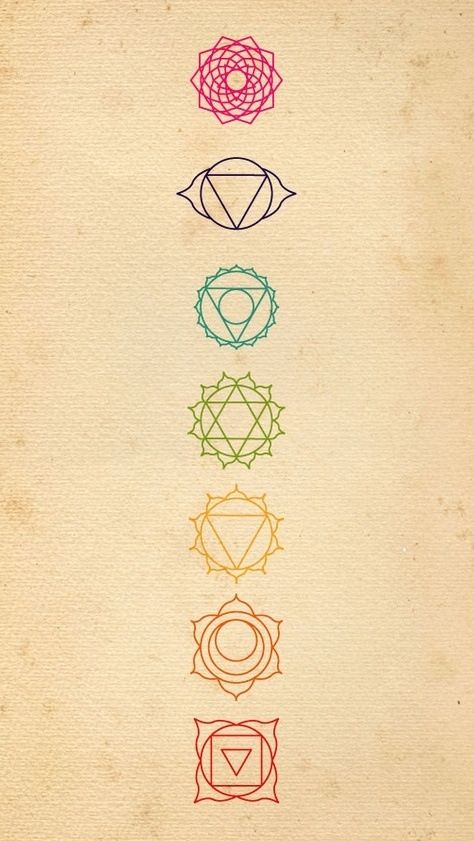
4. Anahata (Heart Chakra)
Located in the heart area, this chakra connects the physical and spiritual realms. Here, love, compassion, and kindness find their true home.
5. Vishuddha (Throat Chakra)
At the throat, this chakra champions communication. It guides our voice, both literally and figuratively, encouraging authentic expression and truth-telling.
6. Ajna (Third Eye Chakra)
Resting between the eyebrows, this chakra is the beacon of intuition. It governs insight, wisdom, and a deeper understanding of the world beyond the tangible.
7. Sahasrara (Crown Chakra)
Perched at the crown of the head, it is the gateway to spiritual enlightenment. Connecting us to the universe, it fosters a deep sense of unity and interconnectedness.
Why are chakras relevant today?
In today’s fast-paced world, where our minds often resemble crowded marketplaces and our hearts, rushed train stations, the wisdom of our chakras offers a calming lighthouse.
Picture trying to tune a vintage radio, each chakra is like a distinct frequency. When misaligned, all you get is static, but with careful calibration, a clear symphony emerges. Just as a musician fine-tunes his instrument to create harmonious melodies, so too can we, with practices like meditation and mindfulness, align our chakras.
Classical literature likens this to a traveller using the North Star for direction; with our chakras in balance, we find our way to self-awareness and an oasis of inner peace amidst life’s clamour.
The timeless wisdom of chakras from classical Indian literature offers a compass for the modern soul, seeking clarity in chaos. By understanding and nurturing our chakras, we embark on a transformative journey, bridging our earthly existence with the ethereal vastness of the universe.
 Kalampedia