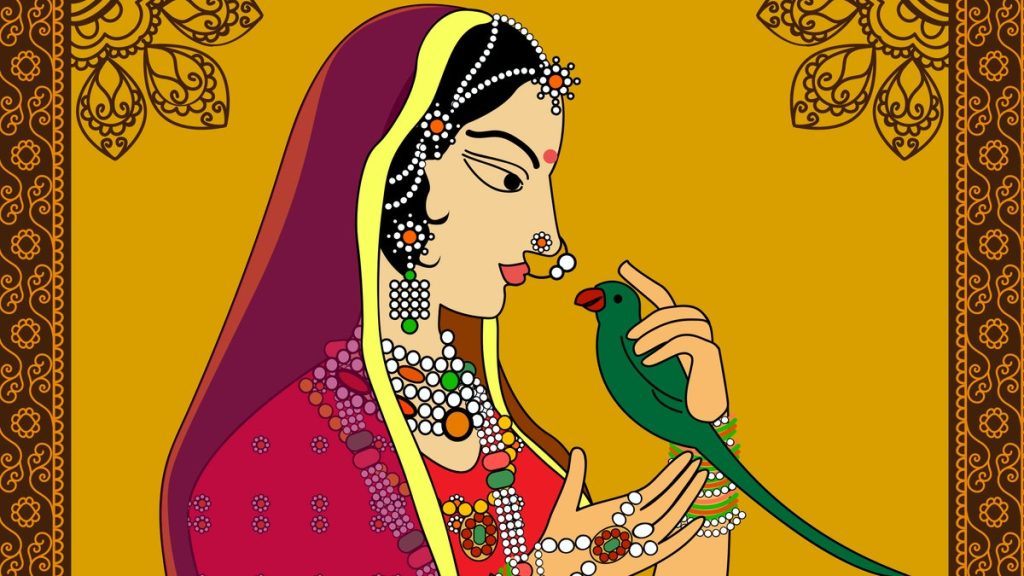
Padmavat is an epic poem written in the Awadhi language by a Sufi poet Malik Muhammad Jayasi in 1540. A famous piece of Sufi literature from the period, it relates an allegorical story about the desire of three different kings for its central character, Padmavati.
In the next few posts, I will be briefly narrating the story. Let’s start then, shall we?
The story begins with the description of a perfect woman, Padmavati of course, who lives in the Simhala kingdom (modern-day Sri Lanka). The poet praises the island nation for all the good things it possesses. The land of Simhala, the poet says, is blessed with nature. So many fruits grow there, such diversity of species. The city itself is wonderful, with a wise and just ruler maintaining it well. In every house each one, great or small, is happy.

From Simhala, the poet now turns to Padmavati, the little princess. She was considered divine from the moment she was born. It’s like she was the incarnation of a perfect woman. Everyone who saw the little child was fascinated by her. The astrologers made great predictions. The teachers could not stop appreciating her. The education had started at the age of five where she learnt about the holy scriptures, from Vedas to Puranas — and she recited them all.
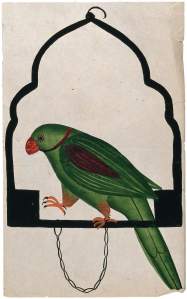
At this point, it’s important to mention an important character in the story: Hiramani, the parrot. Like so many other parrots it enjoying talking, but it was much smarter than the most of them. Hiramani was learned and wise. It would sit with the little girl and recite the holy texts. And the two would talk for hours and hours.
As the princess approached her teen years, the king started thinking of finding her a suitable groom. When she heard about it, she felt both excited and nervous at the same time. The excitement, though, soon dissipated as her father kept rejecting all the proposals.
Getting a little frustrated by the recurring rejections, the princess said to Hiramani, ‘So many men come to ask for my hand, but my father does not like anyone. When will I get married?’
The parrot replied, ‘you should trust the fate.’ It also made the promise that, if given the command, it would find a suitable mate for her.
Just when this conversation was going on, a wicked man in the palace overheard it and told the king. ‘The cunning parrot is corrupting her mind,’ he said. ‘Get rid of it, before things go out of control.’
The king was angry and he ordered to kill the parrot without any delay. However, before that could happen, the parrot escaped and reached the forest where other birds welcomed it.
To be continued…
Reference books:
Padmavati of Malik Muhammad Jayasi (Translated by A. G. Shirreff)
 Kalampedia