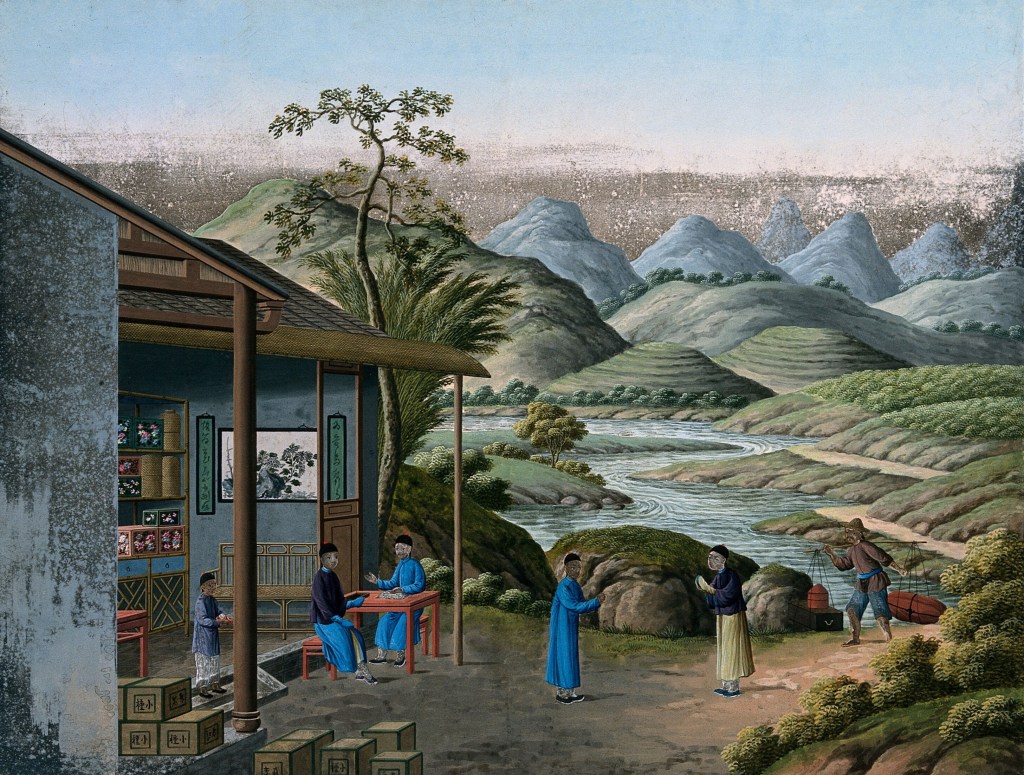
From mythology, let’s move on to the history of tea.
One of the earliest texts on the subject of tea is Ch’a Ching (also known as The Classic of Tea), written by Lu Yu in the eighth century CE. Lu Yu, the great tea master, began to travel and research tea and water in the year 755 CE. This was the period of Tang dynasty, considered as a high point in Chinese civilisation and a golden age of cosmopolitan culture.
Lu Yu spent a number of years in the high mountains, gathering detailed knowledge of tea alongside other herbs. He would often visit the countryside, gather tea leaves and brew it for himself as well as his fellows at the monastery. As his interest in the subject grew, he spent more time collecting and documenting all the available knowledge about tea. That’s how Ch’a Ching came to be.
Did the concept of tea as a beverage only emerge during the Tang dynasty?
Certainly not!
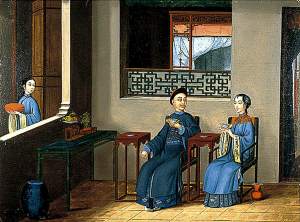
There are quite a few written records which testify that people had been consuming it for centuries. For example, Guo Pu, a Chinese historian from the 3rd century CE, wrote in his commentary to the dictionary Erya that tea leaves were made into a soup. But whether this concoction was taken as a medicine or food is unclear. Similarly, the poet Zhang Zai wrote in the year 280 CE: Preferring fragrant Cha over six beverages.
Even the tea-plant, a native of southern China, was known from very early times to Chinese botany and medicine. It is alluded to in the classics under the various names of Tou, Tseh, Chung, Kha and Ming. It was known for possessing the virtues of relieving fatigue, delighting the soul, strengthening the will and repairing the eyesight. Quite a lot of virtues, if you think about it. Moreover, it was not only administered as an internal dose, but often applied externally in form of paste to alleviate rheumatic pains. The Taoists, the Buddhists, the folk religionists – they all found great superpowers in it.
We also know that Lu Yu relied on multiple sources from the Chinese literature while compiling his book on tea. So, clearly the beverage was there in the Chinese society for quite a while. What happened during the Tang dynasty, though, was that tea found its way into every household. It became the preferred beverage – something that was going to happen in Europe around a millennium later.
If we talk about the western literature, the earliest record of tea is said to be found in the statement of an Arab traveller in the ninth century. A few centuries later, Marco Polo also recorded the deposition of a Chinese minister of finance for his arbitrary augmentation of tea-taxes. It was the time when the West was trying to meet the East. Trade was expanding, cultural ideas were getting exchanged and so were the culinary tastes. All this was soon going to change how the world perceived and consumed tea.
 Kalampedia