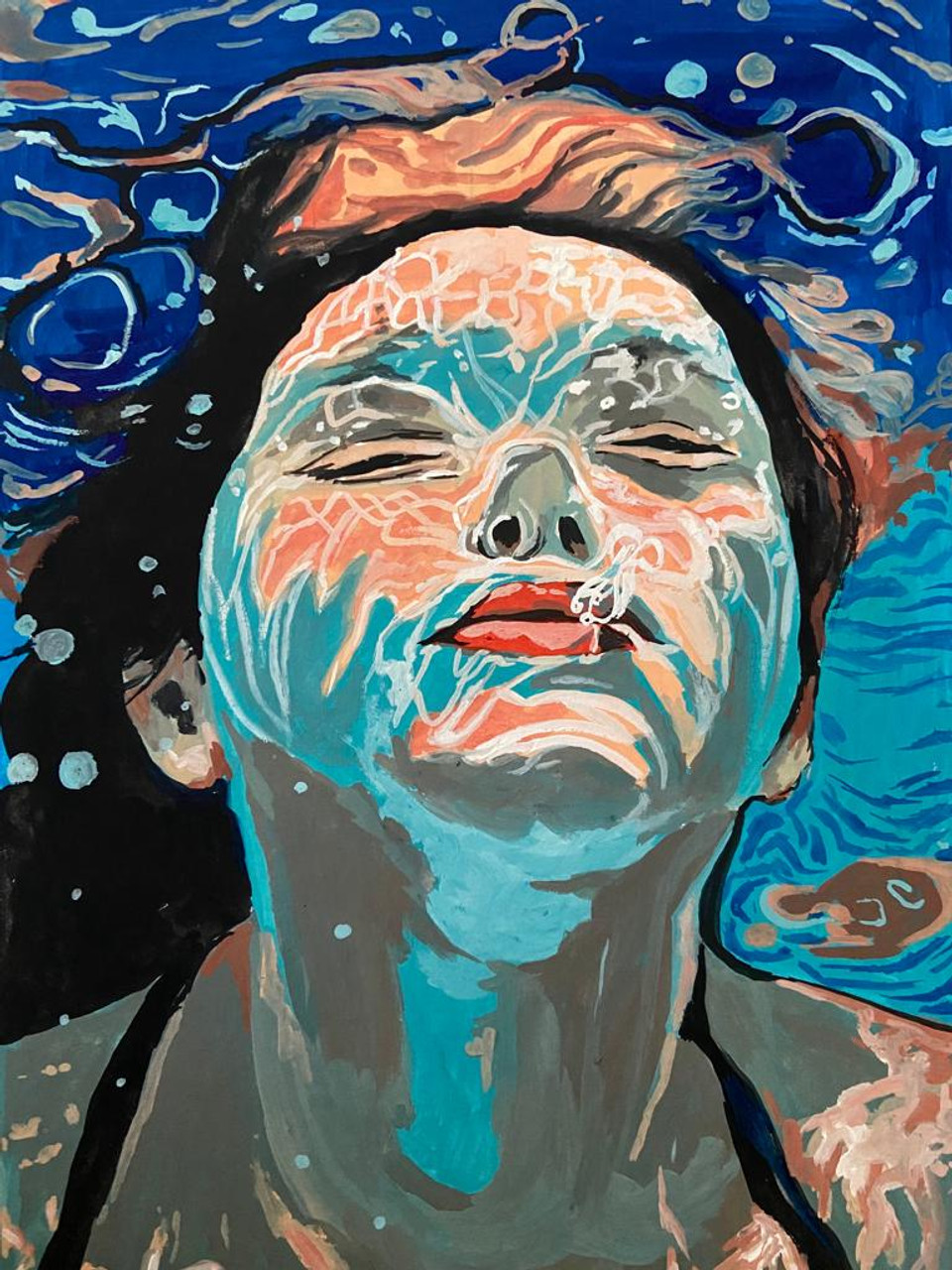
Breath…
Perhaps it’s the only thing that stays with us for as long as we live. You can’t get rid of it, try as hard as you may. The breath won’t leave you. It’s what gives us life — that’s why the ancient Indians called it Prana, the life force.
Most of the time we don’t pay any attention to our breath. It comes and goes in its own ways. A question like this one (how to breathe?) never occurs to us. Due to this, seldom do we realise that we might not be breathing correctly.
There are two worlds. The real world — the one we live in, explore, study, understand, where we go about our business and eventually die. The other is unreal, where we return to. Not much do we know about the latter, apart from the testimonies of a few enlightened souls. The two worlds seem entirely different, often unrelated. However, if you pay close attention, there is a connection; and we hold that connection within ourselves. The two worlds, real and unreal, are joined loosely by an invisible thread: the thread of our breath.
Nimish Dayalu [Caveman’s Secret Sauce]
It might sound naive, even silly, to consider the possibility that there could be such a thing as an incorrect way of breathing. However, as you shall see, during the course of this series, that there is — especially when we see the art and science of breathing in the light of ancient Indian wisdom.
To put it briefly, the point is that we can make use of our breath to derive a number of health benefits. Breathing meditation is a subject in itself. The details of it might be complex, but the fundamental idea remains the same: just like changes in our health, brain activity, stress, moods, etc can bring a shift in our breath, the opposite can also be done.
With that in mind, let’s start with the very basics of our being: the breath. And start to learn this important, but essential, skill in this series called How to Breathe. We will make use of ancient Indian texts, particularly The Yoga Sutras of Patanjali, considered to be the foundational text in yoga and meditation.
 Kalampedia