
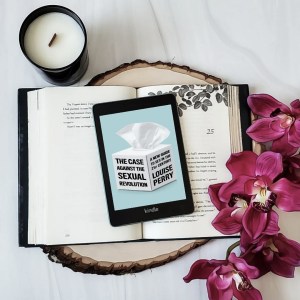
What did the sexual revolution of the 1960s do for women? It is generally suggested that by challenging traditional codes of behaviour related to sexuality, the revolution emancipated women and improved their lives. However, Louise Perry, author of the book The Case Against the Sexual Revolution, begs to differ. She argues that we might have overlooked its ill effects, which have especially been supersized in the digital age.
To understand it better, I invited Louise Perry to join me for a conversation. Below is the full text of this exchange.
Thank you, Louise, for taking out time for this. Before I talk about your book, let me start with the broader issue of polarisation in the current intellectual discourse. We have seen that in recent times, many conservative ideas are gaining popularity as compared to the progressive thought. Do you agree with this notion? And if yes, is it a natural recourse to maintain balance, or is it a failure on the liberals’ part?
I’m not sure that conservative ideas are gaining institutional power – which is what actually matters, in the end – since progressivism seems to be growing ever more powerful in most cultural and educational contexts. But I think you’re right that some conservative intellectuals have attracted large audiences, and some sections of the media and publishing industries have noticed the existence of that demand. Jordan Peterson springs to mind as one example. I think Peterson is popular because he offers a particularly confident and lucid alternative to progressive ideas that are simultaneously embedded in powerful institutions, while also being unpopular among most of the population. Outside of elite spaces, conservative ideas still have an instinctive attraction.
Now let’s come to your book. What made you write ‘The Case Against Sexual Revolution‘?
I’ve been working around this issue for my entire professional life. My first job out of university was at a rape crisis centre, and since becoming a journalist I’ve written a great deal on sex and violence. I also work for a campaign group, We Can’t Consent to This, which is concerned with murder cases in which defendants rely on a “sex game gone wrong” defence – a tactic that has become much more common in recent years. ‘The Case Against the Sexual Revolution‘ is the culmination of those years of work.
I wanted to come to the gender question, because recently there has been a lot of debate around this issue. It’s a pity that we don’t talk much about biology while having these important conversations on gender. The obvious objection is that we might get into a terrain where people would start discriminating as they did in the past. So, my question is, how do we discuss this in public, considering the risks? Where do we draw the boundary?
I’m sympathetic to those feminists who are hyper-sensitive to the possibility that scientific research might be put to sexist ends. Historically, psychology (including evolutionary psychology) has been used to, for instance, argue that women should be excluded from the professions or the franchise. The “missing five ounces” was a phrase used by some Victorian scientists, who linked women’s smaller brain size (on average five ounces smaller) to supposed female intellectual inferiority. But that history shouldn’t lead feminists to disregard the discipline of evolutionary psychology entirely. The scientific data is morally neutral. It can be put to both feminist and anti-feminist ends.
Perhaps you and I live in different worlds. You might be seeing the challenge of people seeing sex as a commodity and I might come across people who still feel that women’s sexuality should be suppressed. Do you think with more individual freedom (sexual freedom being a part of it), we are inevitably going to end up with sex being a commodity, or is there a way to create a healthy balance?
I hope that it’s possible to strike a balance. But we must also remember that everything has trade offs and any system of sexual ethics will produce some bad outcomes – the question is which kind of bad outcomes we’re willing to tolerate.
Ah, the question of trade-off – that’s the classic conservative idea, isn’t it? So as a feminist, who also appreciates traditional values, what do you make of today’s feminism? Does it concern you that a significant number of women don’t identify themselves as feminists or don’t quite like the term?
It’s always been the case that a minority of women call themselves feminists, even if a majority would sign up to its basic tenets (concern about domestic violence, for instance). I think this is because ‘feminism‘ as a term is associated with a more narrowly defined ideology that’s at odds with what many ordinary women believe, as opposed to a broader definition of feminism such as ‘a movement on behalf of women’s interests’ or similar. Some recent American polls have shown a drop in feminist identification, including among Democrats. I think that’s an inevitable consequence of a feminist movement growing more and more disconnected, not only from mainstream opinion, but also from reality. A return to commonsense is sorely needed.
Indeed. One last question. What are you planning to write next?
I think I’m going to write a book on anti-natalism, but not until I’ve taken a break from book writing (appropriately enough, I want to have another baby first!)
Ha-ha, that’s absolutely the appropriate thing to do. I wish you well. Thank you so much once again for your time.
You’re most welcome!
 Kalampedia