
Somewhere deep inside, we already know this. That buying expensive things is not going to make us truly happy. Why, then, are we so powerfully drawn to them? Why do we keep hoping against the hope? A philosophical meditation would be helpful to clarify these concerns.
It is easy to laugh at ancient people who would drill a hole in the side of their skulls in order to get rid of migraine, but we end up making a similar mistake when it comes to the question of happiness. They didn’t understand the cause of their suffering, nor do we. Given this lack of understanding, consumerism (especially expensive objects) often feels like a plausible solution to needs we don’t understand. This is because objects mimic in a material dimension what we require in a psychological one. We need to rearrange our minds but are lured towards new shelves. We buy a cashmere cardigan as a substitute for the counsel of friends.
Why do we behave this way? It’s not entirely our fault. Our weak understanding of our needs is aggravated by what Epicurus termed the ‘idle opinions’ of those around us, which do not reflect the natural hierarchy of our needs, putting more emphasis on luxury and riches. The prevalence of idle opinion is no coincidence. It is in the interests of commercial enterprises to skew the hierarchy of our needs, to promote a material vision of the good and downplay an unsaleable one.
And the way we are enticed is through the sly association of superfluous objects with our other, forgotten needs.
It may be a jeep we end up buying, but it was — for Epicurus — freedom we were looking for.

It may be the aperitif we purchase, but it was — for Epicurus — friendship we were after.
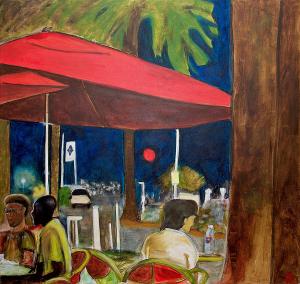
There’s a little secret to pleasure that no one talks about. The pleasure that we derive from an experience, it depends less on the object of experience and more on the way we experience it. The more closely (and mindfully) we watch our present experience, the more value we derive from it. On the other hand, as long as we remain distracted (and we are distracted, thanks to these devices), we are not going to immerse ourselves in the present experience, hence denying ourselves an opportunity to feel the depths of it.
In fact this is one of the ways in which we — unconsciously — trick ourselves into believing that we are having a pleasurable experience because of the amount of money being spent. In reality, what we frequently do is that we raise our sense of awareness according to the price of a product or service. Therefore, while staying at a five-star hotel, we pay close attention to every little detail in architecture. When we buy an expensive car or gadget, we explore all the features with great excitement. How wonderful it would be if we could carry that excitement everywhere! This is something which can be achieved through meditation: instead of relying on external stimuli (objects, people or experiences) to bring excitement in our lives, we work on the real source of that excitement, i.e., our minds.
Even if you don’t meditate and need external stimuli to feel happy, there are better options available. And we know them. Whatever our societal standards are (or will be in future), we know the value of true joy and where it lies. Playing with a child, conversations with a friend, a walk on a hillside, a clean house, cheese spread across fresh bread — these are the things easily available to us, and yet we keep disregarding this endless supply of happiness. Should we, though?


 Kalampedia