
Know thyself. Everybody, from that friend who acts like a therapist to an enlightened spiritual guru, would tell you that. It makes sense too. What’s the point in reading hundreds of books, if we remain ignorant to what has been written on our minds? However, soon we realise the problem.
We may look like the ultimate owners of our bodies and minds, but we remain practical strangers to much of what unfolds within them. A casual acquaintance may, in a few minutes of conversation, deduce more about our psyches than we have been able to determine across many decades. We are frequently the very last people to know what is at work within ‘us’.
Can we do something about it? It would be a shame if we couldn’t. There are (at least) some things that we can control in our lives to navigate ourselves towards our destiny. This simple fact makes this journey all the more interesting. Let’s take a small step, then, and understand ourselves a little better through these three key insights.
You’re a houseplant

This should be the starting point of every spiritual conversation, or the first thing one learns in life. Everything else comes after this.
Yes, you are a houseplant. You grow out of a seed, then blossom into youth by feeding on the mother earth, and eventually get dissolved in the same place you came from. Along the way you trade everything that you have (the atoms of your body, the breath, the happiness, the sorrows, and much more) with your surroundings — you take some, you give some. That is all there is to life, isn’t it?
What to do, you might ask?
You start by assuming that you are a houseplant — a complicated one, but still a houseplant. So you start by taking a deep breath.
Breath is the bridge which connects life to consciousness, which unites your body to your thoughts. Whenever your mind becomes scattered, use your breath as the means to take hold of your mind again.
Thich Nhat Hanh
Now have some water. Also, sunshine. Not too much, just a little. Go slowly and mindfully, starting with your breaths and movements and diet, and then pretty much with everything that you do.
Often our priorities go in the opposite direction. That’s why we suffer. We don’t believe that we are houseplants, but some giant trees in a forest that can endure anything that comes their way. In reality, we can’t. Once upon a time, we used to be that, but not anymore. Now, we are houseplants. So let’s keep it that way and take another deep breath.
You’re a child
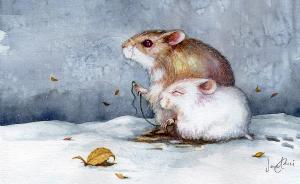
As a child, when someone asked your age, you might have said, “I am four,” and added, with great solemnity, “and a half.” You were conscious of the rapidity and intensity of human development and wanted clearly to signal to others — and yourself — what dramatic metamorphoses you might undergo in the course of ordinary days and nights.
Sadly, we don’t do that anymore.
Once we’ve been labelled as adults, our progress is still monitored but it is envisaged in different terms: it is cast in the language of material and professional advancement. The focus is on your grades, your jobs, your properties, marriage, etc.
What we forget to measure is the emotional growth that continues inside. We may, over two sleepless nights, have entirely rethought our attitude to envy or come to an important insight about the way we behave when someone compliments us.
These quiet but very real milestones don’t get marked. We’re not given a cake or a present to mark the growth. We’re not congratulated by others or viewed with enhanced respect. No one cares or even knows how caring might work. But inside, privately, we might harbour a muffled hope that some of our evolutions will be properly prized.
This can be made easier if we learnt to see ourselves as children. That we are not perfect, but are still learning, nevertheless. That we are often crazy in some ways. That our behaviour (and everybody else’s) is not just affected by ill intentions but health and environment too. That not everything is under our control, but things will get better after some time. This attitude will take us a long way in our quest for emotional education.
You’re beyond this or that
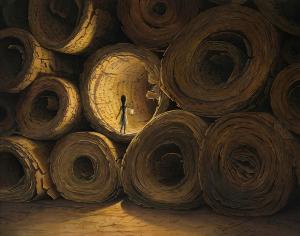
To know thyself is to look beyond the obvious. Hence, our understanding of the self cannot be completed, until we dare to go beyond the idea of body and mind, and understand life itself.
Let’s try this simple contemplative meditation to explore our own nature.
All that is unknown, or could ever be known, is experience. Struggle as we may with the implications of this statement, we cannot legitimately deny it.
All that is known is experience, and all that is known of experience is the experiencer. Therefore, in order to know and understand anything (and consequently everything), one has to probe into the nature of this experiencer. The thing that sits inside our head and observes everything. But, what is this thing? In other words, what is the true nature of the self? Who am I, really?
‘I’ refers to the knowing or aware element that remains present throughout all knowledge and experience, irrespective of the content of the known or the experienced. Whatever it is that knows the feeling of depression is the same that knows the feeling of joy. The two feelings are different but are known by the same knowing subject, irrespective of the quality of the feeling.
I am pure knowing, independent of the content of the known. I am the knowing with which all experience is known. I am the awareness itself. This is exactly what the ancient Indian sages would have said.
Reference books:


 Kalampedia