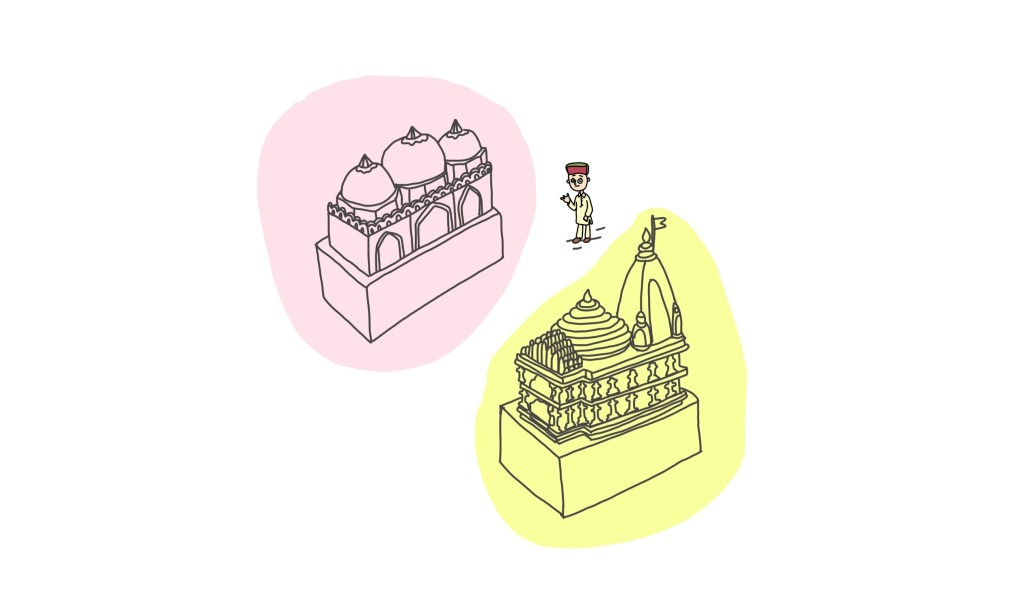
In the beginning there was a temple. The temple became a mosque and there was chatter all around. And because the mosque was once a temple, the chatter never really died down and turned into a more serious matter.
This is the story of Ayodhya, Gywanvapi and countless other religious sites in India which used to be temples in the ancient times and were later destroyed by mediaeval invaders. To make matters more complicated these invaders built mosques on top of the ruins of these temples. In his book Hindu Temples: What Happened to Them, Sita Ram Goel traces over a thousand mosques which were built either on a temple or using the material of a temple that was destroyed by the invading army. This had long-lasting consequences. What could have been a Hindu grudge against an invading ruler, the new structure turned it into a Hindu grudge against Muslims.
How the Temple-Mosque debate changed in the late 20th century
A number of things happened. The infamous demolition of the Babri Masjid was carried out in 1992 by Hindu right-wing groups. The demolition ignited communal violence, not only across the country but the entire subcontinent. Hundreds of temples were demolished in Pakistan and Bangladesh as a reaction. Thousands of people died in riots that followed.

The riots, the killings, the desecrations were all over the news. However, a more significant development was taking place, quietly, away from all the chaos. And the man behind it was KK Muhammed, an archaeologist and former director of the Archaeological Survey of India.
What KK Muhammed unearthed
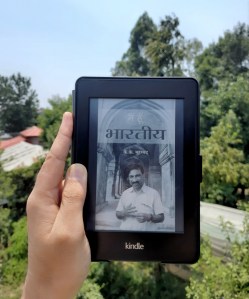
In his autobiography, I, The Indian, KK Muhammed narrates the story of the Ayodhya’s Babri mosque controversy. As an archaeology student, Muhammed, along with his team members, had made numerous observations at the excavation site, all pointing in the direction that there had been a temple once upon a time.
Then came the question which was going to shape the Indian politics for quite some time. The question was this: if there was a temple once, and a mosque was constructed on top of it, who does it belong to? Should it be considered a temple or a mosque? It wasn’t easy and therefore the negotiations between the two groups (Hindus and Muslims) went on for a long, long time before violence took over.
This could have been avoided, remarks Muhammed. In fact, he suggests that the things would not have gone that far if it had not been for a group of Marxist historians who did not let the two sides reconcile. These historians, who were then prominent voices in media as well as academia, first insisted that there was no such thing as temple on that site. Once this claim was disproved, they incited the Muslim right-wing to not give up their holy site at any cost. By turning Muslims against Hindus and maintaining a divide between the two groups, it was the politics (of divide) that reaped great rewards.
How Hindus and Muslims can live together
It is clear that the main tension between Hindus and Muslims lies in their dark past. The problem goes as far back as the arrival of Islam in north India. Those battles, no matter how much one romanticises them, were horrible. The destruction of temples, plundering, forced conversions, enslavement and slaughtering were not uncommon. At some point, Hindus also started playing what they call the ‘revenge game’ and it continues to this day. How do we get out of it? KK Muhammed proposes a few solutions.
First of all, we have to begin with the acknowledgement of our history, including its dark chapters. It’s going to be uncomfortable, it’s going to bring up old wounds, but it’s necessary. Without any truth and reconciliation of the past, there can be no future for our shared existence. More importantly, we must look at our collective heritage, instead of looking through the lens of one religion.
India has been a land of cultural and religious exchange. It’s composite culture is at the heart of the Hindu tradition which, in many ways, is the foundation of the Indian identity. Buddhism and Jainism developed it further and made invaluable contributions to this heritage. Islamic architecture made it more beautiful and so did Christian architecture. Taj Mahal could only be built in India, not Turkey. Jews could only find safe haven in India, not Europe. Atheistic religions like Buddhism or Jainism could only flourish in India, not Rome. Understanding India’s diversity and valuing it is the only way India — and its diverse communities — can move forward.
Reference books:


 Kalampedia