
Sometimes we look at something — an object, a picture, a piece of writing — and instinctively call it an art. But, rarely do we pause and reflect on this question: what is art?
Is every object an art? Is every piece of writing an art? Or every kind of music, and by extension every sound, forms an art? This does not seem right. Therefore, we must probe this question a little more.
It was Schopenhauer who first said that all arts aspire to the condition of music. He was thinking of the abstract qualities of music; in music, and almost in music alone, it is possible for the artist to appeal to his audience directly, without the intervention of a medium of communication in common use for other purposes.

Think about it.
The architect must express himself in buildings which have some utilitarian purpose. The poet must use words which are bandied about in the daily give-and-take of conversation. The painter usually expresses himself by the representation of the visible world. Only the composer of music is perfectly free to create a work of art out of his own consciousness, and with no other aim than to please. This is why many consider music as the purest form of art.
But, we haven’t addressed our question yet.
Much of our confusion regarding this question comes from a lack of consistency in the use of the words art and beauty. We almost always assume that all that is beautiful is art, or that all art is beautiful. Is it so, though?
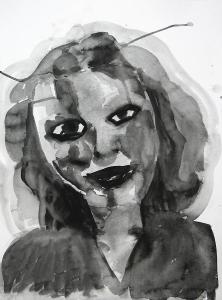
This identification of art and beauty is at the bottom of all our difficulties in the understanding as well as appreciation of art. There are many problems that arise from this confusion, but the most significant one is that it allows certain people to manipulate our sense of beauty and present something as an art to us while it may not be the case.
Thankfully, we can overcome this challenge if we are prepared to put a little effort into it. There are three stages:
- First, the mere perception of material qualities — colours, sounds, gestures, and many more complex and undefined physical reactions.
- Second, the arrangement of such perceptions into pleasing shapes and patterns.
- Now comes the most important stage, where we go beyond the aesthetic sense. This stage comes when such an arrangement of perceptions is made to correspond with a previously existing stats of emotion or feeling. This is when we say that the emotion or feeling is given an expression.
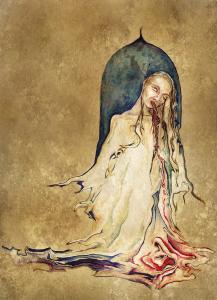
That is how we identify a work of art. It comes into existence with the act of incarnation — that is to say, at the moment the artist finds the words (or picture, or sounds, and so on) to express his emotion or ‘state of mind’. Emotion and expression are then an organic unity that cannot be separated. Which is why it will always be subjective, or at least contain a significant element of subjectivity which can be extracted from the expression.
Note: This, of course, is the basic understanding of art. Keep following this space to explore more.
Reference books:


 Kalampedia