
The new era of technology has created knotty ethical dilemmas and agonising choices. One such dilemma is regarding the underlying philosophy of euthanasia. Or voluntary death, in simple words.
In 1976, the landmark case of Karen Ann Quinlan focused attention on the issues involved in the process of dying. For a year, twenty-one-year-old Karen had been in an irreversible coma, the apparent result of her using a combination of alcohol and tranquilisers. She was being kept alive on a respirator, and her doctors were certain she would never wake up; assisted by machines, however, she might live for years. After much agonising over their decision, her parents asked the doctors to turn off the machines, but the doctors refused.
The Quinlans then petitioned to have all “extraordinary procedures” discontinued, but the lower court turned them down. Finally, the New Jersey Supreme Court reversed the lower court’s decision and granted the request in 1976. The judicial opinion was based on the constitutional right of an individual to privacy. It noted that although the state has a duty to preserve life, there comes a point at which a person’s right to privacy and to refusal of bodily invasion overcomes the state’s interest. The court stated that if Karen’s guardian, family, attending physicians, and hospital ethics committee all agreed that there was no hope of recovery and that life support systems should be discontinued, then the support could be withdrawn without any civil or criminal liability. In other words, the judge decided that nature should take its course and that Karen Quinlan had a right to die.
Many have questioned the moral philosophy of euthanasia. If that act results in death, is it the same as killing the patient? That is the main question here.
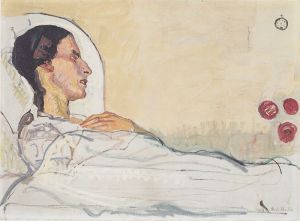
Physicians traditionally have been committed to the preservation of life and the relief of suffering, but sometimes one duty conflicts with the other. The point here worth noting is that physicians make choices as long as they align with the patient’s own choice regarding their well-being. For example, if there’s a surgery required in case of a terminal disease and the surgery itself comes with risks, then it’s entirely up to the patient or his family members whether to go for it or not.
The word euthanasia means “good death,” but most people associate it with mercy killing. James Rachels, a philosophy professor and author of the book The End of Life, makes the distinction between allowing someone to die (passive euthanasia) and intentionally killing (active euthanasia). There are some people who support passive euthanasia, but not the active one. But, philosophically speaking, there’s hardly any difference between the two: letting someone die when you could save them is akin to killing them, isn’t it?
We begin by making the assumption that life is preferable over death and living without pain is preferable over living with pain. Now, when we come to a situation where pain increases to such an extent in an individual that they would no longer wish to endure it. The same can be considered in cases where substituted judgement is required, that is, patient lacks decision making capacity due to their current circumstances. Inevitably, we are left with two possibilities in these cases:
- We let the patient stay on life-support or in their present circumstances. This prolongs their life but (at least in some cases) their suffering continues too.
- We withdraw life-support and choose death over suffering.
As you can see, there is nothing right or wrong here. It completely depends on one’s fundamental view of life. If you consider life sacred, as many religious people do, you might not want to sacrifice life at any cost. A similar argument is made when it comes to the morality of abortion. On the other hand, if your view is based on seeing life as an experience in itself without any divine intervention, you might support the practice of euthanasia.
While death is, arguably, usually bad for the person who dies, the goal of euthanasia is to make this less bad: the word euthanasia means a “good death.” These issues are important, and not just for people currently facing hard choices about death. None of us knows what will happen to us: at any time, an accident or illness might force these issues upon us, and so we should engage them more deeply, now. That’s why, understanding the underlying philosophy of euthanasia becomes important.
Reference books:


 Kalampedia
