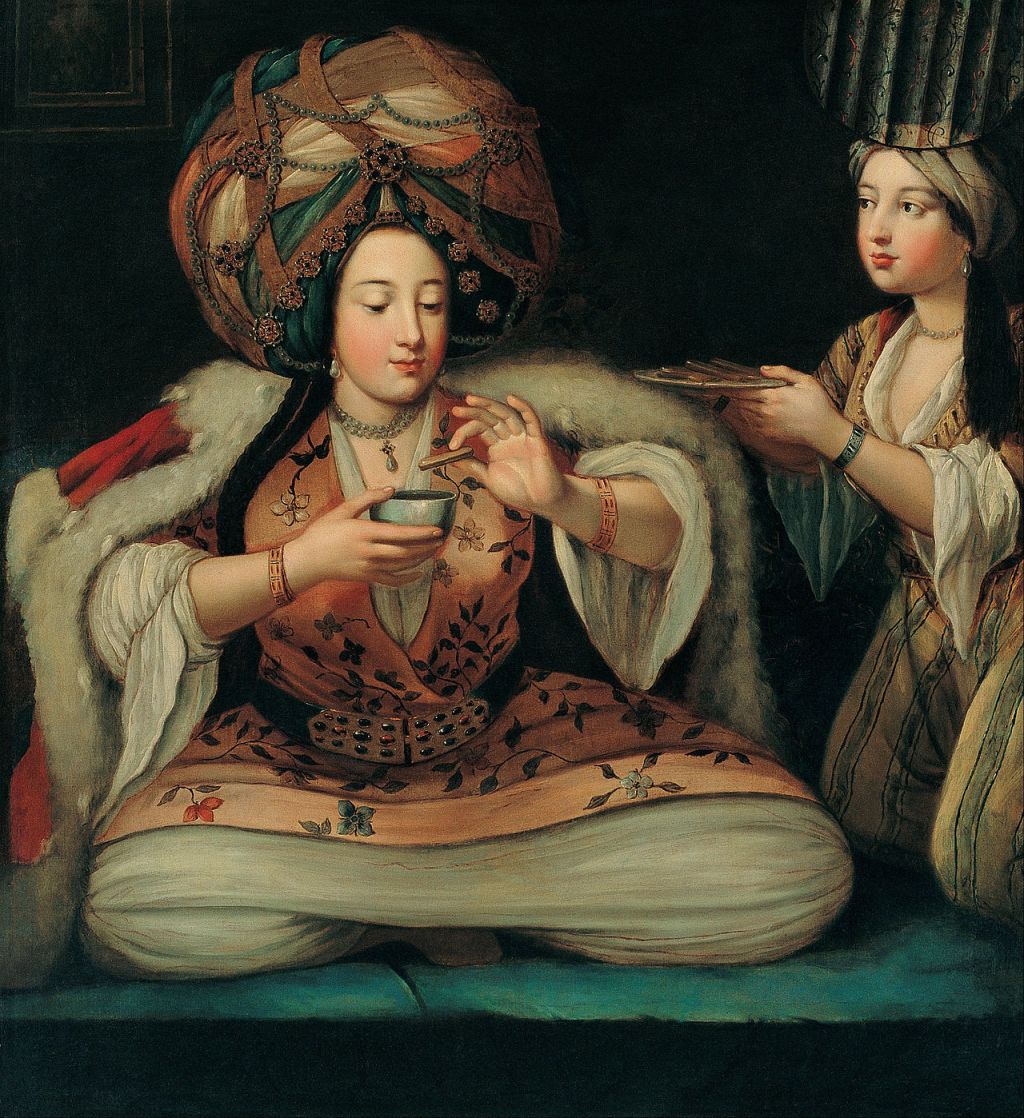
How did the women in Ottoman empire look like? What did they do? When we ask these questions we are essentially talking about the medieval period in Turkey when the Islamic empire flourished. It’s interesting to note that while women in Prophet Muhammad’s time in Arabia played a key role in religious as well as political affairs, women in Ottoman empire led a much different life. It shows how the Islamic society had changed in a few hundred years.
Ogier de Busbecq, who was a European diplomat in Tukey in the sixteenth century, wrote a letter about the role of women in Ottoman empire. For him, the role of women was one of many extraordinary aspects of Ottoman culture. So, what did he write? Let’s find out from the letter itself.
Ogier de Busbecq’s letter on women in Ottoman empire
The Turks are the most careful people in the world of the modesty of their wives, and therefore keep them shut at home and hide them away, so that they scarce see the light of day. But if they have to go into the streets, they are sent out so covered and wrapped up in veils that they seem to those who meet them mere gliding ghosts. They have the means of seeing men through their linen or silken veils, while no part of their own body is exposed to men’s view. For it is a received opinion among them, that no woman who is distinguished in the very smallest degree by her figure or youth can be seen by a man without his desiring her, and therefore without her receiving some contamination; and so it is the universal practice to confine the women to the harem.

Their brothers are allowed to see them, but not their brothers-in-law. Men of the richer classes, or of higher rank, make it a condition when they marry, that their wives shall never set foot outside the threshold, and that no man or woman shall be admitted to see them for any reason whatever, not even their nearest relations, except their fathers and mothers, who are allowed to pay a visit to their daughters at the Turkish Easter.
On the other hand, if the wife has a father of high rank, or has just brought a larger dowry than usual, the husband promises on his part that he will take no concubine, but will keep to her alone. Otherwise, the Turks are not forbidden by any law to have as many concubines as they please in addition to their lawful wives. Between the children of wives and those of concubines there is no distinction, and they are considered to have equal rights.
As for concubines they either buy them for themselves or win them in war; when they are tired of them there is nothing to prevent their bringing them to market and selling them; but they are entitled to their freedom if they have borne children to their master… A wife who has a portion settled on her is mistress of her husband’s house, and all the other women have to obey her orders. The husband, however, may choose which of them shall spend the night with him. He makes known his wishes to the wife, and she sends to him the slave he has selected.
Only Friday night, which is their Sabbath, is supposed to belong to the wife; and she grumbles if her husband deprives her of it. On all the other nights he may do so as he pleases.
Divorces are granted among them for many reasons which it is easy for the husbands to invent. The divorced wife receives back her dowry, unless the divorce has been caused by some fault on her part. There is more difficulty in a woman’s getting a divorce from her husband.
Reference books:


 Kalampedia