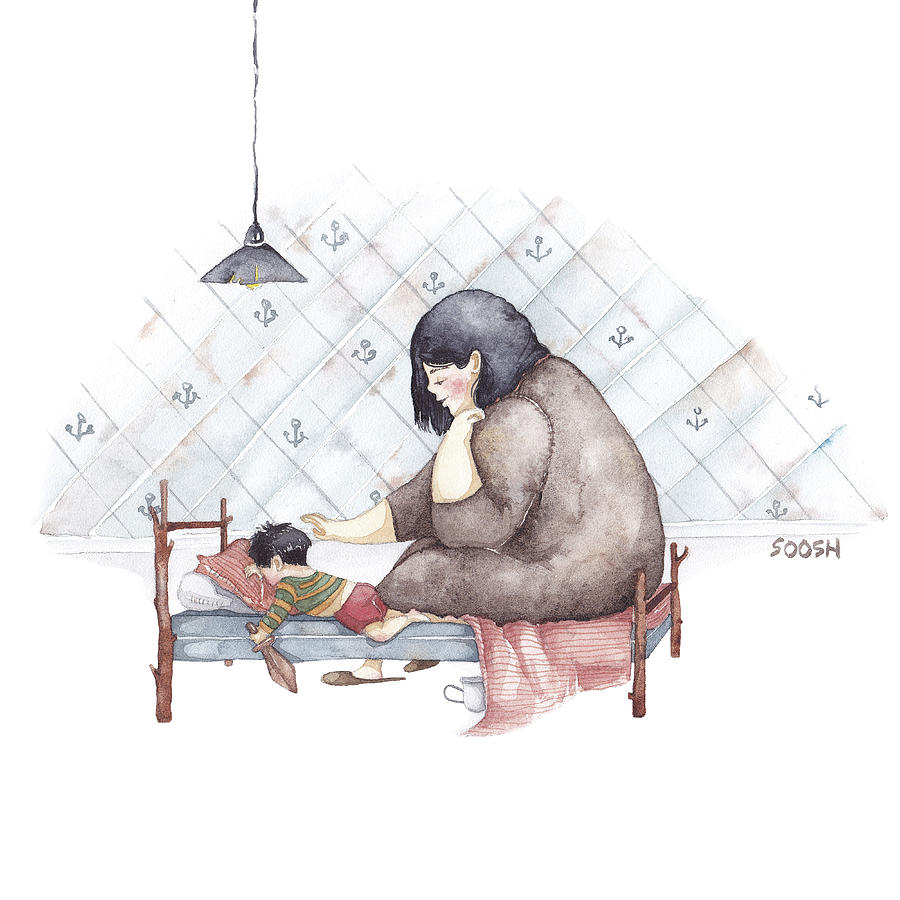
THE TAO TE CHING was written more than twenty-five hundred years ago. Its authorship is shrouded by legend but is attributed to the legendary Chinese sage, Lao Tzu. It is a book of practical advice for leaders and philosophers, attempting to express glimpses of the inexpressible Tao, or “The Way”. Legend has it that Lao Tzu wrote the brief sentences with great reluctance, knowing that the moment characters appeared on paper the essence of the Tao would be lost. Yet his work has become the most widely published book in the world next to the Bible.
What we will specifically discuss in this post is the valuable parenting advice that we can get from The Tao Te Ching. This is what the author William Martin has tried to do in his book The Parent’s Tao Te Ching. We will use Martin’s interpretations of the ancient text to provide some insightful lessons for the modern parents.
Don’t only preach, let them learn

You can speak to your children of life, but your words are not life itself. Understand that. You can show them what you see, but your showing and their seeing will always be different. So, what to do in that case? Here is a simple piece of practical advice to begin with.
Go for a slow and mindful walk with the child(ren). Show them every little thing that catches your eye. Notice every little thing that catches theirs. Don't look for lessons or seek to teach great things. Simply observe. Observe them, notice what they observe, understand them -- the lesson will teach itself once you bring that harmony.
The art of happiness

The greatest thing that a child can acquire is the art of happiness. This does not mean simply making them happy by offering short term pleasures. Instead, we should aim to teach the art of creating happiness. How do we do that? Here’s how.
Encourage your children's deepest joys, not their superficial desires. Praise their patience, not their ambition. Once they are comfortable with themselves, they find contentment everywhere. Once they find contentment, they will find happiness inevitably. More importantly, your own happiness is going to be contagious too -- they learn the art from you.
To punish or not to punish

This one should be easy. You can control your children through threats and punishments and they will learn to fear. Many parents do that and they think it works too. Because they themselves once went through this cycle of mental slavery, they feel imposing it on the child makes sense. The problem is, with this approach the child will always be fearful. The child will have a very difficult time developing trust throughout the life. What is the alternative? Let’s see.
If your child fails at something merely express your confidence in their ability to handle the consequences. If they behave irresponsibly, merely point out the consequences to themselves and others. Again, express your trust that they will learn. Do not slip into the downward spiral of blame, shame and control. It doesn't work.
Reference books:


 Kalampedia