Soma (a word borrowed by Aldous Huxley for the drug in his novel Brave New World) means three things: the plant, the drink made from it (Soma Rasa) and a deity.
Soma Rasa in Hinduism
The precise identity of Soma is one of the mysteries of Indian culinary history. The ancient Hindu scripture Rig Veda contains hundreds of references to Soma, including an entire chapter of 114 hymns dedicated to it. During rituals, Soma Rasa is offered to the gods and ingested by the priests and worshippers.
We have drunk the Soma; we have become immortal; we have gone to the light; we have found the gods… The glorious drops that I have drunk set me free in wide space.
The Rig Veda (VIII.48)
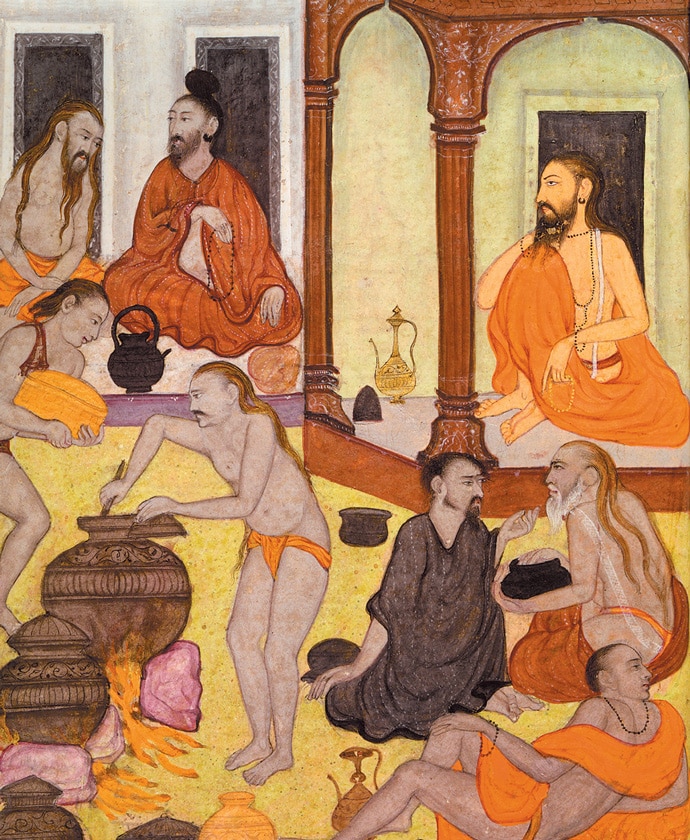
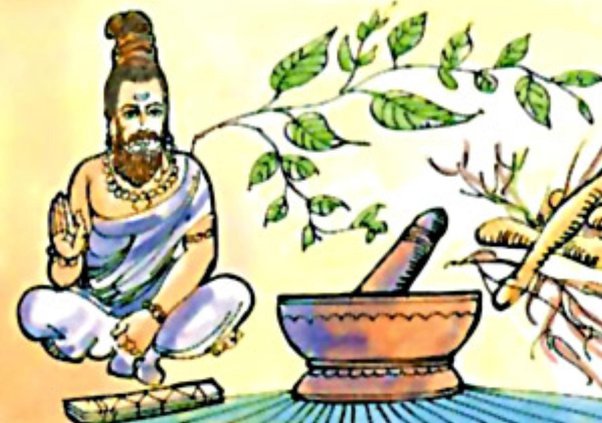
The plant, which the text describes as yellow with long stalks, grew in the mountains and was collected by women. They extracted juice from its stalk by pressing it between two stones or pounding it in a mortar. The juice was filtered through lamb’s wool and stored in jars or wooden tubs. Soma Rasa, as the ancients called it, was brown or tawny in colour. Before they drank it, they mixed it with milk or yoghurt.
From various references, we know that Soma became increasingly difficult to obtain. One prayer even apologises to the gods for the use of a substitute. And after 800 BCE, no references to it survive at all. A number of sources suggest that the need for a substitute for the conscious-altering soma may have led to the development of other ways of creating unusual psychic states such as yoga, breath control, fasting and meditation.
The Soma Plant
Some writers think that Soma was a leafless shrub called Somalata, which means Soma leaf or branch. It is a stimulant used as a bronchodilator in Ayurvedic medicine. Another candidate is the plant Ephedra sinica, which was used by Iranian Zoroastrians in their rituals. It contains the alkaloid ephedrine, which is a stimulant similar to amphetamine but is not hallucinogenic. Another, less likely, possibility is Cannabis sativa, a plant native to Central Asia that today grows all over India. The leaves and flowers of the female cannabis plant make bhang, which nowadays is mixed with milk and drunk during the spring festival Holi. Another candidate is the fly agaric mushroom, which produces hallucinogenic effects and is used by Siberian shamans in their rituals. The debate remains open.
Based on various references from the Vedas and Ayurvedic literature, it seems likely that Soma was not one plant in particular, but a collection of plants. There may have been one Soma plant in the beginning, but over time, even the ancients were using different herbs to prepare this drink. This point is important as we get to the recipe part.
The Soma Rasa Recipe
As clear from the above discussion that it is quite hard to find this divine drink today. What we can do is try to prepare this drink at home. It might not be the exact same drink that the Vedic gods preferred, but it is the closest we can get, given the limited resources and our understanding of it. Let’s do it then.
Step 1: The first step is the trickiest one. We have a number of choices here when it comes to choosing the plant. Let’s go with Somalata (Sarcostemma acidum) since it is widely available, assuming you have made it to the Indian subcontinent. Somalata is a leafless plant that grows in arid places in peninsular India. You can take help of the Ayurvedic practitioners to find/purchase it.
Step 2: Somalata yields an abundance of a mildly acidulous milky juice from its tiny flowers. We can extract this juice with the help of a grinder.
Step 3: Next is the fermentation step. Here we mix the juice with water, yoghurt or barley powder. The fermentation takes a few days. Fifteen days is generally a good time.
Voila! Your drink is ready. Have it with ghee or yoghurt. Say cheers to the ancient Hindu Gods as you find yourself flying in the heavens!
Reference books:
The Rig Veda: Complete, Translation by Ralph TH Griffith
Feast And Fasts: A History Of Food In India, by Colleen Taylor Sen
 Kalampedia