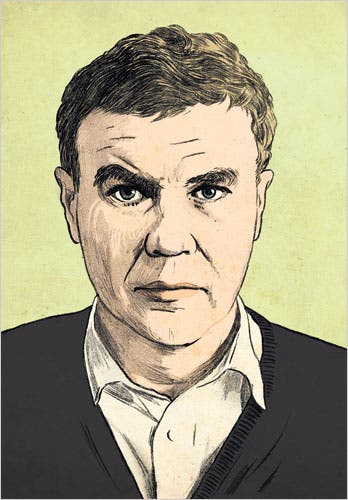
How should one read Raymond Carver’s short stories? Should one read them at all?
Before we answer these questions, let’s try to understand the writer first. And before we understand the writer, let’s try to understand the man.
When Raymond Carver was a little boy he was walking to school with a friend who got hit by a car. The boy wasn’t hurt, but years later, Carver wondered what if?
Years later Carver’s telephone rang late at night. When he answered, the caller hung up. Carver was not disturbed by the call, but he wondered what if the call had come when he was upset about something else?

This was Raymond Carver, throughout his life, always musing on the possibilities of life. This is what he offered in his stories. Considered as one of the greatest short story writers, Carver contributed significantly to the revitalisation of the American short story during the 1980s.
Carver did not come easily to eminence. He grew up in a working-class family in Yakima, Washington, married young and worked as a labourer. His stories mainly take place in his native Pacific Northwest region; they are peopled with the type of lower-middle-class characters he was familiar with while growing up.
Thomas R. Edwards describes Carver’s fictional world as a place where “people worry about whether their old cars will start, where unemployment or personal bankruptcy are present dangers, where a good time consists of smoking pot with the neighbors, with a little cream soda and M&M’s on the side … Carver’s characters are waitresses, mechanics, postmen, high school teachers, factory workers, door-to-door salesmen. [Their surroundings are] not for them a still unspoiled scenic wonderland, but a place where making a living is as hard, and the texture of life as drab, for those without money, as anywhere else.”

The style that made Carver famous is best characterised by some words of his own taken from the short story The Bath.
No pleasantries, just the small exchange, THe barest information, nothing that was not necessary.
Raymond Carver (The Bath)
The sparsely eloquent style became so well known in literary circles that his editor said that he would read over a dozen stories every year by people who were trying to write like Raymond Carver. It’s not just about his popularity; it’s the writing as well. Raymond Carver’s short stories say little and yet they say a lot. These are perfectly suited for a modern reader who wants to read quality writing in short time. You read them and get absorbed in them and are left wondering.
Recommended Reading
Raymond Carver wrote short story as well as poetry collections. Two of his short story collections deserve our attention.
- What We Talk About When We Talk About Love
- Will You Please Be Quiet, Please?
The first is perhaps the most popular book by Carver. The 17 stories in this collection make it a haunting meditation on love, loss, and companionship, and finding one’s way through the dark.
The second, Will You Please Be Quiet, Please?, is described by contemporary critics as a foundational text of minimalist fiction. These stories offered an incisive and influential telling of disenchantment in the mid-century American working class.
 Kalampedia