
I insist on destroying myself,
On destroying myself in you.
A Bollywood Love Song
Destroying myself? Why would anyone want that? What kind of love song is this?
If you are familiar with Sufism, and the concept of fana in it, you would know that it is the highest expression of love. Fana (فناء), literally speaking, is the Sufi term for extinction. It means to annihilate the self, while remaining physically alive. The idea is that once you annihilate the self, the boundaries diminish and what remains is the ultimate union with the God.
When a man’s ‘I’ is negated (and eliminated) from existence, then what remains? Consider, O denier.
Jallaluddin Rumi

Al-Ghazali’s views on fana
Al-Ghazali (c.1056–1111) was one of the most prominent and influential philosophers, theologians, jurists, and mystics of Islam. In his autobiography, he explained why he renounced his brilliant career and turned to Sufism. It was, he says, due to his realisation that there was no way to certain knowledge or the conviction of revelatory truth except through Sufism.
Al-Ghazali’s views on fana can be interpreted through his books Ihya ‘Ulum al-Din and Mishkat al-Anwar. Through these readings, we will try to explain his ideas.
The concept of fana in Ihya
Al-Ghazali in Ihya presents a kind of mysticism which aims at purifying the soul. He believes that there are different stages, leading one to the ultimate goal. Love and fellowship with the divine presence are the highest stages; rest are preparatory stations.

In Ihya, al-Ghazali explains three levels of trust:
- In the first level the Sufis delegate all authority to God and let Him be their deputy and represent them in all things.
- The second level is to depend on God as a child fully trusts and relies on his mother.
- The highest stage of trust is to submit oneself fully to the will of God as the dead body submits to those who wash it before the funeral.
Al-Ghazali admits that the second and the third levels are very rare. But, one must strive for it, nevertheless.
Al-Ghazali goes beyond Ibn Sina, who shows that God’s love is mainly towards himself, to make a broader point. He says that God, as pure perfection in Himself, loves His perfection and the autonomous actions of this perfection. This means that He loves the world as His own action and a part of His own existence.
This is the closest the Islamic philosophy can get to the non-dualism of the east. In al-Ghazali’s words, “He (God) loves the all in Himself because He is the all.”
The concept of fana in Mishkat al-Anwar
Al-Ghazali’s concept of fana, as is unveiled in Mishkat, is closely related to his theory of the metaphysics of light. He meditates on the motif of light through which he explains the mystical experience of God. He distinguishes two kinds of light:
- the sensible light which shines upon things
- the knowledge which shines upon the unseen world

In parallel to these two lights, he says, exist two kinds of eye. The outward eye and the inward eye. With one you look at the world outside, and with the other you turn to your soul.
The knowledge, which he mentions in this context, is the knowledge of God. Its existence, much like the existence of everything (except God), is borrowed from God. The world is divided, therefore, into God as the only self-existent and the universe as the reflection of His existence. In reality, there is only God that exists.
This metaphorical existence is proved to the Sufi in his experience of annihilation. When a Sufi experiences God as the only existent One, he experiences the reality of the temporal world as non-existent in itself. Al-Ghazali shows that all things have no independent existence, for the basis of their existence is borrowed.
Fana, therefore, points at the union with the One. At the same time, al-Ghazali points out that it is not the union in the sense that one becomes the God. Because that would mean that the two entities are equal, which, they are not (notice he goes back to the point of dualism). According to him, this union is the total identification with the divine essence, not a total integration.
Sufi meditation on fana
Sufis have long meditated in the pursuit of the union with the God. Fana, in other words. However, one must note that the Sufi tradition of meditation differs significantly from many others, say Buddhism. Here, you won’t find any secular or atheistic versions, especially in the advanced stages.
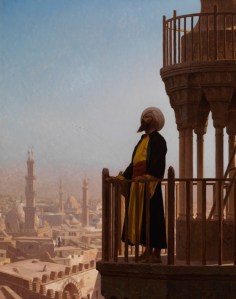
Sufi meditation is spiritual by nature. The idea of God is part of its DNA. The core of all its practices is to remember God, fill the heart with God, and unite oneself with Him. Below are the brief descriptions of some of the Sufi meditation techniques that could be of great help to you.
- One type of meditation that al-Ghazzali recommends is to meditate on the wonders of God’s creation. Simply relax and look around. Observe. Do not speak or care about your own thoughts. Simply observe. Marvel at the beauty around you. Practice this wherever you go.
- Close your eyes and focus all your attention towards God. Watch your mind constantly so that no other thought can find its place there, only God remains.
- Meditation through chanting is another common way. Zikr (Dhikr) as it is often called, meaning remembrance. You speak the name of God, repeatedly. The idea is to inscribe the divine in your heart.
Reference books:


 Kalampedia