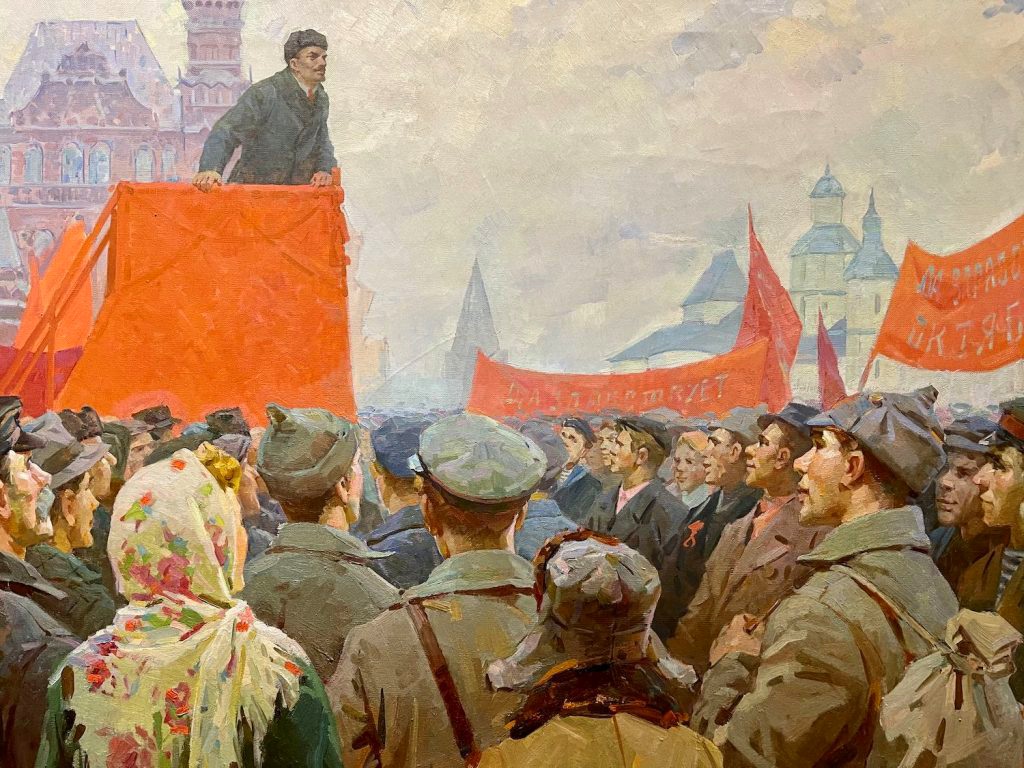
Note: We have published a free Kindle Unlimited book on the Ukraine crisis. Please click on the link to get it right now: A Short History of the Ukraine Crisis
9th Century: Formation of Kyivan Rus. This is where the story of modern-day Russia and Ukraine begins. Kyivan (Kievan) Rus was the early, mostly East Slavic state dominated by the city of Kyiv (Kiev) from about 880 CE to the middle of the 12th century. People speaking East Slavic dialects were known from the ninth century as Rus (also referred to as ancient Russians or Ruthenians). Later, they diverged into three major nations — modern Belarus, Russia and Ukraine.

988: Adoption of Christianity. Vladimir I wanted to unite the people under one umbrella, and… is there any better tool than religion? So, around 988 he sent envoys to examine the major religions. The options? Islam, Judaism, the Catholic Christianity of Western Europe, and the Orthodox Christianity of Eastern Europe.
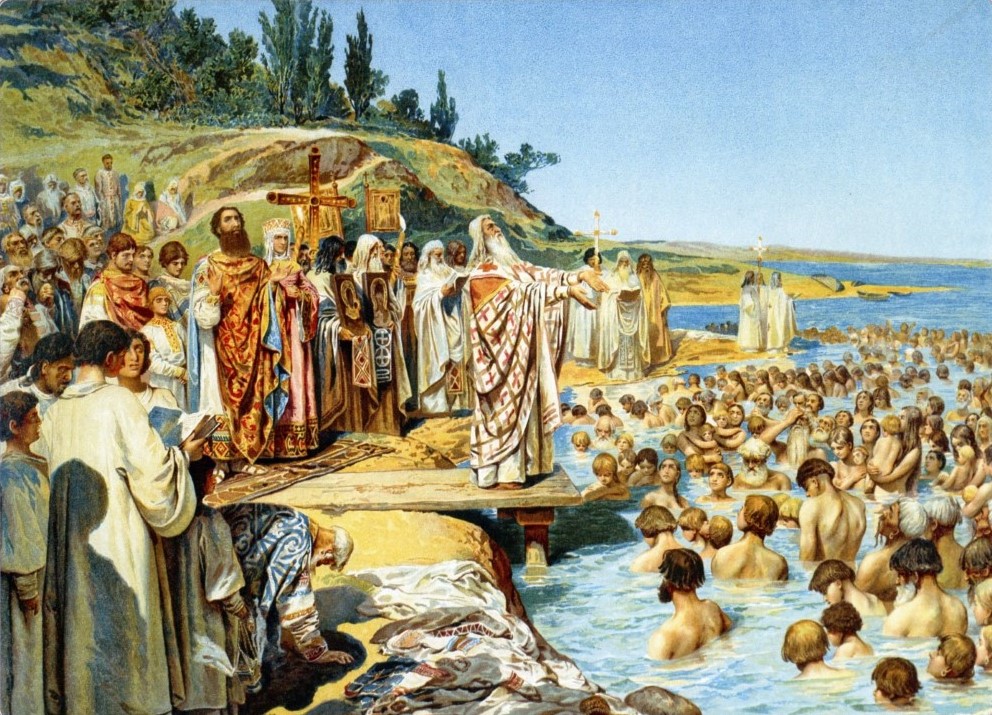
The story of Vladimir’s choosing Orthodox Christianity is part legend, part fact. According to the tradition, Vladimir didn’t like the dietary restrictions of Islam and Judaism. Catholic Christianity was all right, but what impressed the grand prince was the dazzling worship his ambassadors described seeing in the great Cathedral of Hagia Sophia in Constantinople. That was that.
1240: Kyiv destroyed by the Mongols. There is a rule in international warfare: you cannot invade Russia in winters. But, like most other rules in history, this one too didn’t apply to the Mongols. They invaded and conquered Kyivan Rus’ in the 13th century, destroying numerous cities, including Ryazan, Kolomna, Moscow, Vladimir and Kyiv.
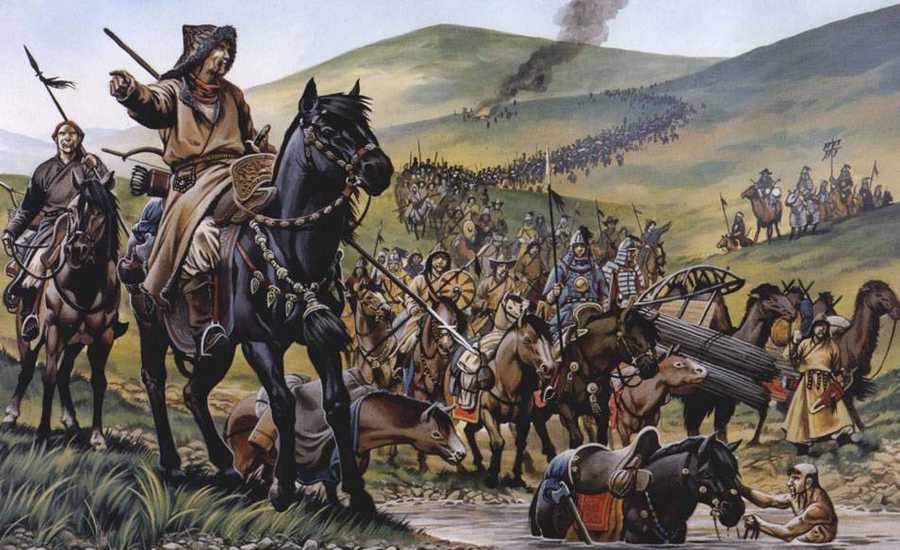
1362: Kyiv annexed by Lithuania. As Genghis Khan once said, “Conquering the world on horseback is easy; it is dismounting and governing that is hard.” By mid-fourteenth century the Mongol Empire had broken up into several “Hordes” who ruled independently of one another. The Russian principalities were ruled by Golden Horde who fought against the Grand Duchy of Lithuania in the Battle of Blue Waters. The Lithuanians won a decisive victory and finalised their conquest of the Principality of Kyiv.

1492: The first mention of Cossacks. This was also the year when Columbus “discovered” America but we will come to that some other time. Ukrainian Cossacks came from a variety of nationalities and social groups. Their ancestors came from Ukrainian, Russian, Polish, and Tatar territories, and migrated at great risk to the southern steppes to hunt, fish, gather honey, and make handicraft goods. By the mid-sixteenth century they had developed a military organisation of a peculiarly democratic kind, with a general assembly (rada) as the supreme authority and elected officers, including the commander in chief, or hetman.

1569: Union of Lublin between Poland and Lithuania. The Union of Lublin, established in 1569, tied together the Kingdom of Poland and the Grand Duchy of Lithuania, creating the so-called Commonwealth of Both Nations, characterised by a single monarch, a common parliament and one currency. This newly created state remained a major political entity until it was partitioned towards the end of the 18th century.

1596: Creation of the Uniate (Ukrainian Greek Catholic) Church. In the Ukrainian area of Galicia and extending to parts of Belarus and Lithuania, an idiosyncratic religious communion emerged which aimed to straddle the Orthodox and Catholic worlds. This was known as the Uniate Church. The agreement struck at Brest allowed for the Uniate Church to establish its own leadership and hierarchy as well as keep liturgy in the vernacular language, Church Slavonic, and other Eastern Christian customs, such as priestly marriage. But this new Church also swore allegiance to the pope, bringing it under the dominion of Western Christianity and the rest of Europe.
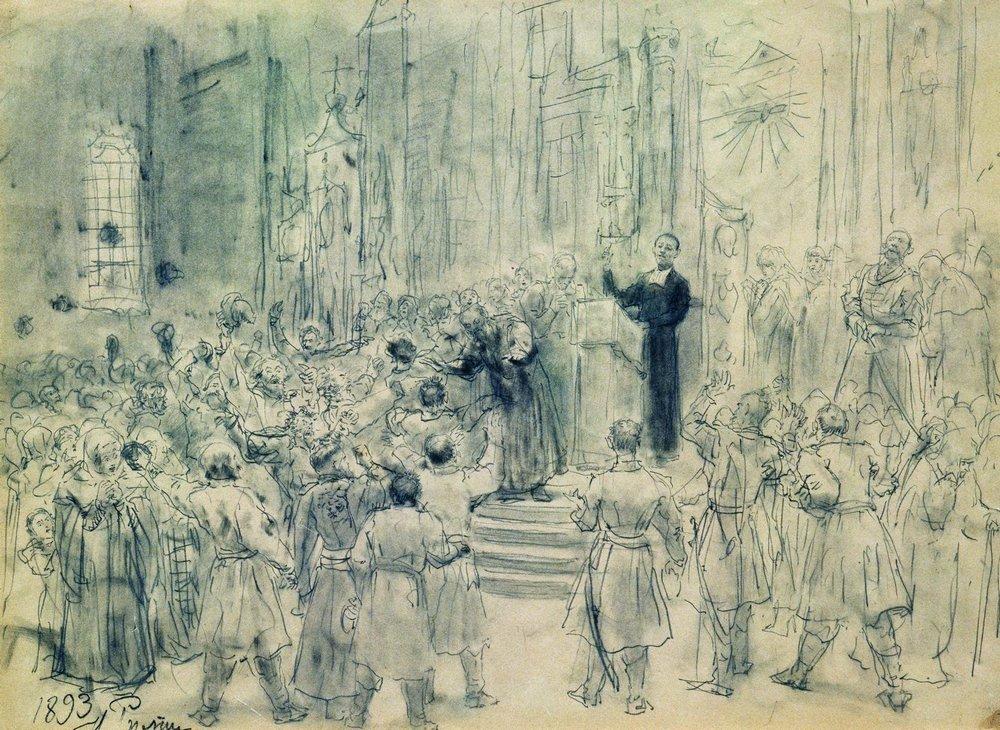
1648: Khmelnytsky Uprising. It was an Cossack rebellion against the Polish rule. The uprising in the Ukrainian territories against the Polish-Lithuanian Commonwealth began in early 1648 under the leadership of Bohdan Khmelnytsky (1595–1657), a Cossack officer proclaimed hetman. The rebels destroyed the Polish standing army, and the confusion and dissension following the death of the king in May 1648 gave them the advantage. Within a few months almost all Polish nobles, officials and priests had been wiped out or driven from the lands of present-day Ukraine. This led to the eventual incorporation of eastern Ukraine into the Tsardom of Russia in 1654.

1654: Treaty of Pereiaslav. One of the strongest links in the toxic chain of events that has bound Ukraine’s fate to that of Russia was forged in this year. The Treaty of Pereyaslav was designed to save Ukraine from Polish domination.It did so, but it also made Ukraine a Russian vassal for centuries. If not for this treaty, Ukraine might have been an entirely different country. Ukrainians could now be speaking little or no Russian, have another religion, and culturally as well as economically be less dependent on modern Russia. Understandably then, the Ukrainian nationalists see it as a sad occasion, while the pro-Russian parties celebrate it.

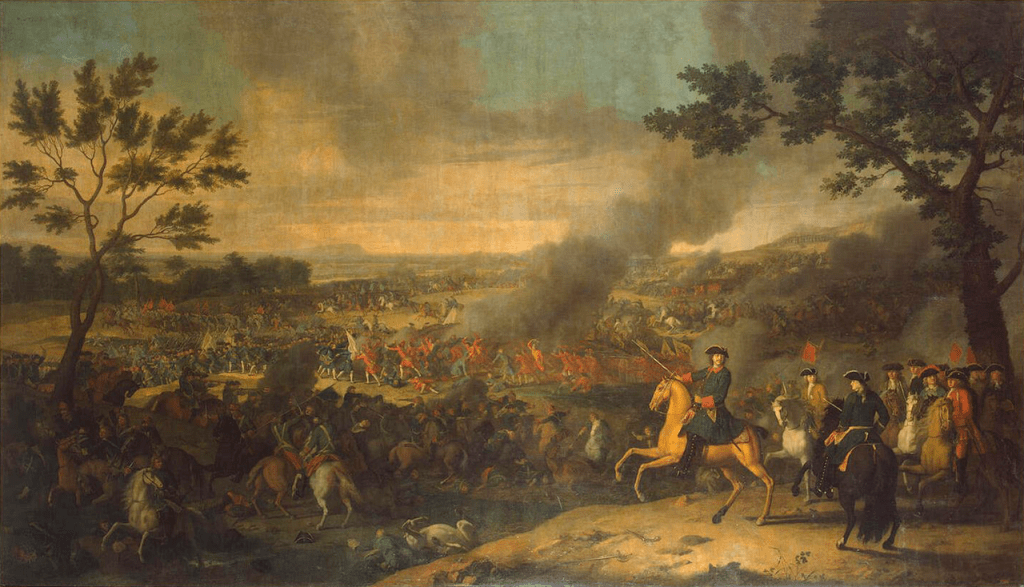
1709: The Battle of Poltava. A Russian army under the command of Tsar Peter I defeated a Swedish army, under the command of Carl Gustaf Rehnskiöld. The battle put an end to the status of the Swedish Empire as a European great power, as well as its eastbound expansion, and marked the beginning of Russian supremacy in Northern Europe, which continues till today.
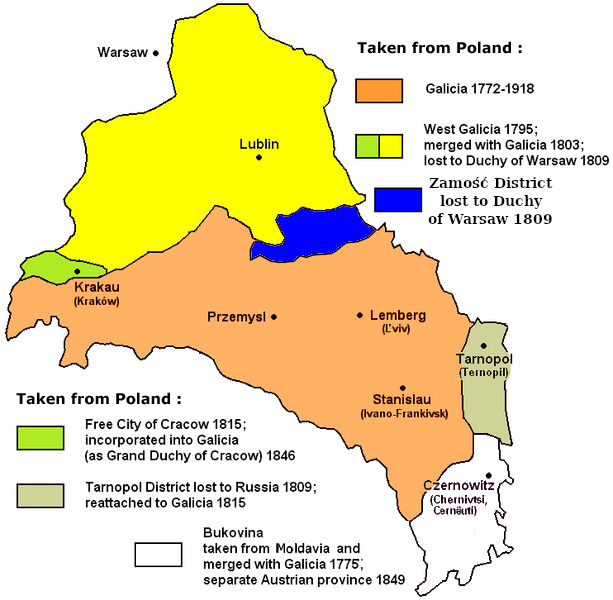
1772: Galicia becomes part of the Habsburg Empire. The era of Austrian Habsburg rule in Galicia and Bukovina that lasted from 1772 to 1918 represents one of the few instances of direct and long-term interaction between the Germanic world and territories inhabited by Ukrainians. As a result, it was not long before a significant percentage of the articulate elements in western-Ukrainian society, and perhaps even a larger proportion of the peasant masses, accepted Habsburg rule and considered Austria to be their legitimate homeland.
1783: The Russian Empire annexes Crimea. Crimea became a part of Russia from 1783, when the Tsarist Empire annexed it a decade after defeating Ottoman forces in the Battle of Kozludzha. It remained with Russia until 1954, when the Soviet government transferred Crimea from the Russian Soviet Federation of Socialist Republics (RSFSR) to the Ukrainian Soviet Socialist Republic (UkrSSR).

1917: Revolution in the Russian Empire. The year was the climax of a revolution we have always called Russian, but was so much more. In Kyiv, the capital of Ukraine, power fell to the Central Council, or Rada, which had since the summer pressed for Ukrainian autonomy within the Russian state. Its membership was elected in April 1917 by the constituent All-Ukrainian National Congress.

1918-20: Ukrainian People’s Republic. Ukraine proclaimed its independence from the Russian Republic on 25 January 1918. However, in 1920, the Bolsheviks established control over eastern Ukraine. Two years later, what had now become the Ukrainian Socialist Soviet Republic joined the Soviet union. Did they have any other choice? It’s a rhetorical question, don’t worry.

1941-44: Nazi occupation of Ukraine. Initially, the Germans were greeted as liberators by some of the Ukrainian populace. In Galicia especially, there had long been a widespread belief that Germany, as the avowed enemy of Poland and the U.S.S.R., was the Ukrainians’ natural ally for the attainment of their independence. The illusion was quickly shattered — which we all are aware of. Moreover, the war also meant the end of Nazi rule. This meant, it was time to turn to Russia, once again.

1954: The Crimea is transferred from the Russian Federation to Ukraine. Soviet leader Nikita Khrushchev gave Ukraine a gift: Crimea. At the time, it seemed like a routine move, but six decades later, that gift is having consequences for both countries. It wasn’t just a gift. Ukraine’s great famine, or Holodomor, was created by Joseph Stalin, Khrushchev’s predecessor; millions died. Stalin died in 1953, and when Khrushchev took over, “the idea was that they really needed to democratize the system, to centralize it less,” says Nina Khrushcheva, Khruschev’s great-granddaughter. Besides, much like the imperialist Britain, the Soviet leadership was also fond of merging incompatible regions together to facilitate the divide within, which would make them return to the Communist rule.

1991: The Soviet Union collapses; Ukraine proclaims independence. The population of Ukraine voted overwhelmingly for independence in the referendum of December 1, 1991. In an election coinciding with the referendum, Kravchuk was chosen as president. By this time, several important developments had taken place in Ukraine, including the dissolution of the Communist Party and the development (under the newly appointed Minister of Defense Kostiantyn Morozov) of the infrastructure for separate Ukrainian armed forces.

1997: Russia and Ukraine Treaties. Russia and Ukraine established two independent national fleets, divided armaments and bases between them, and set forth conditions for basing of the Russian Black Sea Fleet in Crimea. The treaty was supplemented by provisions in the Russian–Ukrainian Friendship Treaty, which was signed three days later.

2004-09: Ukraine’s “gas war” with Russia. Russia and Ukraine clashed over gas prices following the 2004 pro-Western “Orange Revolution” which swept President Viktor Yushchenko to power. In 2007 Ukraine’s parliament passed a law banning the privatisation, sale or lease of gas pipelines, after Russia suggested creating a joint venture to run the system. Russia accused Ukraine of corruption and stealing gas meant for Europe, and on January 7, Russian Prime Minister Vladimir Putin ordered a halt in gas transit via Ukraine as well, saying it was pointless pumping the gas if it was being stolen by Ukraine.

2014: Russia annexes Crimea. In November 2013, Viktor Yanukovych, Ukraine’s pro-Russian president, rejected closer ties with the European Union by refusing to sign an association agreement on the eve of a summit in Vilnius, Lithuania. By early 2014, Yanukovych had fled and the capital had fallen into the hands of various pro-European opposition parties. The focus turned to Crimea, a peninsula in the south of the country home to an ethnic Russian majority, where Russia’s Black Sea Fleet was headquartered.

Putin dispatched his army to Ukraine’s borders for an unexpected military exercise, and fighter jets along Russia’s western borders were put on high alert. Then on Thursday Feb. 27, gunmen with no insignia on their uniforms seized government buildings in Crimea, and then took control of two Crimean airports the day after. Russia’s seizure of Crimea from Ukraine violated a number of agreements, but… when has that mattered?
2015-19: Ceasefire and ceasefire violations. As fighting continues, Russia repeatedly strikes at Ukraine in a series of cyberattacks, including a 2016 attack on Kyiv’s power grid that causes a major blackout.
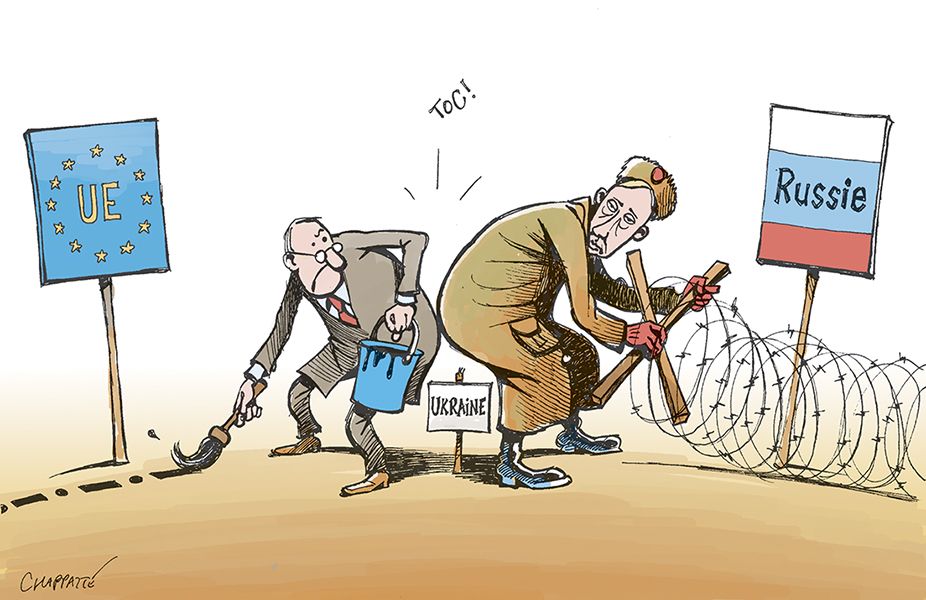
2021: We are at it, again. Russia sends about 100,000 troops to Ukraine’s borders, ostensibly for military exercises. President Zelenskyy urges NATO leadership to put Ukraine on a timeline for its membership. Russia, on the other hand, asks NATO to permanently bar Ukraine from membership and to withdraw forces stationed in countries that joined the alliance after 1997, including the Balkans and Romania. The confusion continues.

2022: The war may be coming. Or maybe not. Let’s wait and see.
Reference books:


 Kalampedia