
IS LOVE AN ART? Or is love a pleasant sensation, which is a matter of chance, something one “falls into” if one is lucky?
Many have pondered over this question, many still do, but as the societies evolved, we have moved away from the art side of it. After all, that makes love slightly-less-romantic as it would then require knowledge and effort. Most of us are starved for love, and so, we romanticise it. We watch endless numbers of films about happy and unhappy love stories, listen to hundreds of songs about love — yet hardly do we think that there is anything that needs to be learned about love.
Erich Fromm, a 20th-century psychoanalyst and social philosopher, saw love as an art and explained it eloquently in his 1956 book The Art of Loving. Based on his views, let’s take a look at what we can learn about love, particularly, the romantic form of love.
A mistake we make

We see the problem of love primarily as that of being loved, rather than that of loving, of one’s capacity to love. Hence the problem to us is how to be loved and how to be lovable. In pursuit of this aim we follow several paths. One, which is especially used by men, is to be successful, to be as powerful and rich as the social margin of our position permits. Another, used especially by women, is to make ourselves attractive, by cultivating our body, dress, etc. Other ways of making ourselves attractive, used both by men and women, are to develop pleasant manners, interesting conversations, to be helpful, modest, inoffensive.
Notice something interesting here. Many of the ways to make ourselves lovable are the same as those used to make ourselves successful, “to win friends and influence people.” As a matter of fact, what most of us mean by being lovable is essentially a mixture between being popular and having sex appeal.
Love as it happens today
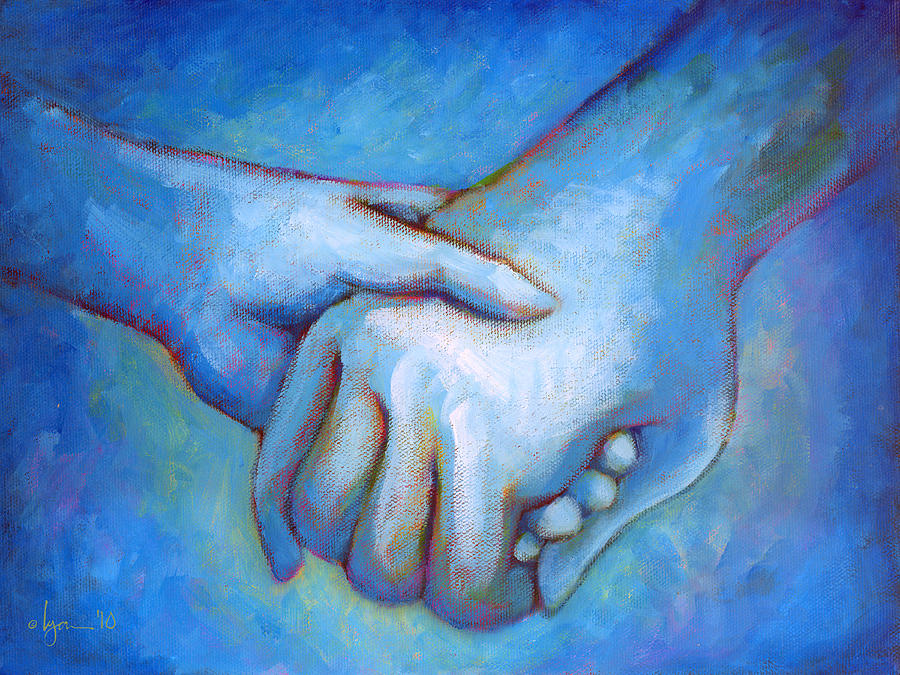
We keep forgetting, but it’s important to remind ourselves that the problem of love is not the problem of an object, rather a problem of faculty. We think that to love is simple, but to find that right object to love is difficult. It’s quite the contrary. The hardest thing is to love day after day, especially after those early days of you-take-my-breath-away have passed. This is where we can turn to history and learn from its pages.
In most traditional cultures, love was mostly not a spontaneous personal experience which then might lead to marriage. In fact, marriage was contracted by convention — either by the respective families, or by a marriage broker; it was concluded on the basis of social considerations, and love was supposed to develop once the marriage had been concluded. In the recent times the concept of romantic love become almost universal. Most of us are in search of “romantic love,” of the personal experience of love which then should lead to marriage. This new concept of freedom in love has greatly enhanced the importance of the object as against the importance of the function.
If only we could work on our capacity to love, instead of this endless pursuit of a perfect man or woman, if only…
What we can learn

The first challenge is to understand that love is an art that can be learned and developed over a period of time. This realisation comes once we clear the confusion between the initial experience of “falling” in love, and the permanent state of “being” in love. If two people who have been strangers, as all of us are, suddenly let the wall between them break down, and feel close, feel one, this moment of oneness is one of the most exhilarating, most exciting experiences of life. This miracle of sudden intimacy is often facilitated if it is combined with, or initiated by, sexual attraction and consummation. However, as it would be easy to guess, this kind of love does not last.
The two persons become well acquainted, their intimacy loses more and more its miraculous character, until their antagonism, their disappointments, their mutual boredom kill whatever is left of the initial excitement. Yet, in the beginning, we do no know this: so, we take the intensity of the infatuation, this being “crazy” about each other, for proof of the intensity of our love, while it may only prove the degree of our preceding loneliness.
As mentioned before, knowing that “love is an art” is the key. And the process of learning an art can be divided into two parts: one, the mastery of the theory; the other, the mastery of the practice. If you want to learn the art of medicine, you must first know the facts about the human body, and about various diseases. When you have all this theoretical knowledge, you are still by no means competent in the art of medicine. But, the journey has begun. And you will only become a master in this art when the results of your theoretical knowledge and that of your practice are blended into one — your intuition.
Reference books:


 Kalampedia