
The word emotion is a modern invention — and not a particularly helpful one. The first books to use the word in the title do not appear until the 19th century. The most famous of these is The Expression of the Emotions in Man and Animals, by Charles Darwin, which was published in 1872.
Philosophers and poets had been writing about things like anger, pity, and fear for thousands of years, of course, but they have never before grouped these mental states together under a single umbrella. On the contrary, they had been more concerned to draw distinctions between them, categorising some of them as passions and desires, and others as affections and sentiments. Thus, when the Scottish psychologist Alexander Bain announced, in his 1859 book The Emotions and the Will, that he would use the word emotion to cover to ‘all that is understood by feelings, states of feeling, pleasures, pains, passions, sentiments, affections’, he was marking a fundamental shift in the vocabulary that we use to describe how the mind works.

Behind this terminological shift lay a deeper conceptual revolution — the birth of modern psychology, a self-professed ‘scientific’ approach to the study of the mind, modelled on the natural sciences, especially physiology. The pioneers of this new approach were explicit about their desire to break with traditional ways of discussing and studying the mind, which were inextricably bound up with theology and ethics. Words like passion, lust, and desire all had a biblical pedigree which the pioneers of scientific psychology wished to dispense with. Similarly, the philosophers of Ancient Greece had given a central place to things like pity, fear, and anger in their debates about the good like. Couldn’t they have used the word emotion instead? Alas!
The problem was, nobody knew what the new word really meant. When the Edinburgh professor of moral philosophy, Thomas Brown, used the term in his lectures in 1810-20, he told his students that ‘the exact meaning of the term emotion is difficult to state in any form of the words’. Two centuries later, things are not that clear either. Psychologists still disagree about how to define the term. As the philosopher Thomas Dixon wryly observes, ‘this is hardly surprising for a term that, from the outset, was defined as being indefinable’.
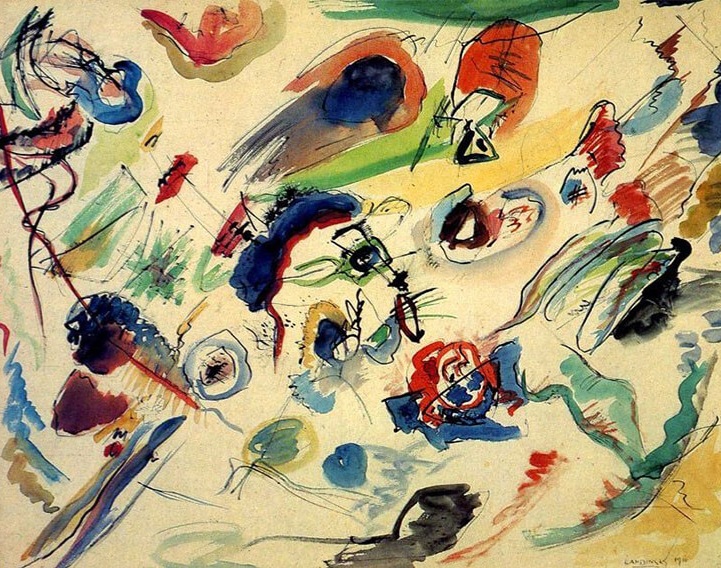
So, instead of attempting to provide a concise definition of emotion, it may be more fruitful to identify some typical examples. Few people deny that anger, fear, and joy are emotions. The question is, how do we define them or categorise them? Philosopher Griffiths has done that job by dividing emotions into three distinct groups: basic emotions, higher cognitive emotions, and culturally specific emotions. Below are the brief descriptions of each category:
- Basic emotions are universal and innate. They are of rapid onset and last a few seconds at a time. Emotions such as joy, anger, fear, surprise, disgust — they fall in this group.
- Higher cognitive emotions are constituted by the integration of three types of mental states: representations of external objects, interoceptive states, and type-specific propositional attitudes. For example, an emotional awareness of bodily changes-such as tensed musculature, a racing pulse, a knotted stomach, or sweaty palms-tends to be one in which those changes are felt as reactions to external events.
- Cultures influence how people choose to regulate their emotions, ultimately shaping an individual’s emotional experience and leading to general cultural differences in the experience and display of emotion. For example, in certain cultures where guilt is associated with pleasures, a person may feel the combination of the two while seeking pleasure. While a person living outside this culture may not know this emotion.
Let’s return to the original question now: what is emotion?
Based on what we know so far, emotions are simply a class of feelings, differentiated by their experienced quality from other sensory experiences like tasting chocolate or something like sensing a pain in one’s lower back. If we want to get slightly more technical, then, according to the American Psychological Association (APA), emotion is defined as “a complex reaction pattern, involving experiential, behavioral and physiological elements.”
There are three aspects of an emotion: subjective experience, physiological response and behavioural response. Subjective experience is the feeling element — how you experience it. Then your body responds to that feeling — maybe your heartbeat goes up or your breath gets heavy. And finally, the behavioural aspect — how you outwardly express it, whether you scream or sing. These three, put together, constitute what we call an emotion.
Reference books:


 Kalampedia