
In 1894, a cleaning lady in the German embassy of France found something in a wastebasket that would throw the entire country into chaos. It was a torn-up memorandum — and the cleaning lady was a French spy. She passed the memo on to senior staff in the French army, who read it and realised with alarm that someone in their ranks had been selling valuable military secrets to Germany.
The memo was unsigned, but suspicion quickly fell on an officer named Alfred Dreyfus, the only Jewish member of the army’s general staff. Dreyfus was one of a small number of officers who was of high enough rank to have access to the sensitive information mentioned in the memo. He was not well liked. His fellow officers considered him cold, arrogant, and boastful.
As the army investigated Dreyfus, suspicious anecdotes began to pile up. One man reported seeing Dreyfus loitering somewhere, asking probing questions. Another reported having heard Dreyfus praising the German Empire. Dreyfus had been spotted at least once in a gambling establishment. Rumour had it that he kept mistresses, despite being married. Hardly signs of a trustworthy character!
Feeling increasingly confident that Dreyfus was the spy, French army officers managed to obtain a sample of his handwriting to compare with the memo. It was a match! Well, at least it looked similar. There were admittedly a few inconsistencies, but surely it couldn’t be a coincidence that the handwriting was so much alike. They wanted to make sure, so they sent the memorandum and the sample of Dreyfus’s writing to two experts for evaluation.
Expert Number 1 declared it to be a match! The officers felt vindicated. Expert Number 2, however, was not convinced. It was quite possible that the two writing samples came from different sources, he told the officers.
A mixed verdict wasn’t what the officers were hoping for. But then they remembered that Expert Number 2 worked with the Bank of France. The world of finance was full of powerful Jewish men. And Dreyfus was Jewish. How could they trust the judgement of someone with such conflicts of interest? The officers made up their minds. Dreyfus was their man.
Dreyfus insisted he was innocent, but to no avail. He was arrested, and a military court found him guilty of treason on December 22, 1894. He was sentenced to solitary confinement for life on the aptly named Devil’s Island, a former leper colony off the coast of French Guiana, far across the Atlantic Ocean.
When Dreyfus heard the decision, he was in shock. After being dragged back to prison, he considered suicide, but eventually decided that such an act would only prove his guilt.
The final ritual before sending Dreyfus away was to strip him of his army insignia in public, an event dubbed “the degradation of Dreyfus.” As an army captain tore the braid from Dreyfus’s uniform, one officer cracked an anti-Semitic joke: “He’s a Jew, remember. He’s probably calculating the value of that gold braid.”
As Dreyfus was paraded past his fellow troops, journalists, and crowds of onlookers, he shouted, “I am innocent!” The crowd, meanwhile, spat insults and yelled, “Death to Jews!”
Once he arrived on Devil’s Island, he was kept in a small stone hut with no human contact except for his guards, who refused to speak to him. At night, he was shackled to his bed. During the day, he wrote letters, begging the government to reopen his case. But as far as France was concerned, the matter was settled.
“CAN I BELIEVE IT?” VS. “MUST I BELIEVE IT?”
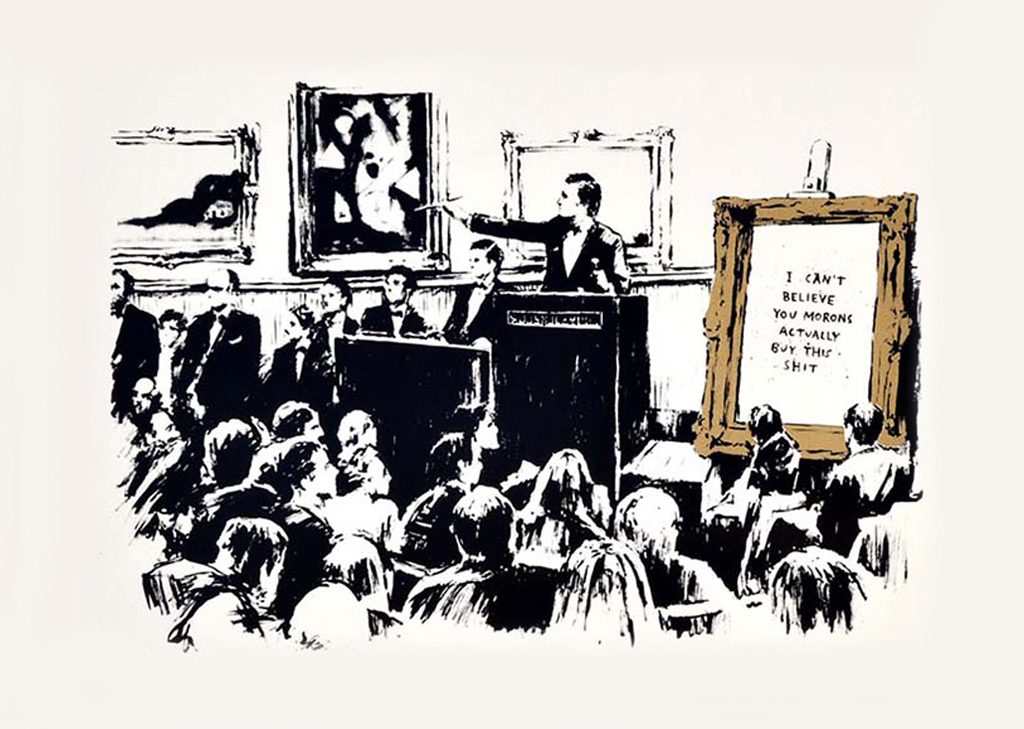
It might not look this way, but the officers who arrested Dreyfus had not set out to frame an innocent man. From their perspective, they were conducting an objective investigation of the evidence, and the evidence pointed to Dreyfus.
But although their investigation felt objective to them, it was clearly coloured by their motives. They were under pressure to find the spy quickly, and they were already inclined to distrust Dreyfus. Then, once the wheels of the investigation had been set in motion, another motive was born: they had to prove themselves right or risk losing face, and potentially their jobs as well.
The investigation of Dreyfus is an example of an aspect of human psychology called directionally motivated reasoning — or, more often, just motivated reasoning — in which our unconscious motives affect the conclusions we draw. The best description of motivated reasoning comes from psychologist Tom Gilovich. When we want something to be true, he said, we ask ourselves, “Can I believe this?,” searching for an excuse to accept it. When we don’t want something to be true, we instead ask ourselves, “Must I believe this?,” searching for an excuse to reject it.
When the officers first began investigating Dreyfus, they evaluated rumours and circumstantial evidence through the lens of “Can I accept this as evidence of guilt?,” erring more on the side of credulity than they would have if they weren’t already motivated to suspect him.
When Expert Number 2 told them that Dreyfus’s handwriting didn’t match the memo, the officers asked themselves, “Must I believe it?” and came up with a reason not to: Expert Number 2’s supposed conflict of interest due to his Jewish faith.
The officers had even searched Dreyfus’s home for incriminating evidence and failed to find any. So they asked themselves, “Can we still believe Dreyfus is guilty?” and were able to come up with a reason to: “He probably got rid of the evidence before we got here!”
Even if you’ve never heard the phrase motivated reasoning, I’m sure you’re already familiar with the phenomenon. It’s all around you under different names — denial, wishful thinking, confirmation bias, rationalisation, tribalism, self-justification, overconfidence, delusion. Motivated reasoning is so fundamental to the way our minds work that it’s almost strange to have a special name for it; perhaps it should just be called reasoning.
You can see it in the way people happily share news stories that support their narratives about America or capitalism or “kids today,” while ignoring the stories that don’t. You can see it in the way we rationalise away red flags in an exciting new relationship, and always think we’re doing more than our fair share of the work. When a coworker screw up, it’s because they are incompetent, but when we screw up, it’s because we were under a lot of pressure. When a politician from the rival party breaks the law, it proves how corrupt that whole party is, but when one of our politicians breaks the law, he’s just a corrupt individual.
***
The above excerpts are taken from Julia Galef’s book The Scout Mindset: Why Some People See Things Clearly And Others Don’t.
 Kalampedia