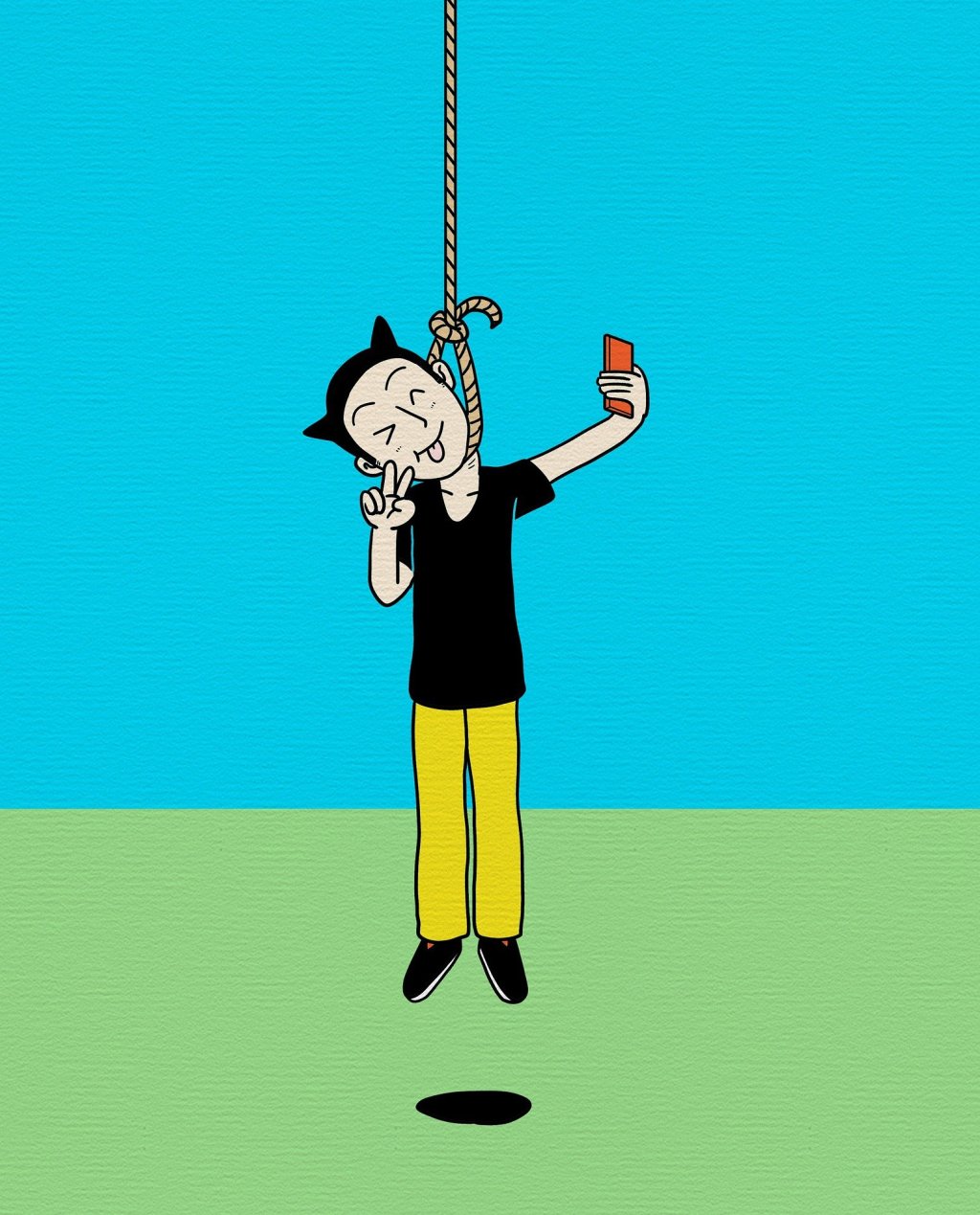
Is the world getting better? A look at the news headlines would suggest otherwise.
The world is doomed.
Rich are getting richer, poor are getting poorer.
Air-pollution is going to take millions of lives.
This could very well be the end of the western civilisation.
The society is disintegrating at a surprising pace.
When we read some of the above mentioned stories in news-media, we are likely to believe that the world is getting worse day by day, a lot worse than one would imagine. Yet, in recent times, there have been attempts made by scientists, philosophers and writers to prove the opposite. That, in fact, the world is getting better. One such voice is that of British writer Matt Ridley who, in his book The Rational Optimist, makes the point that we are way better off than we ever were in human history.
Ridley starts by asserting that despite the problems that exist today, the vast majority of people are much better fed, much better sheltered, much better entertained, much better protected against disease and much more likely to live to old age than their ancestors have ever been. We take all the human progress for granted; perhaps, we should not.
Of course, there are people out there who think life was better in the past. They argue that there was not only simplicity, tranquillity, sociability and spirituality about life in the distant past that has been lost, but a virtue too. To persuade the proponents of these arguments, Ridley tells an imaginary tale. It goes something like this.
Imagine that it is 1800, somewhere in Western Europe or eastern North America. The family is gathering around the hearth in the simple timber-framed house. Father reads aloud from the Bible while mother prepares to dish out a stew of beef and onions. The baby boy is being comforted by one of his sisters and the eldest lad is pouring water from a pitcher into the earthenware mugs on the table. His elder sister is feeding the horse in the stable. Outside there is no noise of traffic, there are no drug dealers and neither dioxins nor radioactive fall-out have been found out in the cow's milk. All is tranquil; a bird sings outside the window.
So far, so good? Wait, there is more.
Suddenly, father's reading is interrupted by a bronchitic cough that presages the pneumonia that will kill him at 53. He is lucky, though; life expectancy in 1800 was less than 40. The baby will die of the smallpox that is now causing him to cry. His sister will soon be the chattel of a drunken husband. The water the son is pouring tastes of the cows that drink from the brook. Toothache tortures the mother. The stew is grey and gristly and yet meat is a rare change from gruel. Candles cost too much, so firelight is all there to see by. Nobody in the family has ever seen a play, painted a picture or heard a piano. They don't even have enough clothes. And as for the bird outside the window, tomorrow it will be trapped and eaten by the boy.
If this fictional family is not to your taste, perhaps you would prefer some statistics. Since 1800, the population of the world has multiplied six times, yet average life expectancy has more than doubled and real income has risen more than nine times.

Taking a shorter perspective, in 2005, compared with 1955, the average human being on Planet Earth earned nearly three times as much money (corrected for inflation), ate one-third more calories of food, buried one-third as many of her children and could expect to live one-third longer. She was less likely to die as a result of war, murder, childbirth, accidents, tornadoes, flooding, famine, whooping cough, tuberculosis, malaria, diphtheria, typhus, typhoid, measles, smallpox, scurvy or polio. She was less likely, at any given age, to get cancer, heart disease or stroke. She was more likely to be literate. She was more likely to own a telephone, a flush toilet, a refrigerator and a bicycle.
And all this has happened all over the world. The average Mexican today lives longer than the average Briton did in 1955. Infant mortality is lower today in Nepal than it wad in Italy in 1952. The proportion of Vietnamese living in less than $2 a day has dropped from 90 percent to 30 percent in twenty years. The rich have got richer, but the poor have done even better. The poor in the developing world grew their consumption twice as fast as the world as a whole between 1980 and 2000. The Chinese are ten times rich, one-third as fecund, and twenty-eight years longer-lived than they were fifty years ago. The United Nations estimates that poverty was reduced more in the last fifty years than in the previous five hundred.
Surely, there are things to worry about. New problems have emerged, new challenges have arisen, new diseases, new viruses and what not, but if we come back to our original question. i.e., is the world getting better? Yes, it is. So, while we work on the problems of today and tomorrow, we must not lose sight of the fact that collectively we are building a better future. Such a reminder would encourage many of us and those to follow.
 Kalampedia