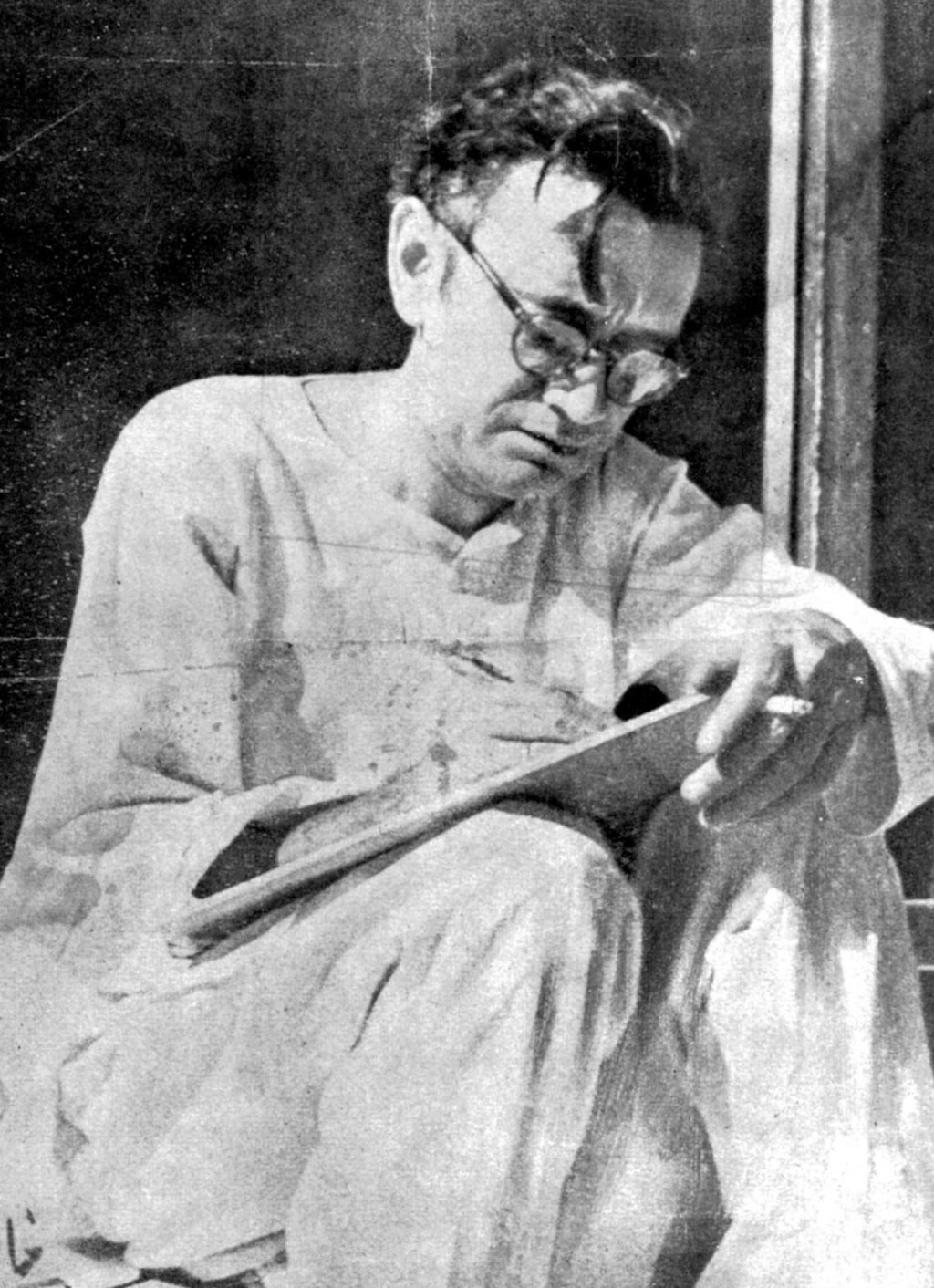
Saadat Hasan Manto was a rare writer who captured the essence of India and Pakistan equally well, especially the dark sides of these two societies which used to be one before the partition of India in 1947. And he lived through all of this. Born in Punjab and having spent many years in Bombay working as a writer, he moved to Pakistan soon after its creation.
As it often happens with writers, you find the impression of their life experiences in their writings, and so was the case here. The stories written in Bombay carried a lot of playfulness, then it turned serious about the dangers of partition and creation of a religious state, and eventually into something darker with satires and mockery and regrets. At the same time, his lifestyle had changed. He became increasingly alcoholic (often it is said that he wrote pieces standing up in newspaper offices, taking money in cash and being driven off in a tonga to fetch the drink) and passed away in 1955 due to cirrhosis of the liver. But he left behind a large body of work: twenty two collections of short stories, a novel, five series of radio plays, three collections of essays and two collections of personal sketches. Let’s take a closer look at his works.

Manto’s world is not always pleasant. Because it’s real. When people objected to the obscenity in his stories, he said, “if you cannot bear these stories then the society is unbearable. Who am I to remove the clothes of this society, which itself is naked. I don’t even try to cover it, because it is not my job, that’s the job of dressmakers.” That’s Manto for you. He makes you uncomfortable. He tells the naked truth. And he practised it a lot. In his words, he was addicted to writing just as he was to drinking.
It’s clear from his writings that he hadn’t had any formal education in it. All he did was, he captured the reality around him without missing out on any details. Some of us try to be politically correct and leave the ugliness of reality out of the writing; Manto never did that. When he saw blood, he did not turn his eyes away. When he saw any filth, he did not shy away from talking about it. That’s why the quirkiness is always there. Even when he talked about politics, he did not comfortably choose a side. In fact – as he always does – he made you uncomfortable with unsaid truths.
There is a great lesson to be learnt from the life of Saadat Hasan Manto. Which is that if you dare to speak the truth, it will always make people uncomfortable. Society, as Manto said, was used to dressing itself up in carefully woven lies. The nakedness offends. And so does the truth. But if you are willing to resist such opposition, the world will thank you for having stood up.
Suggested Reading:
Manto: Selected Stories – Manto’s first collection of short stories written in 1940s.
Bombay Stories – Tells the stories from the twentieth century Bombay.
Toba Tek Singh – A powerful satire mocking the partition of India. It’s a really short story.
 Kalampedia