
The word sonnet is derived from the Italian word “sonetto,” which means a “little song” or small lyric. In poetry, a sonnet has 14 lines, and is written in iambic pentameter.
But, what is iambic pentameter?
Iambic is used to refer to a rhythm (= pattern of words) used in poetry, in which each short syllable that is not stressed is followed by a long or stressed syllable. Iambic pentameter is a rhythm with each line made of five iambic pairs.
In a sonnet, each line has 10 syllables. It has a specific rhyme scheme, and a volta, or a specific turn.
There are six types of Sonnets:
- Italian Sonnet (Rhymes as abba–abba–cdc–dcd)

- Shakespearean Sonnet (Rhymes as abab–cdcd–efef–gg)

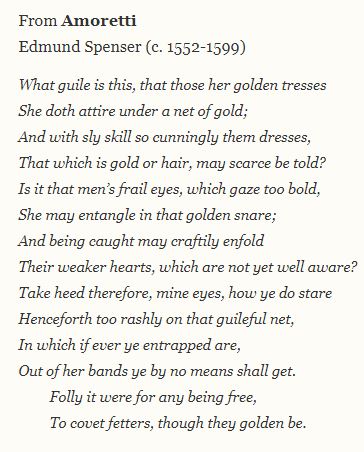
- Spenserian Sonnet (Rhymes as abab–bcbc–cdcd–ee)
- Miltonic Sonnet (Rhymes as abab–cdcd–efef–gg and omits the volta)

- Terza Rima Sonnet (Rhymes as aba–bcb–cdc–ded…)

- Curtal Sonnet (Rhymes as abcabc–dcbdc or abcabc dbcdc with the last line a tail, or half a line)

Recommended Books:


 Kalampedia